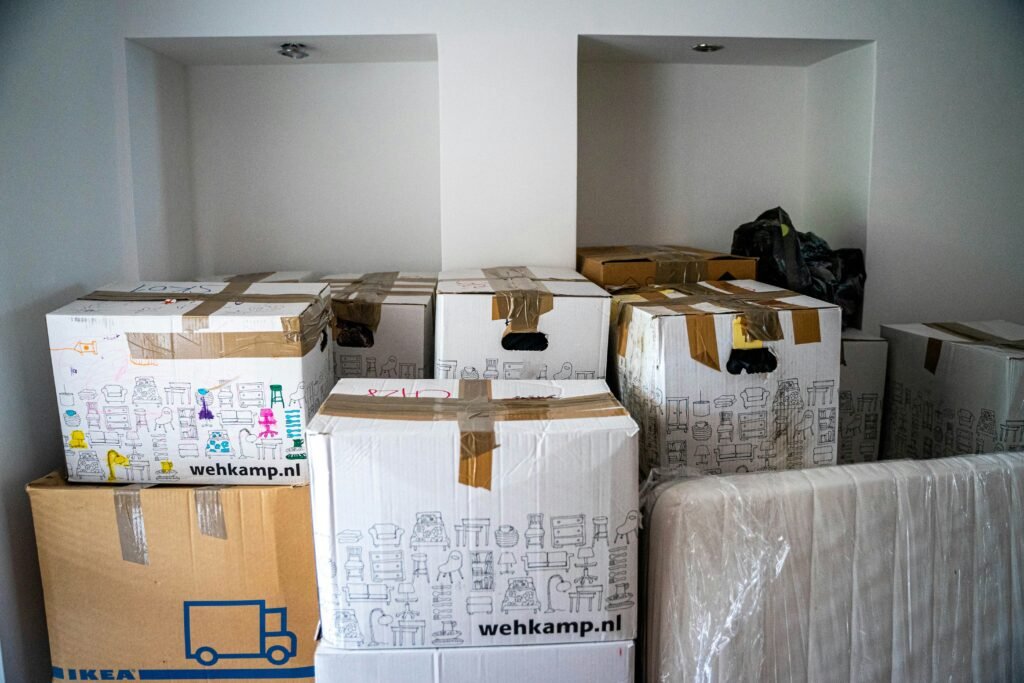

Moving into a Toronto condo does not always involve a truck full of furniture. You might arrive with suitcases, boxes and a few household items, planning to purchase larger furniture after moving in. That can raise an important question: do you still need to reserve the service elevator?
A box-only move may still qualify as a move under a condominium’s governing documents. The answer generally depends on the building’s rules, how many belongings you are transporting, which entrance you use and whether your activity could interfere with other residents.
Before carrying multiple loads into the building, ask management for written Toronto condo elevator booking requirements. Assuming that the rules apply only to furniture can result in interrupted access, unexpected fees or a cancelled move.
A Box-Only Move May Still Count as a Move
Condo rules may define a move according to the activity taking place rather than the size of the belongings.
Your building may consider it a move when you:
- Begin occupying a unit
- Transport numerous boxes through common areas
- Make repeated elevator trips
- Use a loading dock
- Hold an exterior door open
- Use carts or dollies
- Require elevator padding
- Bring belongings into the building over several hours
Some buildings distinguish between a formal move, an ordinary delivery and a resident carrying personal items. Others apply the same reservation procedure whenever someone starts or ends occupancy.
Do not assume that avoiding furniture automatically avoids the moving rules.
Why Toronto Condos Require Elevator Reservations
An elevator reservation helps a condominium control access and reduce disruption. The building may reserve one elevator for the resident while keeping others available for regular use.
The procedure may also allow management to:
- Install protective padding
- Reserve the loading area
- Arrange security access
- Prevent simultaneous moves
- Inspect common areas
- Control exterior doors
- Reduce elevator congestion
- Keep fire routes and corridors clear
Toronto does not impose one universal elevator-booking procedure for every condominium. Each condominium corporation has governing documents that may establish its own reasonable rules and administrative requirements.
The Condominium Authority of Ontario explains that condominium residents must follow the corporation’s governing documents. Tenants are also entitled to use common elements, including elevators, as outlined in those documents. Residents can review the authority’s official information on renting or leasing a condo.
Ask Management How the Building Defines a Move
Contact the property manager or condominium office before the moving date. Explain exactly what you intend to bring rather than asking only whether an elevator booking is required.
Include:
- The approximate number of boxes
- Whether you are bringing furniture
- Whether you will use a dolly or cart
- The expected number of trips
- The date and approximate time
- Whether a vehicle needs loading access
- Whether the unit will become occupied that day
- Whether additional furniture will arrive later
Ask management to confirm whether your plan is treated as:
- A formal move
- A small move
- A box-only move
- A delivery
- Ordinary resident access
Request the answer in writing. This provides a record if different employees later give conflicting instructions.
Review the Governing Documents
Important requirements may appear in the condominium’s declaration, bylaws, rules, resident handbook or moving package.
Look for provisions covering:
- Move-in and move-out procedures
- Service elevator reservations
- Permitted moving hours
- Deposits and administrative fees
- Loading-dock access
- Elevator padding
- Security arrangements
- Proof of insurance
- Damage to common elements
- Door and fob access
- Deliveries
- Fines or chargebacks
- Cancellation procedures
The Condominium Authority of Ontario describes bylaws as administrative guidelines that must be reasonable and consistent with the Condominium Act and the corporation’s declaration. Its overview of condominium bylaws can help residents understand where building requirements may originate.
Rules differ between buildings, so advice from someone living in another Toronto condominium may not apply to yours.
Speak With the Landlord When You Are a Tenant
A tenant may receive instructions from a landlord, property manager, concierge or condominium office. Make sure everyone is referring to the same current requirements.
Ask the landlord to provide:
- The condominium’s governing documents
- The current moving package
- Elevator-booking instructions
- Required forms
- Information about fees and deposits
- Loading-area procedures
- Any restrictions applying to tenants
- A contact person for moving-day access
If the landlord says no booking is necessary but building management says otherwise, resolve the disagreement before arriving with your belongings.
A verbal assurance from a landlord may not prevent building staff from enforcing the condominium’s established procedures.
Understand the Difference Between a Fee and Deposit
An elevator reservation may involve a nonrefundable fee, a refundable damage deposit or both.
A nonrefundable fee may be intended to cover:
- Administration
- Security supervision
- Elevator preparation
- Staff time
- Common-area inspections
- Cleaning
A refundable deposit may be held against possible damage to elevators, walls, floors, doors or other common elements.
Before paying, ask for written confirmation of:
- The amount
- Who receives it
- Whether it is refundable
- What conditions apply
- When the deposit will be returned
- What evidence will be provided if money is withheld
- What happens if the move is cancelled
- Whether a box-only move qualifies for a reduced charge
Do not assume an amount is refundable simply because someone calls it a deposit. Keep the receipt and reservation confirmation.
Small Moves May Still Affect Other Residents
Several boxes can create considerable elevator traffic when transported individually. A resident making repeated trips may occupy the elevator longer than someone moving one large piece of furniture.
Building management may also be concerned about:
- Boxes blocking hallways
- Exterior doors being held open
- Unauthorized people entering
- Dollies damaging elevator floors
- Residents waiting for the elevator
- Loading areas being occupied
- Packing materials left in common spaces
Estimate the complete impact of your move rather than considering only the size of each item.
Carrying Items by Hand Does Not Guarantee an Exemption
You may intend to carry everything by hand without a cart, loading dock or moving vehicle. The building could still require a reservation if the activity represents the start or end of occupancy.
Before proceeding without a booking, ask:
- Is there a maximum number of boxes allowed without a reservation?
- Can personal items be transported through the main entrance?
- Are repeated trips permitted?
- Can luggage be moved at any time?
- Is the service elevator mandatory?
- Are weekend or evening moves prohibited?
- Must the concierge be notified?
Get the answer before moving day rather than asking while the boxes are already in the lobby.
Moving Over Several Days May Not Avoid the Rules
Some residents consider moving a few boxes each day to avoid reserving the elevator. This may be permitted, but it should not be assumed.
Spreading the move across several days can create other problems:
- Repeated disruption
- Multiple loading-area visits
- More time with doors held open
- Unclear responsibility for hallway damage
- Conflict with delivery rules
- Difficulty coordinating keys and fobs
Tell management if you plan to bring belongings gradually. Ask whether an individual booking is required for each day or whether ordinary resident access is sufficient.
Furniture Deliveries May Require Separate Reservations
A box-only move does not necessarily eliminate future elevator bookings. A sofa, bed, table or appliance delivered later may be subject to separate rules.
Ask whether future furniture deliveries require:
- Another elevator reservation
- A new deposit
- A delivery fee
- Proof of insurance
- Advance notice
- Loading-dock access
- Delivery during specific hours
- Protective elevator padding
A building may classify a commercial furniture delivery differently from a resident’s move. Confirm the requirements before scheduling any large item.
Confirm Elevator and Loading-Area Measurements
Even when you are initially bringing only boxes, measure the building’s access points before ordering furniture.
Record:
- Elevator door width
- Elevator interior height
- Elevator depth
- Hallway width
- Service entrance width
- Loading-dock clearance
- Turns between the elevator and unit
- Unit doorway dimensions
TCM’s furniture access measurement checklist explains how to measure doors, hallways, stairs, elevators and furniture before moving day.
These measurements can prevent a future delivery from being rejected or leaving furniture stuck in a lobby.
Get the Reservation Details in Writing
If a Toronto condo elevator booking is required, request written confirmation showing:
- The building address
- Unit number
- Moving date
- Reserved start time
- Reserved end time
- Assigned elevator
- Approved entrance
- Loading-area instructions
- Required deposit or fee
- Contact person
- Cancellation policy
- Procedure for delays
Do not rely only on a conversation with a concierge. Staff may change between the booking date and moving day.
Bring a digital or printed copy of the confirmation when you arrive.
Build Extra Time Into the Reservation
A box-only move can take longer than expected because of:
- Toronto traffic
- Limited loading access
- Security check-in
- Waiting for elevator padding
- Small elevator capacity
- Long hallways
- Parking restrictions
- Another move running late
- Difficulty obtaining keys or fobs
Count the time required to unload the vehicle, enter the building, transport the boxes and clear the common areas.
TCM’s guide explaining what to expect on moving day can help you prepare for access checks, loading, transportation and unloading.
Check Parking Before Moving Day
An elevator booking does not automatically include a parking or loading reservation.
Ask:
- Is there a designated loading dock?
- Does the vehicle need advance registration?
- Is underground clearance sufficient?
- Can a rental vehicle enter the garage?
- Is street parking permitted?
- Is someone required to supervise the vehicle?
- How far is the carrying route?
- Can the vehicle remain during the entire booking?
Parking delays can consume much of a short elevator reservation. Inspect the location in advance when possible.
Protect the Elevator and Hallways
Damage is possible even when moving only boxes. Overfilled cartons may split, while carts can mark floors or strike walls.
Reduce the risk by:
- Using strong, properly closed boxes
- Avoiding overloaded cartons
- Keeping walkways clear
- Using clean cart wheels
- Protecting sharp or protruding objects
- Following elevator capacity limits
- Removing packing debris immediately
- Avoiding wet or leaking containers
Do not prop open security or fire doors without permission. Ask building staff how exterior access should be managed during the move.
Photograph Common Areas
Take photographs before bringing in the first load. Record the condition of:
- Elevator walls
- Elevator doors
- Hallway flooring
- Lobby surfaces
- Doorframes
- Corners
- Loading areas
- Service entrances
Photograph the same areas after the final trip. These records may help if damage is later attributed to your move.
If a deposit is withheld, request photographs, inspection records and an itemized explanation.
Prepare for an Elevator Problem
A reserved elevator may be unavailable because of maintenance, mechanical problems or another delayed move.
Ask in advance:
- Which elevator will be used as a backup?
- Can the reservation be extended?
- Will the fee transfer to another date?
- Who should be contacted after office hours?
- Can boxes remain temporarily in the loading area?
- Are stairs permitted for small items?
- What happens if the building cancels the booking?
Do not leave belongings unattended in a lobby or hallway without authorization.
If someone becomes trapped in an elevator, use its emergency communication system and follow building emergency procedures. The City of Toronto states that building management is responsible for contacting the elevator-servicing organization for a non-emergency entrapment; call 911 when there is an emergency. Review the City’s official elevator emergency guidance.
Keep Important Items With You
Do not place essential belongings where building delays could make them inaccessible.
Keep these items personally accessible:
- Identification
- Keys and fobs
- Medication
- Phone and charger
- Booking confirmation
- Tenancy or ownership documents
- Payment receipts
- Water and basic food
- Essential work equipment
- Valuables
TCM’s moving-day essentials box guide provides a broader checklist for the belongings you may need immediately.
Avoid These Box-Only Moving Mistakes
Common mistakes include:
- Assuming boxes do not count as a move
- Relying entirely on verbal instructions
- Arriving without notifying the concierge
- Using the main elevator when a service elevator is required
- Forgetting to reserve loading access
- Treating a refundable deposit as a nonrefundable fee
- Moving outside permitted hours
- Scheduling furniture delivery without a second booking
- Blocking hallways with stacked boxes
- Failing to photograph existing damage
A brief written conversation with management can prevent most of these problems.
Frequently Asked Questions
Is a service elevator required when moving only boxes?
It depends on the condominium’s governing documents and how the building defines a move. Ask management for written confirmation before transporting multiple loads.
Can I carry a few boxes through the regular elevator?
Some buildings permit ordinary personal items in passenger elevators, while others require the service elevator for move-in activity. Rules vary by condominium.
Do suitcases count as a move?
A small amount of personal luggage may be treated as ordinary access, but starting occupancy with numerous suitcases and repeated trips could be classified differently. Confirm with management.
Can I move boxes into a Toronto condo over several days?
Possibly, but spreading the activity across several days does not automatically remove booking requirements. Tell management what you are planning and request written instructions.
Is an elevator deposit refundable?
A genuine damage deposit is generally intended to be returned when its conditions are satisfied. Ask for the refund terms, inspection procedure and deadline in writing.
Will furniture delivered later require another booking?
It may. Large-item deliveries can have separate elevator, loading-dock, insurance and scheduling requirements.
What happens if I move without reserving the elevator?
Building staff may stop the move, deny loading access or take action under the condominium’s governing documents. The precise consequences depend on the property’s rules and circumstances.
What if the landlord and condo management provide different instructions?
Ask them to resolve the disagreement before moving day. Request the current governing documents and final instructions in writing.
Should I reserve the elevator even when uncertain?
Contact management rather than making an assumption. If a booking is unnecessary, obtain written confirmation so you can show building staff on moving day.
Moving Note: Toronto condominium requirements vary between properties. Review the current declaration, bylaws, rules and moving package for your building before transporting belongings. This article provides general information and is not legal advice.