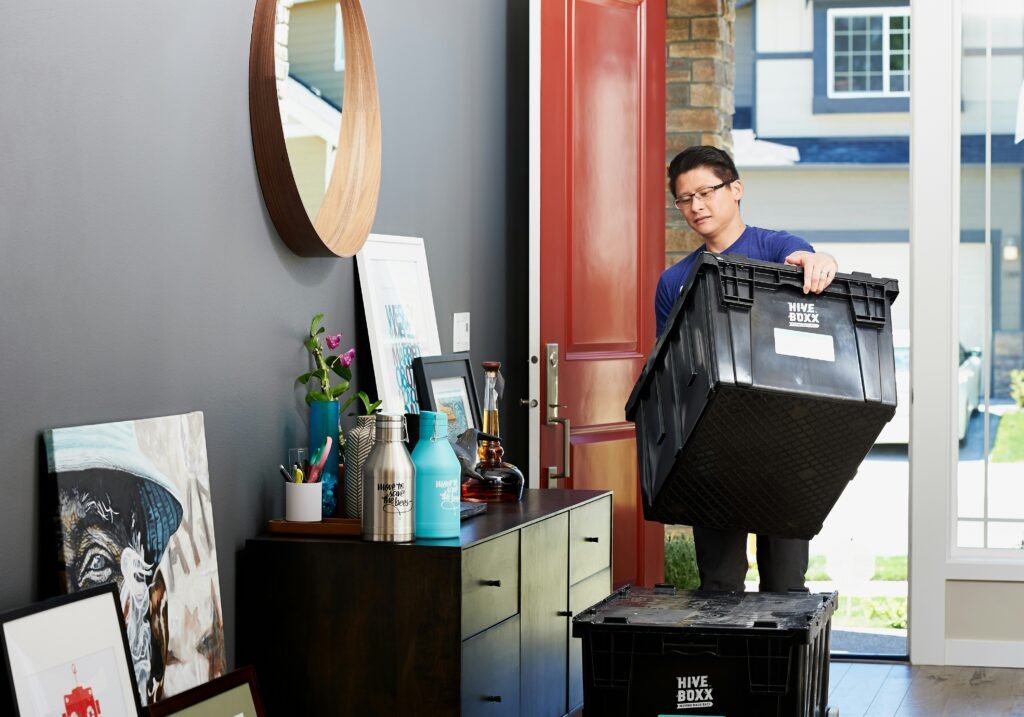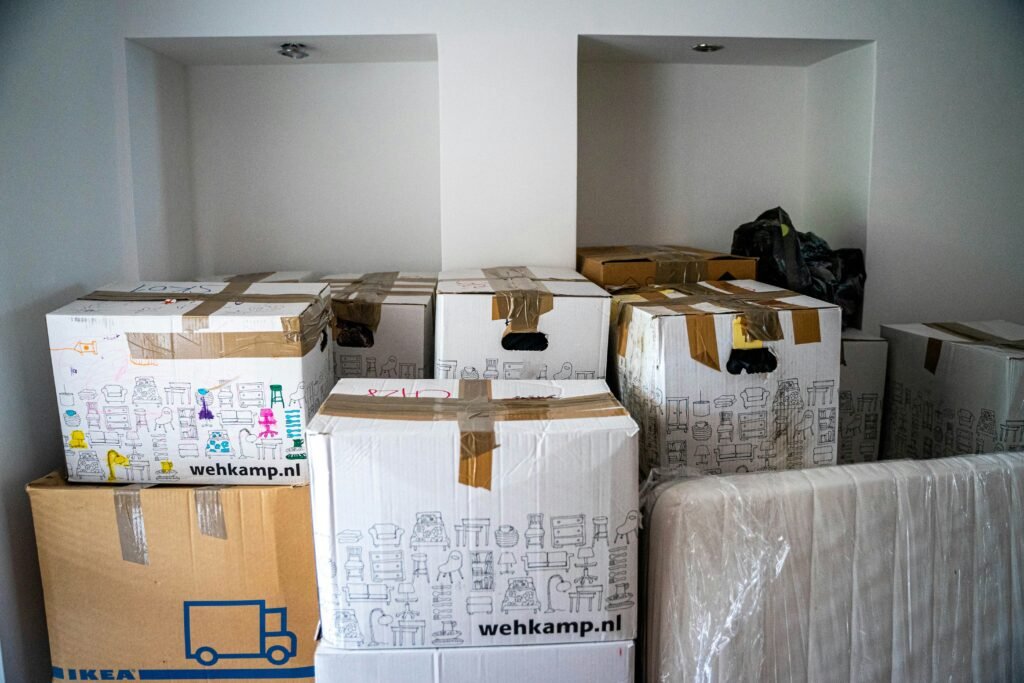

A sofa that fits comfortably in your current living room may not fit through the doorway of your new home. A refrigerator may be narrow enough for the kitchen entrance but too large for a tight hallway turn. Even when an item technically fits, limited space around stairs, elevators or entryways can make moving it difficult or unsafe.
Taking the right measurements before moving day helps you identify these problems while there is still time to make a plan. You can decide whether furniture should be disassembled, determine which entrance to use and avoid transporting belongings that will not fit in the new home.
This guide explains what you should measure before moving, how to record the dimensions and what to do when an item appears too large for the available route.
Why Moving Measurements Matter
Measurements are not only needed for arranging furniture. They also determine whether each item can travel from its current location to its intended room in the new home.
A piece of furniture may need to pass through several restricted areas:
- The doorway of its current room
- Hallways and corners
- Staircases or elevators
- The main exit
- A loading entrance
- The entrance to the new property
- The doorway of its destination room
The smallest or most difficult point along this route can determine whether the item can be moved normally.
Measuring in advance can help you:
- Avoid delays on moving day
- Identify furniture that requires disassembly
- Choose the most accessible entrance
- Protect walls, doors and furniture
- Plan for narrow stairs or sharp turns
- Determine whether large belongings will fit in the new home
- Avoid paying to transport furniture you cannot use
- Prepare building access before help arrives
Measurements are especially important when moving into an apartment, an older home, a multistory property or a building with restricted elevator access.
Create a Furniture and Access Measurement Sheet
Do not rely on memory or keep unrelated measurements in several phone notes. Create one record containing the dimensions of your large belongings and every important part of the moving route.
Your measurement sheet can include the following information:
| Item or location | Width | Height | Depth or length | Additional details |
|---|---|---|---|---|
| Sofa | 84 in. | 34 in. | 38 in. | Legs can be removed |
| Current front door | 35 in. | 80 in. | — | Door opens inward |
| New hallway | 41 in. | 96 in. | 12 ft. | Sharp turn near bedroom |
| Elevator door | 42 in. | 84 in. | — | Reservation required |
| Elevator interior | 68 in. | 90 in. | 54 in. | Protective padding installed |
| Bedroom doorway | 32 in. | 80 in. | — | Hinges may reduce clearance |
Measure in the same unit throughout your checklist. Inches are commonly used for furniture and residential openings in the United States, but any consistent unit will work.
Photograph complicated spaces and label each image so you can compare the photographs with your measurements later.
What Furniture Should You Measure?
You do not need to measure every small object. Concentrate on large, heavy, unusually shaped or difficult-to-disassemble belongings.
Important items to measure include:
- Sofas and sectionals
- Recliners and sleeper sofas
- Bed frames and headboards
- Mattresses
- Dressers and wardrobes
- Dining tables
- Desks
- Bookcases
- Entertainment centers
- Large mirrors and artwork
- Refrigerators and freezers
- Washers and dryers
- Exercise equipment
- Pianos
- Safes
- Outdoor furniture
- Workbenches and tool cabinets
Record the width, height and depth of each item. For circular tables and similar objects, record the diameter as well.
Measure the item itself rather than relying exclusively on dimensions from a product listing. Added feet, handles, cushions, brackets or other components may change its actual size.
Measure Furniture at Its Widest Points
A common mistake is measuring only the main body of a piece of furniture. Instead, include every part that could affect clearance.
Depending on the item, this may include:
- Arms
- Legs
- Handles
- Hinges
- Decorative trim
- Attached cushions
- Wheels
- Hardware
- Protruding shelves
- Fixed headboards
- Electrical components
If any component can be removed safely, measure the item both assembled and disassembled. Record which tools and instructions will be needed to remove and reinstall it.
Place screws, brackets and other hardware in a labeled bag. Secure the bag to the item or keep it in a clearly identified hardware container.
Check Whether Furniture Can Be Turned
Furniture does not always need to pass through an opening in its normal upright position. A sofa may fit when placed vertically or angled, while a table may fit after its legs are removed.
However, comparing the width of the furniture with the width of the doorway is not always enough. You must also consider:
- Ceiling height
- Furniture length
- Available turning space
- Hallway width
- Door placement
- Nearby walls
- Stair railings
- Light fixtures
- Floor-to-ceiling clearance
A long sofa might fit through a door but still be impossible to rotate inside a narrow hallway. Likewise, an item may clear a staircase but be unable to turn at the landing.
Do not assume an item will fit diagonally without checking the surrounding space.
Measure Doorways Correctly
Measure every doorway along the planned route, not only the front door.
For each doorway, record:
- Clear opening width
- Clear opening height
- Door thickness
- Direction in which the door opens
- Handle or hardware position
- Threshold height
- Space on both sides of the opening
Measure the usable opening rather than the full outer dimensions of the frame. The door, hinges, stops and hardware can reduce the available clearance.
If removing a door would create additional space, determine whether it can be removed safely and whether the property owner or building permits it. Never remove fire-rated doors or other regulated building components without authorization.
Measure Hallways and Corners
A hallway may appear wide enough until a large item reaches a corner. Measure the narrowest part of each hallway and note anything that reduces clearance.
Potential obstructions include:
- Radiators
- Baseboard heaters
- Built-in shelves
- Handrails
- Light fixtures
- Utility panels
- Coat hooks
- Door handles
- Decorative trim
- Low ceilings
- Changes in floor level
At corners, measure the width of both connecting hallways and the open area where the item must turn. Take photographs from multiple angles.
Pay particular attention to L-shaped hallways and entrances located immediately beside a wall. These spaces may provide very little room to pivot long furniture.
Measure Staircases and Landings
Staircases can be among the most difficult parts of a moving route. Measure more than the width of the steps.
Record:
- Width between the walls or railings
- Ceiling height above the stairs
- Lowest overhead clearance
- Landing width and depth
- Distance around turns
- Handrail projection
- Newel-post position
- Doorways at the top and bottom
- Number and direction of turns
Measure the narrowest usable width after accounting for handrails and trim. On a staircase with a low ceiling, check the diagonal clearance available for tall furniture.
If the staircase changes direction, confirm that the landing provides enough space to rotate the item. A wide staircase does not guarantee that a long sofa, mattress or dresser can make the turn.
Measure Elevators and Building Entrances
Apartment and condominium moves often involve more than one entrance, a lobby, an elevator and several hallways.
Measure or confirm:
- Building entrance width and height
- Vestibule dimensions
- Lobby door clearance
- Elevator door width and height
- Elevator interior width, height and depth
- Hallways between the elevator and unit
- Loading-dock entrance
- Service corridors
- Ramps and steps
- Distance from the loading area to the unit
Ask building management whether a service elevator must be used. Some buildings publish elevator dimensions, but it is still helpful to confirm the usable space because wall padding or protective equipment can reduce the interior dimensions.
You may also need to reserve the elevator, provide advance notice or follow limited moving hours. Include these arrangements in your moving-day plan.
Check Exterior Access
The route between the home and the moving vehicle can create problems even when every interior doorway is large enough.
Inspect and measure:
- Gates
- Porches
- Exterior steps
- Walkways
- Driveways
- Garage openings
- Side entrances
- Basement entrances
- Low branches
- Overhangs
- Fences
- Parking spaces
- Loading zones
Look for steep slopes, loose surfaces, narrow paths and tight corners. Make sure gates can open fully and that outdoor furniture, planters or waste containers will not block the route.
If street parking is limited, research whether a temporary parking or loading permit is required. Do not assume the closest space will be available on moving day.
Measure the New Rooms
An item fitting through the entrance does not mean it will function properly in its intended room. Measure the room itself before deciding where furniture will go.
Record:
- Room length and width
- Ceiling height
- Door locations
- Window locations
- Closet doors
- Floor vents
- Radiators
- Electrical outlets
- Light switches
- Built-in cabinets
- Fireplace dimensions
- Fixed heating or cooling equipment
Consider how doors and drawers will open after the furniture is placed. Leave enough space for people to walk safely through the room.
For a bed, confirm that there is room for the frame, nightstands and access on the necessary sides. For a dining table, account for the space needed to pull chairs away from the table.
Painter’s tape can be used to mark the proposed furniture footprint on the floor, provided the tape is suitable for the surface and will not cause damage.
Measure Appliances and Their Installation Spaces
Large appliances require additional planning because they may depend on utility connections, ventilation and manufacturer-specified clearances.
Measure both the appliance and its intended opening. Check:
- Appliance width, height and depth
- Door and handle projection
- Space needed to open appliance doors
- Ventilation clearance
- Water connection location
- Drain location
- Electrical outlet location
- Gas connection location
- Floor level
- Cabinet overhangs
- Baseboards and trim
A refrigerator may fit inside its opening but still lack enough space for its doors or drawers to open. A washing machine may fit in a laundry area but extend far enough to restrict the doorway.
Do not connect or modify electrical, gas or plumbing systems unless you are qualified and authorized to do so.
Consider Protective Materials
Moving blankets, corner guards and other protective materials add thickness. An item that barely fits without protection may become too wide after it is wrapped.
Allow extra clearance for:
- Moving blankets
- Plastic wrap
- Mattress bags
- Corner protectors
- Appliance padding
- Floor protection
- Elevator wall padding
Do not remove necessary protection merely to force an item through a tight opening. Damage to the furniture or property can cost far more than taking time to find another solution.
Compare the Furniture With the Entire Route
After recording your moving measurements, compare each large item with every opening and restriction along its route.
Use this process:
- Identify where the item is currently located.
- Trace its route out of the current home.
- Record the smallest doorway or passage.
- Check all corners, stairs and elevators.
- Trace the route into its destination room.
- Confirm that the item fits inside the room.
- Determine whether disassembly is necessary.
- Record the safest planned route.
A simple route checklist may look like this:
| Checkpoint | Available clearance | Item measurement | Likely result |
|---|---|---|---|
| Current bedroom door | 32 in. | 30 in. | Fits with limited clearance |
| Staircase | 36 in. | 30 in. | Width is sufficient |
| Stair landing | 40 × 45 in. | 78 in. long | Turning space needs review |
| New front door | 35 in. | 30 in. | Fits |
| New bedroom door | 31 in. | 30 in. | Very tight clearance |
Do not treat a close numerical comparison as a guarantee. Irregular shapes, angles, wrapping and limited room to maneuver may still prevent an item from fitting.
What Should You Do If Furniture Will Not Fit?
Discovering a problem before moving day gives you several possible solutions.
Disassemble the Furniture
Remove legs, shelves, doors, cushions or other detachable components when the manufacturer’s instructions allow it.
Confirm that the item can be reassembled safely. Some furniture made with particleboard or one-time fasteners may not tolerate repeated disassembly.
Choose Another Route
A garage, patio door or wider side entrance may provide better access. Compare the complete route and make sure the alternative entrance can be used legally and safely.
Do not attempt to move furniture through a window, balcony or elevated opening without qualified help and appropriate equipment.
Use a Different Room
If the furniture fits inside the property but not inside its intended room, consider another practical location.
Use your room measurements to determine whether the item can function properly in the alternative space.
Sell, Donate or Recycle the Item
Transporting furniture that cannot be used in the new home wastes space, effort and money. When no reasonable solution exists, arrange to sell, donate or responsibly dispose of it before moving day.
Include this decision in your broader plan for decluttering before a move.
Replace It After Moving
For low-value or difficult-to-transport furniture, replacing the item after moving may be more practical. Compare the cost of transportation, disassembly and special handling with the cost of an appropriate replacement.
Common Measurement Mistakes
Even careful planners can overlook an important part of the route. Watch for these common mistakes:
- Measuring the doorframe instead of the clear opening
- Forgetting about handles, legs or decorative trim
- Measuring only the new home
- Ignoring hallway turns and stair landings
- Forgetting elevator wall padding
- Assuming furniture can always be tilted
- Overlooking exterior gates and walkways
- Failing to consider protective wrapping
- Measuring from an outdated property floor plan
- Assuming appliance dimensions match the available opening
- Recording numbers without labeling them
- Rounding measurements upward
- Forgetting to measure the final room
Take each measurement at least twice when clearance is limited. If another person measures the new home for you, ask for photographs showing the tape measure in position.
Furniture and Access Checklist
Use this checklist before finalizing your moving plan.
Furniture
- Measure the width, height and depth of large furniture.
- Include handles, feet, arms and other projections.
- Identify removable components.
- Record the dimensions after disassembly.
- Label and secure all hardware.
Current Home
- Measure room doorways.
- Measure hallways and sharp corners.
- Check stair width and overhead clearance.
- Measure stair landings.
- Inspect exterior doors, gates and walkways.
- Identify the easiest exit route.
New Home
- Measure the main and alternative entrances.
- Measure hallways, staircases and elevators.
- Check every doorway on the route.
- Measure the destination rooms.
- Record fixed obstacles and utility locations.
- Confirm that furniture can be used after placement.
Building and Vehicle Access
- Confirm loading locations.
- Check parking restrictions.
- Reserve the service elevator when required.
- Verify permitted moving hours.
- Measure loading-dock and service entrances.
- Remove authorized obstacles before moving day.
Frequently Asked Questions
How much extra clearance should furniture have?
There is no single amount that works for every item. More clearance is generally safer because wrapping, hardware, irregular shapes and turning angles affect the usable space. An item that is only slightly smaller than an opening may still be difficult to move through it.
Should I measure furniture before or after packing it?
Measure the furniture before wrapping it and account for the added thickness of protective materials. If an item will be disassembled, record both its assembled and disassembled dimensions.
Do I need to measure mattresses?
Yes. Mattresses can bend to varying degrees, but their length, width and thickness still matter. Larger or rigid mattresses may be difficult to move through tight staircases and corners.
Can floor plans replace physical measurements?
Floor plans are useful for understanding the layout, but they may not show trim, railings, door hardware, ceiling changes or other obstructions. Verify critical dimensions at the property whenever possible.
What if I cannot access the new home before moving day?
Request accurate measurements, photographs or a floor plan from an authorized person. If important dimensions remain uncertain, avoid assuming that oversized furniture will fit and prepare an alternative plan.
Should appliances be measured with the doors open?
Record the appliance’s closed dimensions and the space required for its doors, drawers and controls to operate. Also check connections, ventilation and manufacturer-required clearances.
Is measuring necessary for a small apartment move?
Yes. Apartments frequently have elevators, narrow corridors, shared entrances and moving-hour restrictions. A small household can still include furniture that will not fit through the available route.
Prepare the Route Before Moving Day
Complete your measurements early enough to make changes. Do not wait until the vehicle is being loaded to determine whether a sofa can enter the new living room.
Share relevant dimensions, access restrictions and building rules with everyone involved in the move. Clearly label furniture that must be disassembled, and keep the necessary tools and hardware accessible instead of packing them in an unidentified box.
You should also prepare an accessible moving-day essentials box so important documents, medication, chargers and basic supplies do not become mixed with furniture hardware or household boxes.
Careful moving measurements cannot eliminate every difficulty, but they can prevent many avoidable delays. Measuring the furniture, the complete access route and the destination rooms allows you to make practical decisions before moving day becomes busy.
Note: Building policies, access requirements, parking rules and safe handling procedures vary by property and location. Confirm applicable restrictions with the property owner or building management, and use properly qualified assistance when moving unusually heavy, valuable or oversized items.