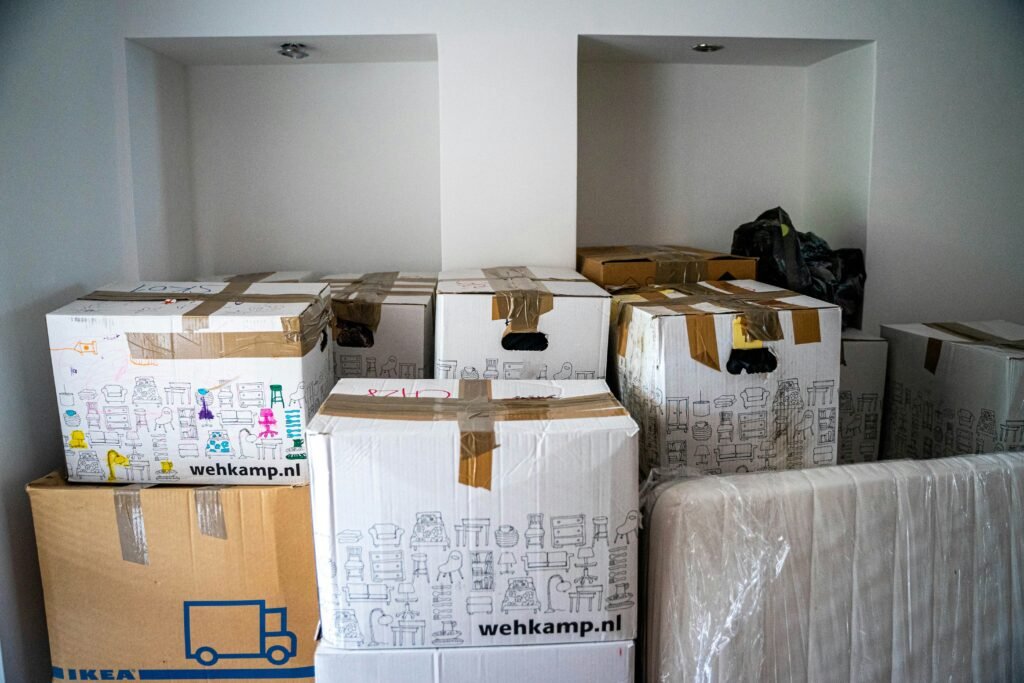

A move involving two pickup locations requires more coordination than a standard move from one home to another. The belongings may come from two apartments, a house and a storage unit, separate homes in different cities or even addresses in different states.
Although some moving companies can collect belongings from multiple locations, this arrangement should never be assumed. Both addresses, inventories and access conditions must be disclosed before the estimate is prepared. Otherwise, the additional stop could change the schedule, required truck space, labor time and final price.
A successful multi-location move starts with treating each pickup address as a separate part of one larger plan.
When Might a Move Require Two Pickup Locations?
Multiple pickups are common in situations such as:
- A couple combining separate households
- Roommates moving from different apartments
- Belongings divided between a home and storage unit
- Furniture being collected from a family member
- Someone moving personal and business belongings
- An adult child and parent relocating together
- A household collecting previously stored furniture
- Two people moving from different states to one destination
- Recently purchased secondhand furniture being added to a move
- Belongings divided after a temporary housing arrangement
The locations do not necessarily have to contain equal amounts. One address may contain an entire apartment while the other holds only a bedroom set or several storage boxes.
The difference in volume matters because it affects whether one truck and crew can complete both pickups efficiently.
Can Movers Pick Up From Two Different Addresses?
Some moving companies offer multi-stop or multiple-pickup moves, but policies vary. A local mover may be able to visit two nearby addresses during the same booking. A long-distance mover may have stricter routing, pricing and documentation requirements.
Ask directly:
- Can you collect from two pickup locations?
- Must both locations be in the same city or state?
- Will the same truck and crew visit both?
- Is each stop included in the written estimate?
- How will additional travel time be charged?
- Are there separate minimum charges?
- Will both inventories appear on one shipment record?
- Does either location require a separate booking?
- How will changes at one address affect the other pickup?
- What happens if the first location takes longer than expected?
Get the answers in writing. A verbal statement that the crew can “stop on the way” may not explain the additional costs or documentation.
Decide Whether One Combined Move Makes Sense
Using one mover for both locations may simplify communication and delivery, but it is not always the best choice.
A combined move may work well when:
- Both locations are reasonably close together.
- All belongings are going to the same destination.
- The combined inventory fits one truck.
- Pickup dates can be coordinated.
- One company can legally and practically serve every address.
- Building access is available at compatible times.
- The extra stop does not create an unreasonable charge.
Separate moves may be more practical when:
- The pickup locations are in different states.
- The addresses are far apart or in opposite directions.
- One shipment needs storage while the other does not.
- The belongings require different delivery dates.
- One location contains only a few shippable boxes.
- The combined route would substantially increase the price.
- Separate owners need independent contracts or payment records.
- One location cannot confirm its pickup date.
Compare the complete cost and schedule of both approaches. One truck is not automatically less expensive if it requires a major detour, extended labor or an overnight schedule.
Create a Separate Inventory for Each Address
Do not combine everything into one informal list. Prepare an inventory for Pickup A and another for Pickup B.
Record:
- Furniture
- Boxes
- Appliances
- Electronics
- Artwork
- Mirrors
- Exercise equipment
- Outdoor belongings
- Storage-unit contents
- Oversized or unusually heavy items
- Items requiring disassembly
- Fragile belongings
- High-value possessions
- Items that will not be moved
Photograph major items and note their current condition. Include enough detail for the mover to estimate space and labor accurately.
A simple planning table can help:
| Item | Pickup location | Quantity | Destination room | Special handling |
|---|---|---|---|---|
| Dining chairs | Pickup A | 4 | Dining room | None |
| Book boxes | Pickup A | 12 | Office | Heavy |
| Queen bed | Pickup B | 1 | Main bedroom | Disassembly required |
| Framed artwork | Pickup B | 5 | Living room | Fragile |
| Storage bins | Pickup B | 8 | Garage | Keep together |
Update the inventories whenever an item is added, removed, sold, donated or placed into storage.
For interstate moves, the Federal Motor Carrier Safety Administration explains that the mover must prepare an inventory of the shipment before or during loading. The customer and mover should review the inventory and note existing damage. Read the FMCSA’s tips for a successful move before pickup day.
Remove Duplicate Belongings Before Requesting the Final Estimate
Combining two households often produces duplicates such as:
- Sofas
- Dining tables
- Beds
- Televisions
- Desks
- Kitchen appliances
- Cookware
- Dishes
- Cleaning equipment
- Tools
- Linens
- Storage furniture
Decide what will enter the new home before paying to transport everything. Moving duplicate furniture and disposing of it afterward adds labor, truck space and possible disposal expenses.
Compare duplicates based on:
- Condition
- Dimensions
- Quality
- Remaining useful life
- Fit within the new home
- Sentimental value
- Cost of replacement
- Storage requirements
- Compatibility with the shared space
Measure both the furniture and the destination access points. Our furniture and access measurement checklist explains what to measure before deciding which large pieces to keep.
Ask for an Estimate Covering Both Locations
The estimate should reflect the complete job, not only the larger pickup.
Provide the mover with:
- Both complete addresses
- Inventory for each location
- Distance between the addresses
- Destination address
- Requested pickup sequence
- Building restrictions
- Parking conditions
- Stairs and elevators
- Walking distance between each entrance and truck
- Furniture requiring assembly or disassembly
- Storage-unit gate or access hours
- Requested delivery arrangements
- Any item requiring special equipment
Confirm whether the price includes:
- Travel between pickups
- Additional mileage
- Labor at both locations
- Separate truck or crew charges
- Fuel or travel fees
- Stair charges
- Elevator delays
- Long-carry charges
- Parking permits
- Packing materials
- Furniture disassembly
- Storage
- Waiting time
- Additional valuation charges
Compare the written documents with our guide to understanding moving estimates.
Understand the Difference Between a Mover and Broker
This distinction becomes especially important for a complicated interstate move.
A mover physically transports household goods. A broker arranges transportation with another company but does not move the belongings itself. The FMCSA explains that a moving broker is not a moving company.
Ask:
- Are you the carrier that will perform both pickups?
- Will another company handle either location?
- Which company will issue the bill of lading?
- Who will prepare the inventory?
- Will the same carrier transport everything?
- Which registration numbers apply?
- Who should be contacted if one pickup changes?
A complicated route can become harder to manage when the booking company and transporting company are not the same business.
Choose the Pickup Order Carefully
The first address should not automatically be the home belonging to the person who booked the move.
Consider:
- Truck route
- Moving-company location
- Distance to the destination
- Building access hours
- Elevator reservations
- Traffic patterns
- Parking restrictions
- Amount of work at each address
- Whether one person must leave earlier
- Whether fragile items should be loaded later
- Whether bulky furniture affects truck organization
For a local move, starting with the location farthest from the destination may create a more efficient route. However, access restrictions may require the crew to begin elsewhere.
A storage facility with limited access hours may need to be visited before an apartment with flexible access. Similarly, an apartment with a reserved morning elevator may have to come first even when the route is less direct.
Let the mover propose a loading sequence after receiving all the information. Confirm the final order in writing.
Avoid Scheduling the Two Pickups Too Closely
A delay at Pickup A can affect everything scheduled at Pickup B.
Common causes include:
- The first household is not fully packed.
- Furniture requires unexpected disassembly.
- The elevator is unavailable.
- The truck cannot park near the entrance.
- More belongings appear than were included in the estimate.
- Narrow stairs slow the crew.
- Building management restricts loading.
- Weather affects the work.
- Documents require clarification.
- The first inventory takes longer than expected.
Build time between appointments, especially when the second building has a strict elevator reservation. Ask how the mover handles a missed access window caused by delays at the first address.
Confirm Access at Both Properties
Each pickup requires its own access plan.
For every location, verify:
- Allowed moving hours
- Elevator reservation
- Loading-dock availability
- Parking permission
- Gate codes
- Building keys
- Certificate-of-insurance requirements
- Stair and hallway dimensions
- Truck-height restrictions
- Distance from parking to the unit
- Storage-facility access rules
- Whether management must be present
- Whether temporary curb permission is required
Send instructions to the mover before moving day. Do not wait for the driver to arrive before explaining that the storage facility closes early or the apartment elevator requires a reservation.
Use a Two-Part Labeling System
Ordinary room labels may not provide enough information when belongings come from different homes.
Label every box with:
- Its pickup location or owner
- Its destination room
For example:
A–Kitchen–01A–Office–02B–Kitchen–01B–Main Bedroom–03
The first letter identifies the source, the room identifies where the box belongs and the number connects it to the inventory.
A color system can make identification faster:
| Label color | Meaning |
|---|---|
| Blue | Pickup A |
| Green | Pickup B |
| Red | Open first |
| Yellow | Fragile |
| Orange | Storage rather than new home |
Write the label on multiple sides so it remains visible when boxes are stacked. Avoid writing only a person’s name because movers need to know where the box belongs at the destination.
Label Furniture and Loose Items Too
Boxes are not the only belongings that can become confused.
Attach removable labels to:
- Bed frames
- Headboards
- Desks
- Chairs
- Shelving units
- Lamps
- Television stands
- Rugs
- Furniture hardware
- Exercise equipment
- Suitcases
- Plastic bins
Place screws and small hardware in sealed bags. Label each bag with the furniture piece and pickup location. Keep the bags together in a clearly marked hardware container rather than leaving them loose.
Decide Who Will Be Present at Each Pickup
Someone authorized to make decisions should be present at both locations whenever possible.
That person may need to:
- Review the inventory
- Confirm which belongings should be loaded
- Point out existing damage
- Answer packing questions
- Approve written changes
- Confirm that nothing was left behind
- Provide keys and access codes
- Communicate with building management
- Sign documents
For interstate shipments, the FMCSA recommends accompanying the mover during inventory, remaining available to answer questions and checking the residence before the truck leaves. Review its interstate moving checklist.
If one person cannot be present, ask the mover what written authorization is required for a representative. Do not assume a friend, neighbor or building employee can sign important documents on the customer’s behalf.
Keep Financial Responsibilities Clear
Two people combining belongings should decide how costs will be divided before signing the agreement.
Possible approaches include:
- Equal division
- Division based on shipment volume
- Each person pays the labor at their pickup
- One person pays transportation while the other pays packing
- Shared base price with individual additional-service charges
- Separate reimbursement after one person pays the mover
Discuss responsibility for:
- Deposit
- Remaining balance
- Packing materials
- Additional stop charges
- Storage
- Parking permits
- Tips
- Damage deductibles
- Last-minute additions
- Disposal or donation costs
- Temporary accommodation
The mover may require one customer and one payment method even when two people are sharing the expense. Handle the private division separately unless the written agreement states otherwise.
Prepare Separate Essentials Bags
Each person should keep essential belongings outside the moving shipment.
Include:
- Identification
- Moving documents
- Medication
- Wallet and payment cards
- Phone and charger
- Keys
- Work equipment
- Toiletries
- Clothing
- Basic bedding
- Pet supplies
- Important records
- Items needed during travel
Do not place one person’s essential belongings at the other pickup location unless both people will have reliable access.
Our moving-day essentials guide provides a more detailed checklist.
Keep Important Documents Together
Maintain one shared folder containing:
- Written estimate
- Order for service
- Bill of lading
- Both inventories
- Photographs
- Access confirmations
- Parking permits
- Storage documents
- Payment receipts
- Moving-company contact information
- Insurance or valuation selections
- Written schedule
- Pickup addresses
- Delivery information
Keep digital copies accessible to both responsible parties. One person should serve as the primary contact so the mover does not receive conflicting directions.
The FMCSA describes the bill of lading as the contract between the customer and mover and a receipt for the belongings. Keep it until delivery is complete, charges have been paid and any claims have been resolved.
Complete a Final Walkthrough at Both Locations
Before the crew leaves each pickup, inspect:
- Closets
- Cabinets
- Drawers
- Attic
- Basement
- Garage
- Balcony
- Patio
- Storage cage
- Laundry area
- Behind doors
- Under stairs
- Building storage rooms
- Storage-unit corners
Compare the loaded belongings against that location’s inventory. Photograph the empty space when appropriate.
Do not wait until the truck reaches the second location to report something left at the first. Returning could add substantial time or may not be possible.
Review the Combined Inventory Before Delivery
After both pickups are complete, confirm that the records account for belongings from both addresses.
Check:
- Inventory numbers
- Number of boxes from each location
- Furniture pieces
- High-value items
- Existing-condition notes
- Items placed into storage
- Items excluded from the shipment
- Any written estimate changes
If documents were prepared separately at the two locations, ask how they connect to the final shipment and bill of lading.
Direct the Unloading Process
Place a simple floor plan near the entrance of the destination. Match destination rooms with the labels used at both pickup locations.
For example:
Main BedroomBedroom 2OfficeKitchenLiving RoomGarageStorageOpen First
Assign one person to communicate with the crew. Multiple people giving conflicting directions can slow unloading and place belongings in the wrong rooms.
As items enter the home:
- Check inventory numbers.
- Watch for visible damage.
- Direct boxes to their labeled rooms.
- Keep storage-bound items separate.
- Confirm furniture placement before assembly.
- Avoid blocking hallways and entrances.
- Record missing items promptly.
If belongings are lost or damaged, follow our guide explaining what to do when movers lose or damage your belongings.
Multi-Location Moving Checklist
Use this checklist when organizing two pickup locations:
Before requesting estimates
- Create separate inventories.
- Remove duplicate belongings.
- Measure large furniture.
- Confirm the destination layout.
- Collect access information for both addresses.
- Decide whether one combined move is practical.
Before booking
- Confirm that the mover accepts multiple pickups.
- Disclose every address.
- Request a written estimate covering both locations.
- Ask about additional-stop charges.
- Confirm who will transport the shipment.
- Choose a tentative pickup order.
- Review valuation options.
Before moving day
- Reserve elevators and loading areas.
- Arrange parking.
- Confirm gate codes and building access.
- Label boxes by source and destination room.
- Designate a responsible person at each pickup.
- Prepare individual essentials bags.
- Share the document folder.
- Confirm the schedule in writing.
On moving day
- Review the inventory at Pickup A.
- Complete the first final walkthrough.
- Notify the contact at Pickup B when the crew leaves.
- Review the inventory at Pickup B.
- Complete the second final walkthrough.
- Confirm the combined shipment documentation.
- Keep documents and valuables outside the truck.
At delivery
- Post the destination floor plan.
- Assign one person to direct unloading.
- Check items against the inventory.
- Record visible damage.
- Keep storage items separate.
- Confirm that both households’ belongings arrived.
Coordinating two pickup locations for one move is manageable when every address, belonging and responsibility is documented in advance. The most common problems occur when the second stop is treated as an informal addition instead of a distinct part of the move. Separate inventories, clear labels and written arrangements allow both locations to function as one organized shipment.
Moving Note: Moving-company policies, pricing methods and legal requirements vary by location and type of move. Federal household-goods regulations generally apply to interstate moves, while local and intrastate moves may follow state or municipal rules. Confirm all services, addresses, charges and responsibilities in writing before moving day.