
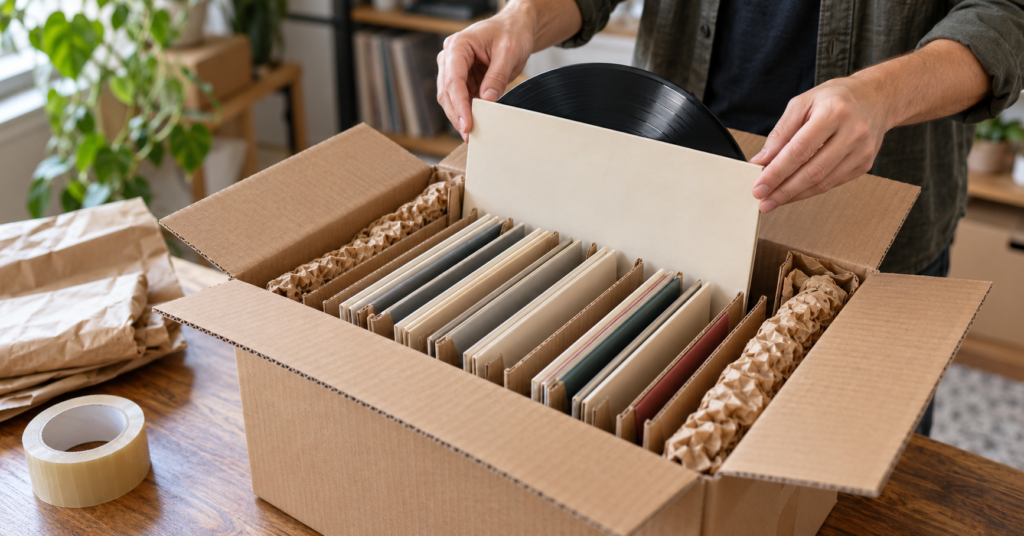
Packing vinyl records starts with two practical questions: can the box support its contents, and will the records avoid excessive heat throughout the move? A neatly sealed carton can still be overloaded, leave albums leaning against one another or spend too long inside a hot vehicle.
Plan the collection separately from ordinary household boxes. The aim is to support the discs, protect their sleeves and keep their journey between suitable indoor spaces as controlled as practical.
Start With a Collection Inventory
Count your records by format and note any oversized box sets, unusual packaging or particularly valuable pressings. Keep smaller singles separate from full-size LPs when planning the packing layout.
Photograph valuable records and their covers before packing. Record identifying details such as artist, album title and catalog number, then assign a number to each carton.
Keep the inventory on your phone or another device that will travel with you. It should identify which records are in each box without requiring you to print a detailed value list on the outside.
If the collection includes shellac 78s, lacquer discs or unfamiliar vintage formats, obtain format-specific guidance before treating them like ordinary vinyl LPs.
Check a Trial Box Before Packing Everything
Prepare one representative carton before buying supplies for the entire collection. Include the sleeves, jackets, dividers and cushioning you intend to use, then weigh the finished package.
That measurement is more useful than a fixed rule about how many albums fit in a box. Gatefold covers, multi-disc sets and packaging differences can change both weight and space requirements.
Compare the packed weight with the packaging specifications and your mover’s handling requirements. Inspect the carton for softened cardboard, damaged seams and weak handholds. Additional tape does not make a worn-out box suitable for a heavy collection.
Smaller cartons can help keep groups of records manageable. A larger box needs an arrangement that limits weight while supporting the contents with suitable padding.
If the trial carton is too heavy, reduce the contents and revise the layout before repeating it. Our guide to estimating how many moving boxes you need can help you incorporate those additional cartons into the wider move.
Check Sleeves and Protect Original Packaging
Handle records with clean, dry hands, touching the edges and label area rather than the playing surface. This helps limit the transfer of oils and dirt to the grooves.
Inspect inner sleeves for tears, grit and deterioration before placing records back inside. Keep original artwork and inserts associated with the correct album, even if a damaged inner sleeve needs replacement.
For replacement sleeves, check the material rather than relying only on an “archival” label. High-density polyethylene is a recommended option for inner sleeves. Paper enclosures should be acid-free and lignin-free. Choose a size that supports the record without forcing it into place.
Keep tape on the shipping carton, away from album covers and collectible inserts. Do not force a thick gatefold or box set into a sleeve that bends its corners.
Pack Records Upright With Support
Stand records vertically on their edges. Arrange them so they remain upright without leaning across a large empty space or being compressed tightly together.
Cushion all six inside surfaces of the box and add rigid, full-size upright supports every few inches. Secure the carton bottom and clearly mark the correct upright orientation so handlers can maintain the intended position.
Use this packing sequence:
- Assemble and secure the carton according to its instructions.
- Add suitable cushioning to the bottom and sides.
- Place sleeved records upright, with rigid supports between groups.
- Fill remaining gaps without pressing unevenly against the jackets.
- Add top protection and close the lid without forcing it.
Check the finished arrangement before sealing. The supports should stay in position, and the contents should not have room to fall sideways. If the lid bulges, revise the packing instead of tightening the tape over it.
Plan for Heat Before Loading Begins
Keep the collection away from radiators, direct sunlight and other heat sources. Records benefit from cool, stable conditions, and a protective container does not shield them from temperature extremes.
Translate that guidance into a transport plan. Ask where the records will wait before pickup, whether the shipment will remain in a vehicle overnight and where cartons will be placed immediately after delivery.
If you carry the collection yourself, account for meal stops, hotel stays and any period when the vehicle will be parked. An air-conditioned journey does not address the time belongings spend in an unattended vehicle.
Keep cartons indoors until the loading team is ready where practical. At the destination, arrange prompt transfer to an appropriate indoor room. Packaging provides physical protection; it should not be treated as a substitute for suitable temperatures.
Give Movers Clear Handling Instructions
Tell the estimator about the collection before moving day. Provide the number of cartons, their approximate weights and any special handling arrangements you want included.
Mark each box with its inventory number, destination room and upright orientation. Explain that other heavy belongings should not be placed on top in a way that crushes the cartons.
Ask how the crew will secure the boxes against shifting. A “fragile” label communicates a need for care, but it does not establish the loading position or protection around the collection.
For valuable records, discuss the mover’s written liability terms and any documentation requirements before pickup. Keep condition photographs and the inventory with your own moving records.
Choose Storage Conditions Before You Need Them
If the collection will spend time in storage, investigate the environment before the cartons arrive. Ask what temperature and humidity conditions are maintained and whether those conditions apply to the actual space holding your belongings.
A general preservation guideline for audio recordings is a stable temperature of approximately 13–21°C (55–70°F), with relative humidity of 30–55%. Avoid unregulated spaces such as attics and garages, and keep the collection off the floor.
These are preservation guidelines, not guarantees that every recording format has identical needs.
Plan the shelving as carefully as the room. Check its load capacity and distribute cartons accordingly. Keep the inventory accessible so you can retrieve a particular box without dismantling a heavy stack.
Before renting a unit, review our guide to what should and should not go into storage for broader questions about permitted contents, access and storage agreements.
Inspect the Collection Before Playing It
At delivery, check cartons for crushing, moisture and broken seals. Photograph visible damage before discarding packaging, and compare the box numbers with your inventory.
Allow records brought from cool storage to reach room temperature before playback.
Unpack onto a clean surface and look for newly bent covers, split sleeves or visibly distorted discs. Keep any affected items and their packaging together while documenting the problem.
Avoid experimenting with heat or household flattening methods on a warped record. Valuable or unusual recordings deserve advice appropriate to their material and condition.
Note: This article provides general packing and preservation guidance for household vinyl collections. Packaging capacity, moving-company requirements and storage conditions vary. Shellac, lacquer and other historic recording formats may require different handling and specialist advice.