A box can arrive in the correct room and still be in the wrong place. It might prevent a door from opening fully, occupy the space needed to turn a wheelchair, or leave everyday belongings at the bottom of a heavy stack. Once the movers leave, correcting those placements may require help that is no longer available.
Accessible unpacking begins before delivery. It involves deciding where cartons can safely wait, how their contents will be reached, and which parts of the home must remain usable throughout the work.
The best arrangement depends on the person using the space. Someone who unpacks while seated may need a different setup from someone who uses a walker, has limited grip, or needs frequent rest breaks. Build the placement plan around those preferences rather than assuming that one layout suits everyone.
Identify the Routes That Must Stay Open
Before choosing box locations, walk or move through the home using the mobility equipment normally used there.
Identify the routes between the entrance, bathroom, bedroom, kitchen, and a suitable resting place. Include access to switches, sockets needed for essential equipment, and door handles.
Check doors in their open positions. A stack that appears clear of a doorway can still prevent the door from opening far enough for someone to pass comfortably.
Keep these routes available throughout unloading. Do not treat a bathroom doorway or the space beside a bed as temporary storage simply because the boxes will eventually be unpacked.
Where measurements or accessibility adaptations need professional assessment, arrange that separately. A moving-day placement plan cannot resolve an unsuitable doorway or missing access feature.
Ask the Person Using the Space to Choose Drop Zones
Decide where packed cartons may be placed in each room. Mark those areas on a simple floor plan or identify them during a walkthrough with the crew leader.
The person who will use the room should guide these choices wherever possible. A location that looks convenient to a helper may interfere with a transfer, a familiar route, or access to furniture.
Explain any areas that must remain empty. For example, space alongside a chair may be needed to position a walker rather than hold a stack of books.
For broader preparation, Allied’s guide to planning an accessible move discusses coordinating accessibility needs before moving day. Use that wider plan to inform the specific unloading instructions you give the crew.
Add Placement Instructions to Room Labels
“Bedroom” tells the crew which room to enter, but it does not explain where the box should go.
Add a short placement instruction when the location matters. Examples include:
- Kitchen — daily items — designated unpacking table.
- Bedroom — clothing — marked wall area.
- Office — stationery — open first.
- Living room — books — leave packed in agreed storage area.
Keep wording large, legible, and consistent. Use strong contrast and place labels on more than one side so they remain visible after unloading.
Ask which format is easiest for the person receiving the boxes. Written labels, a numbered list, or another agreed method may work better than color alone.
Avoid displaying sensitive medical details on cartons. A neutral priority label can communicate handling needs without identifying private information.
Separate Arrival Supplies From Ordinary Unpacking
Some belongings should be available without opening a stack of household cartons.
Prepare the items needed for the first meals, personal care, communication, and rest. Keep essential medication and equipment with the person who needs them, with suitable transport arrangements.
Our guide to packing a moving-day essentials box provides a starting point for selecting arrival supplies. Adapt the contents and container to the household’s access needs.
Decide where those supplies will be placed on arrival. Keeping them together is only useful if their container can be reached and opened.
Avoid allowing an essentials bag to disappear behind ordinary luggage while the main shipment is being unloaded.
Choose a Stable Surface for Opening Boxes
Unpacking directly from the floor can involve repeated bending or reaching. A suitable work surface may make smaller tasks easier, provided it is stable and appropriate for the load.
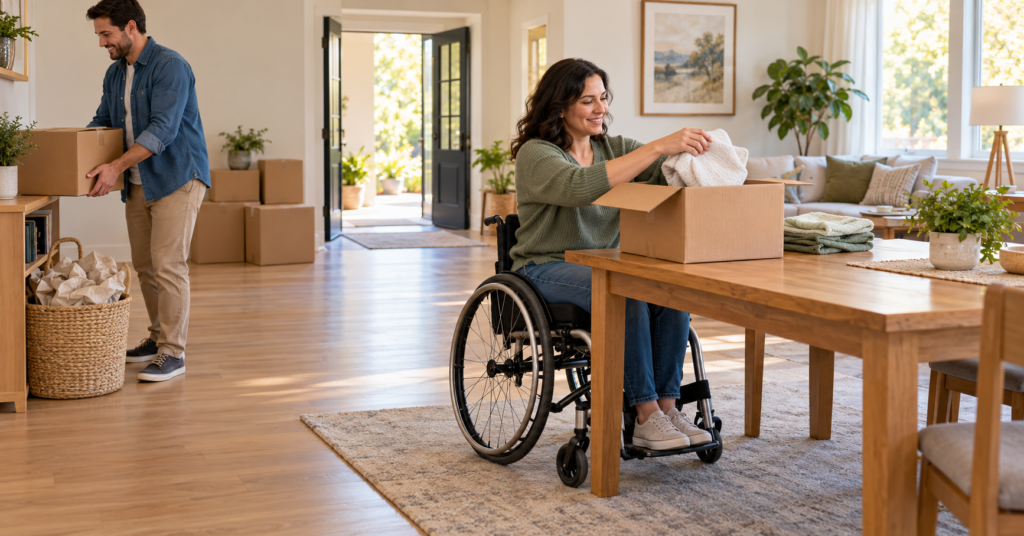
Choose the surface with the person who will use it. Consider its height, approach space, available reach, and whether a chair or mobility device can be positioned comfortably.
Ask a helper to place manageable cartons there individually rather than stacking several boxes on the surface.
Do not use a lightweight folding table for a load it cannot support. Keep the work area clear enough that an open carton, its contents, and wrapping materials do not crowd the user.
Heavy or awkward items should be handled by someone able to move them safely, rather than made accessible through a difficult lift.
Keep Priority Boxes Out of Heavy Stacks
Stacking saves floor space, but it can make the lower cartons inaccessible.
Tell the crew which boxes will be opened soon and ask for those to remain individually reachable in the agreed locations. Less urgent cartons can be grouped elsewhere, subject to safe stacking and available space.
Do not choose a universal stack height. The useful limit depends on the carton strength, contents, stability, and who needs to access it.
Keep heavy boxes at the bottom where stacking is appropriate, but recognize that this does not make them suitable for independent unpacking. Arrange help for opening or relocating them when necessary.
Avoid balancing cartons on furniture, mobility equipment, or surfaces that are needed for support.
Unpack Toward Final Storage Locations
Before opening a carton, decide where its contents will go. Otherwise, belongings can migrate from boxes onto every available surface without becoming usable.
Start with a small number of daily items and choose storage positions the person can comfortably reach. Confirm those positions rather than automatically recreating the previous home’s cupboard arrangement.
For example, everyday dishes may need a different shelf from occasional serving pieces. Frequently worn clothing may belong in an accessible drawer while seasonal items can wait.
Do not fill all reachable storage with rarely used belongings simply because those cartons arrived first.
Leave permanent changes until the person has had an opportunity to try the arrangement.
Remove Packaging as the Work Progresses
Empty cartons, loose paper, and protective wrap can gradually take over a route that was clear at the start.
Assign a collection point outside the active unpacking area. Have someone remove waste regularly rather than allowing it to spread around chairs, wheels, or walking aids.
Keep scissors and other opening tools in a designated place. Select an opening method the user can manage comfortably, and ask for help when tape, staples, or tight wrapping make that difficult.
Check packing material before disposal so small components are not thrown away. Set aside hardware, cables, and accessories in labelled containers.
Do not leave flattened cartons leaning where they could slide into a passage.
Agree on the Help Needed Before the Crew Leaves
Ordinary unloading does not necessarily include opening boxes, arranging cupboards, or removing packing materials.
Confirm the booked service in advance. If additional help is needed, describe the tasks clearly and ask whether they can be provided.
Useful tasks might include placing a specific carton on the unpacking surface, assembling an agreed piece of furniture, or moving a box that blocks access. Avoid relying on an informal expectation that the crew will have extra time.
If family members or another helper will continue the work, give them the same placement plan. Keep one person responsible for coordinating changes so instructions remain consistent.
Finish With a Practical Access Check
Before helpers leave, test the home as it currently stands.
Move between the essential rooms, open the doors, approach the bed and seating, and reach the arrival supplies. Check that charging equipment can be used without cables crossing a route.
Ask whether any placement needs changing now. Moving a carton a short distance while assistance is present can prevent a much harder task later.
Leave unfinished boxes in the agreed areas and identify the next manageable unpacking task. A usable home does not require every carton to be empty on the first day.
Moving Note: Accessible unpacking arrangements should reflect the individual’s mobility, reach, communication preferences, and support needs. Confirm box placement and unpacking services with your helpers, and seek appropriate professional advice where equipment setup or home adaptations require specialist assessment.