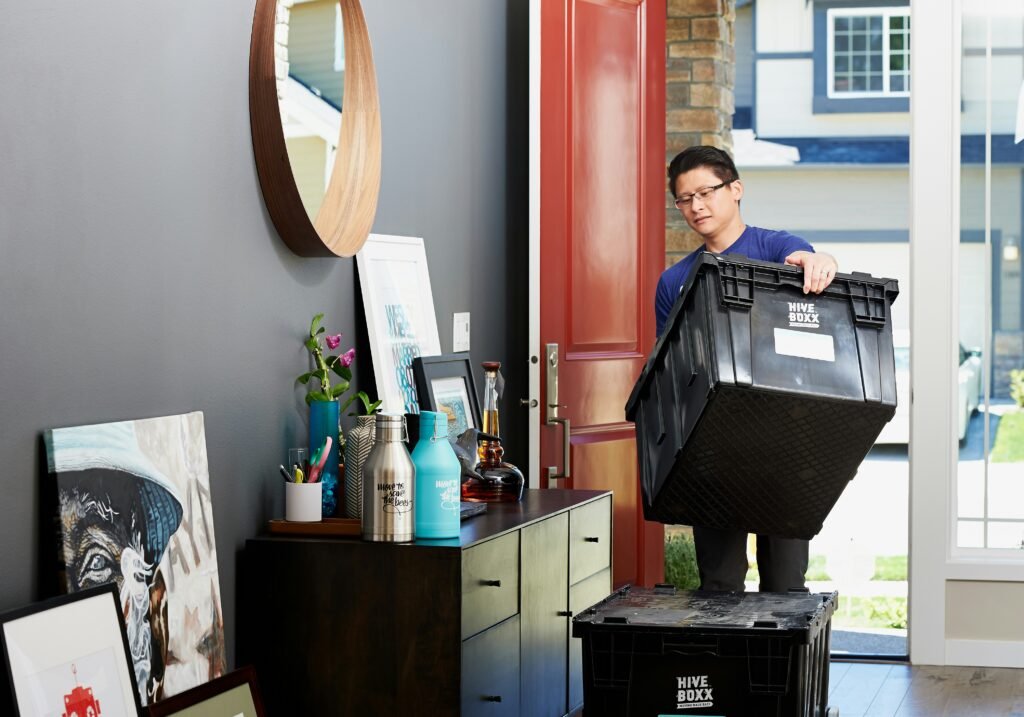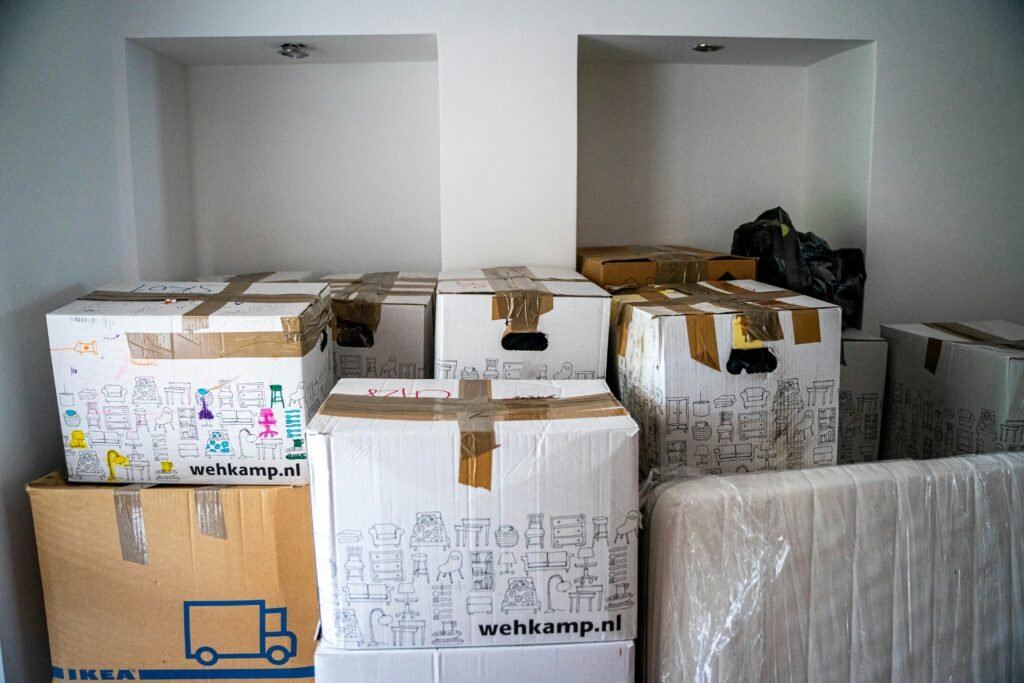
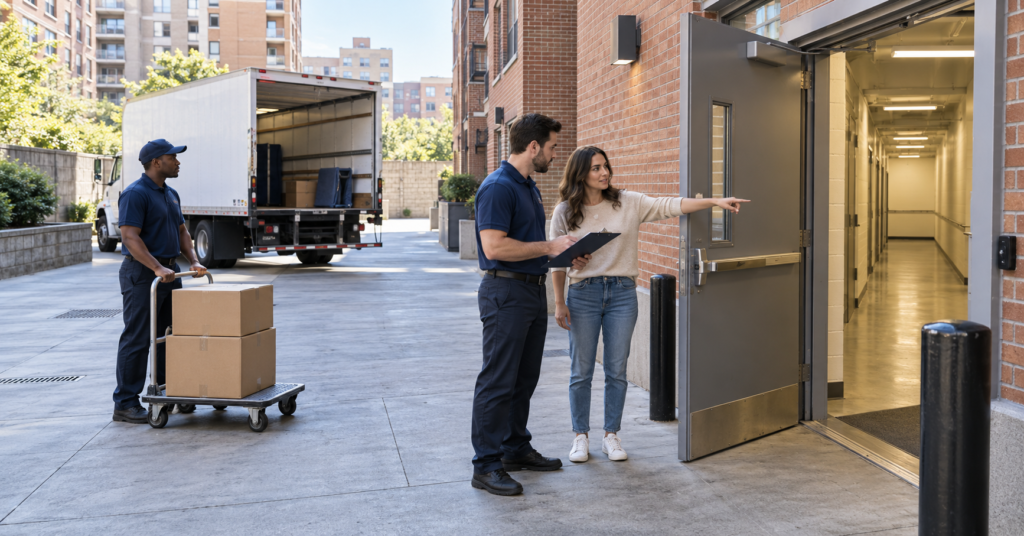
The street address on your lease may lead to the lobby, while the entrance approved for moving furniture sits around the corner or behind the building. If the crew arrives at the wrong door, it may need to reposition the truck, contact management, or carry belongings farther than expected.
Newark apartment moves benefit from confirming the loading entrance before the appointment. The useful information includes where the vehicle should approach, which door the crew may use, and how that entrance connects to your apartment.
A clear arrival plan helps the mover assess the job and gives building staff a shared understanding of what will happen. Start with the property’s actual moving procedure rather than assuming the front entrance is available.
Identify the Entrance Approved for Your Move
Ask the property manager or superintendent which entrance movers must use for your particular apartment.
Some buildings distinguish between the entrance used by residents, the door used for deliveries, and the route permitted for furniture. Establish which one applies to your booking.
Request written instructions when available. These should identify the door, permitted moving hours, and any arrangements required before access is granted.
If you are moving between two apartments, obtain instructions from both properties. Permission to use the front door at the departure building does not establish how delivery will work at the destination.
Keep the building’s instructions with your moving estimate so access details remain easy to find.
Provide Directions to the Door, Not Just the Building
Give the mover the apartment’s official address for its records, then separately describe the approach to the loading entrance.
Include the street name, direction of approach where relevant, and a recognizable feature beside the door. A photograph can be more useful than a description such as “the entrance at the back.”
For example, explain whether the service door faces a side street, sits inside a courtyard, or is reached through a driveway.
Ask the mover to review the approach for the vehicle it plans to send. Do not assume a navigation app will select a suitable route simply because it recognizes the building.
Avoid describing a neighboring driveway or private passage as available unless its use has been authorized.
Separate Door Access From Truck Parking
An approved loading door does not automatically provide an approved place for the truck.
Ask management where the vehicle may stop and whether that space needs a reservation. Confirm whether the area is private property, a shared loading bay, or a location on the public street.
For street loading, verify the applicable requirements with the responsible authority. Building staff’s permission to use a door does not replace parking restrictions outside it.
Tell the mover if the truck cannot stand immediately beside the entrance. Include the likely walking distance and any change of level between the vehicle and doorway.
Our guide to what happens when a moving truck cannot park near the home explains the additional planning questions that arise when the loading point is farther away.
Confirm Who Will Unlock the Entrance
Find out whether the door is opened by your key, a separate access credential, security staff, or the superintendent.
A resident fob that works at the lobby may not operate a service entrance. Test the correct access method before moving day when management permits it.
If staff assistance is required, confirm their working hours and how they should be contacted when the crew arrives. Ask who can help if the usual contact is unavailable.
Share sensitive access information only with the people who need it. Where possible, use an approved temporary access arrangement rather than distributing a permanent building code.
Do not assume the crew can follow another resident inside or leave a controlled door open throughout the move.
Check the Usable Door Opening
Measure the clear opening available when the loading door is positioned as it will be during the move.
Note the usable width and height, including anything that reduces the opening. Handles, fixed panels, overhead closers, and protective padding can affect the available space.
If there are double doors, ask whether both leaves may be opened and who is authorized to release any locking hardware. Do not assume a fixed-looking panel can be removed.
Photograph thresholds and steps directly inside or outside the entrance. A raised edge may affect carts and handling even when the doorway is wide enough.
For large furniture, use our furniture access measurement checklist to collect the dimensions the mover needs. Ask the crew to assess uncertain pieces rather than treating one doorway measurement as proof they will fit.
Follow the Route Beyond the First Door
The loading entrance is only the beginning of the carrying route.
Check what follows it: a vestibule, another locked door, a narrow corridor, a ramp, or a turn toward the elevator. Measure tight corners and note any doors that open into the available maneuvering space.
A long sofa may pass through the exterior opening but have nowhere to turn once inside. Show the mover the approach and exit around each difficult section.
Confirm that the route actually reaches the elevator or stairs approved for your move. A convenient-looking corridor may lead through an area where moving activity is restricted.
Send photographs in sequence so the crew can understand how the separate spaces connect.
Match Loading Hours to the Elevator Booking
Ask whether the loading entrance, loading bay, and moving elevator operate under the same reservation.
They may need separate arrangements. A confirmed elevator slot is less useful if the loading area is unavailable for part of that period.
Clarify what must be completed before the booking ends. Management may expect the crew, vehicle, and protective materials to be cleared from the shared area, not merely the last carton removed from the elevator.
Give the mover the full access window and ask whether the proposed inventory can reasonably be handled within it.
If the crew’s arrival is estimated rather than fixed, discuss how that uncertainty fits the building’s reservation before finalizing the appointment.
Obtain the Building’s Protection Requirements
Request instructions covering floor coverings, doorway protection, elevator padding, and any required documentation.
Ask who supplies and installs each item. Building staff may prepare the elevator, while the mover may be expected to protect other parts of the route.
Send these requirements to the company before the appointment. Confirm that any necessary documents have been accepted rather than assuming that submission completes approval.
Do not attach tape or protective materials to building surfaces without permission. The method used to protect a doorway should not create damage of its own.
Also establish whether management requires a check of shared areas before and after the move.
Keep Staging Within the Permitted Area
Ask where cartons and furniture may wait while the crew works.
A service corridor can look like convenient temporary storage, but it may need to remain clear for residents, deliveries, or emergency access. Use only the staging locations management allows.
Have your apartment ready so the crew does not need to leave belongings outside while you finish packing. Keep personal luggage and items staying behind clearly separated.
At the destination, decide which rooms should receive the main furniture and cartons. Clear instructions reduce the need to pause in shared areas while placement decisions are made.
Avoid blocking another apartment’s entrance, access controls, or utility equipment.
Prepare a Specific Alternative if Access Changes
Ask management what happens if the approved entrance becomes unavailable because of maintenance, a damaged door, or another unexpected obstruction.
An alternative route needs permission and a suitability check. It should not be improvised by directing the crew through a resident-only area.
Tell the mover about any approved backup, including different carrying distances, stairs, or doorway limitations. Ask how a changed route could affect time and quoted charges.
If no workable alternative exists, clarify whom to contact about rescheduling or other arrangements.
Check for meaningful changes shortly before moving day, especially if your original walkthrough took place several weeks earlier.
Send One Final Arrival Brief
Before the appointment, give the crew a concise arrival brief containing:
- The official address and apartment number.
- The approved loading-door location.
- The permitted vehicle position.
- The access window and security procedure.
- The building contact and your receiving contact.
- Any agreed restrictions or backup instructions.
When the crew arrives, walk through the route with its leader before handling begins. Point out conditions that differ from the information previously supplied.
After completion, check that shared spaces are clear, equipment has been removed, and doors are secured according to management’s instructions. Newark apartment moves are easier to coordinate when everyone is working from the same entrance and access plan.
Moving Note: Loading entrances, parking arrangements, moving hours, documentation, and protection requirements vary by building. Confirm the rules for both properties, verify any public-street restrictions separately, and notify your mover about access changes before arrival.