Some belongings can be turned, stacked or positioned on their sides without creating a problem. Others contain fluids, suspended components, delicate surfaces or internal mechanisms that may be damaged when transported in the wrong orientation.
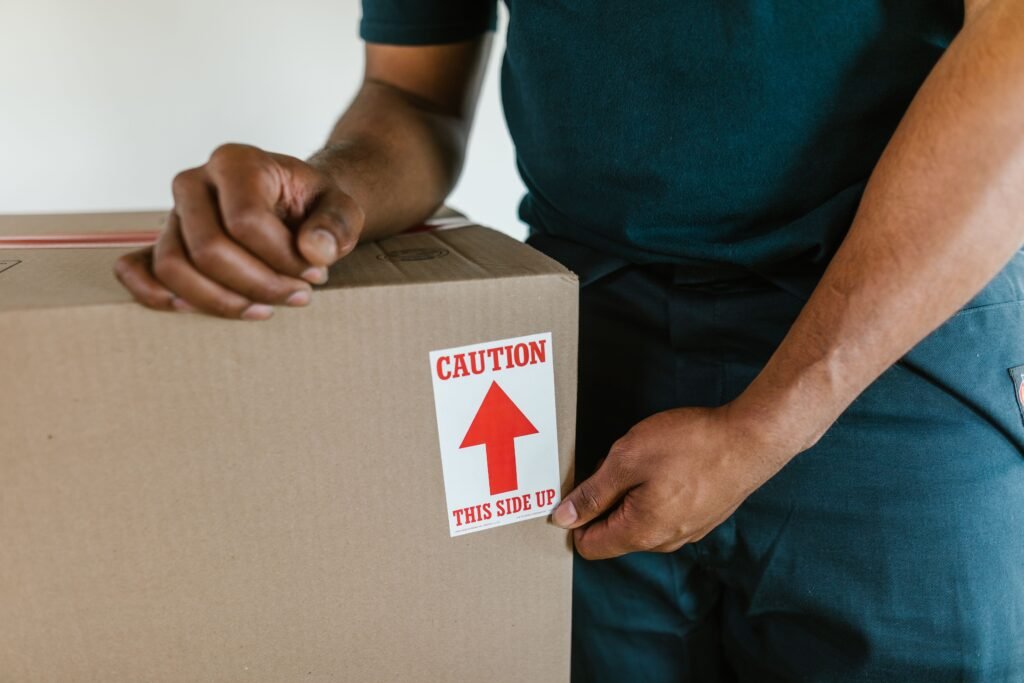
Refrigerators, washing machines, televisions, printers, mirrors and grandfather clocks are among the household items that commonly need upright handling. However, the correct method depends on the specific item and model. A “This Side Up” label is helpful, but it does not replace proper preparation, cushioning and secure loading.
Before packing, identify everything that must stay upright and tell anyone helping with the move. Check the manufacturer’s instructions for appliances and electronics because some products require special preparation or a waiting period before being reconnected.
Why Certain Items Must Stay Upright
An object may require upright transportation for several different reasons.
Internal Fluids Can Move
Refrigerators, portable air conditioners, printers and certain other products may contain oils, refrigerants, ink or other fluids. Tilting the item can move those materials into areas where they do not belong.
Internal Parts Can Shift
Some appliances and clocks contain suspended, balanced or moving components. Incorrect positioning may place unusual stress on them.
Large Flat Surfaces Can Flex
Televisions, mirrors, glass panels and framed artwork are generally safer when supported vertically. Laying them flat may expose the centre of the surface to pressure from vibration or objects placed above them.
Containers Can Leak
Toiletries, household liquids and other permitted nonhazardous products may leak when placed on their sides. A sealed lid does not guarantee that the container will remain closed during vibration and temperature changes.
Weight May Rest on the Wrong Structure
An item designed to stand vertically may not be able to support its own weight safely on a side panel, door, screen or delicate edge.
Items That Commonly Need to Stay Upright
Use this table as a preliminary guide. Always check the instructions for the individual product.
| Household item | Why upright handling matters | Additional preparation |
|---|---|---|
| Refrigerator or freezer | Tilting can affect internal fluids and components | Empty, defrost, dry and secure doors |
| Washing machine | The drum and internal parts require protection | Drain completely and install approved transit hardware |
| Portable air conditioner | Contains refrigerant and compressor oil | Drain, clean and follow model-specific instructions |
| Television or monitor | A flat screen can flex or experience surface pressure | Use a fitted box and protect the screen |
| Mirror or glass panel | Horizontal pressure may increase breakage risk | Use corner protection and a mirror carton |
| Framed artwork | Glass, frame and canvas may flex or shift | Wrap individually and use a picture box |
| Printer | Ink or toner may leak or move | Follow cartridge and transport instructions |
| Grandfather clock | Pendulum, weights and movement are delicate | Remove movable parts before transportation |
| Certain musical instruments | Internal structures can be sensitive to pressure | Use an appropriate case and handling method |
| Plants | Soil, stems and containers can shift | Transport personally and check restrictions |
| Permitted liquids | Containers may leak when tipped | Seal individually and place in waterproof secondary packaging |
Not every item on this list must remain perfectly vertical every second it is moved through a doorway. The important point is to minimize unnecessary tilting and follow the handling limits established for that product.
Refrigerators and Freezers
Refrigerators and freezers should generally be transported upright. Their cooling systems contain refrigerant and compressor oil, and placing the appliance on its side can allow oil to move away from the compressor.
Preparation should begin before moving day.
How to Prepare a Refrigerator
- Remove all food.
- Disconnect the power according to the manufacturer’s instructions.
- Turn off and disconnect the water supply where applicable.
- Empty the ice maker.
- Defrost the freezer completely.
- Drain remaining water.
- Clean and dry the interior.
- Remove or secure shelves and drawers.
- Secure the doors without placing damaging tape on the finish.
- Protect the exterior with moving blankets.
- Measure all doorways and the transportation route.
Never use refrigerator handles as lifting points unless the manufacturer specifically allows it. They may not be designed to support the appliance’s weight.
What If the Refrigerator Must Be Tilted?
Some tilting may be necessary when the refrigerator is placed on an appliance dolly or moved through an entrance. Keep the angle and duration as limited as practical.
When an appliance has been transported on its side or significantly tilted, do not automatically plug it in immediately. The required upright resting time can vary. Follow the manufacturer’s instructions for that exact model or obtain qualified guidance.
Washing Machines
A washing machine may look like a solid cabinet, but the internal drum is designed to move during operation. It must be secured appropriately for transportation.
Before moving the washer:
- Disconnect the power.
- Turn off the water supply.
- Disconnect the hoses.
- Drain remaining water.
- Clean and dry the machine.
- Secure the power cord and hoses.
- Install the manufacturer-approved transit or shipping hardware when required.
- Keep the machine upright during handling and transportation.
Do not improvise shipping bolts or internal supports. Using the wrong hardware or installing it incorrectly may cause damage.
Keep the original transit bolts when purchasing a washing machine. They are easy to discard after installation but may be needed during a future move.
Dryers
Dryers usually do not contain a suspended water-filled drum in the same way as washing machines, but upright transportation is still generally the safest approach.
Preparation may involve:
- Disconnecting electricity or gas through the appropriate procedure
- Cleaning the lint filter
- Disconnecting and securing the vent
- Removing loose accessories
- Protecting the control panel
- Securing the door
- Keeping the dryer upright and stable
Gas dryers require particular care. Do not attempt to disconnect or reconnect a gas line unless you are qualified and authorized to do so.
Portable Air Conditioners and Dehumidifiers
Portable air conditioners and dehumidifiers may contain refrigerant, compressor oil and collected water.
Before transportation:
- Turn off and unplug the unit.
- Drain the water reservoir.
- Allow the interior to dry.
- Remove and clean filters where appropriate.
- Secure hoses and accessories separately.
- Keep the unit upright.
- Protect vents and controls.
- Follow the manufacturer’s waiting period before restarting.
Do not use a portable air conditioner immediately after it has been significantly tilted unless the model’s instructions say it is safe.
Window air conditioners also require careful draining and model-specific preparation. They may retain water even when they appear dry.
Televisions and Computer Monitors
Flat-screen televisions and monitors should normally be transported upright in a fitted box. Their large, thin panels can flex, and horizontal positioning creates the temptation to stack other belongings on top.
For safer packing:
- Disconnect all cables.
- Photograph the connections.
- Remove the stand when appropriate.
- Place screws and small parts in a labelled bag.
- Protect the screen with a clean, nonabrasive layer.
- Install foam corner supports.
- Use the original box or an appropriately sized television carton.
- Fill empty space without pressing against the screen.
- Mark the correct orientation clearly.
- Keep the box upright and prevent movement.
Never place boxes, furniture or other weight on top of a television. Avoid laying the screen face down or allowing pressure on its centre.
For more detail, read our guide on packing electronics for moving.
Mirrors, Framed Art and Glass Panels
Large mirrors and framed pieces should usually remain vertical because their broad surfaces are vulnerable to bending and concentrated pressure.
Pack each piece individually.
Use:
- Glassine or suitable surface protection for artwork where appropriate
- Cardboard corner protectors
- A fitted mirror or picture carton
- Cushioning around the frame
- A rigid outer layer for valuable pieces
- Clear “Fragile” and “Keep Upright” markings
Do not allow tape to touch painted, printed or finished surfaces.
Load mirrors and framed pieces vertically in a protected position where they cannot tip. Do not place them flat beneath boxes or furniture.
Our guide to packing fragile items provides additional instructions for glassware, ceramics, mirrors and artwork.
Printers and Multifunction Machines
Printers may contain liquid ink, toner and moving internal parts. Turning a printer on its side can cause leakage or redistribute material inside the machine.
Preparation differs by printer type and model.
General steps may include:
- Turn off the printer using its normal shutdown process.
- Disconnect power and data cables.
- Remove paper.
- Secure trays and covers.
- Follow the manufacturer’s cartridge or printhead instructions.
- Protect the scanner lid.
- Use the original packaging when available.
- Keep the machine level and upright.
- Avoid extreme temperatures.
- Allow the printer to reach room temperature before use.
Do not automatically remove ink cartridges or toner without checking the instructions. Some printers are designed to be transported with particular components installed, while others require their removal or special securing procedures.
Protect the printer with a secondary liner if there is a possibility of ink or toner leakage.
Grandfather and Pendulum Clocks
A grandfather clock contains delicate mechanical parts that should not remain installed and swinging during transportation.
Depending on the clock, preparation may include removing:
- Pendulum
- Weights
- Decorative finials
- Glass shelves
- Removable panels
- Other loose components
Wrap and label each part separately. Secure doors and protect the cabinet without applying tape directly to the finish.
The clock case should normally remain upright and well supported. Because mechanisms vary and may be valuable or difficult to replace, consider obtaining qualified assistance for antique or complex clocks.
Do not restart or adjust the movement until the clock is level and correctly reassembled.
Musical Instruments
Some musical instruments benefit from upright or purpose-specific positioning, but the correct orientation depends on the instrument.
Examples include:
- Upright pianos
- Harps
- Cellos and double basses
- Drum kits with delicate hardware
- Large electronic keyboards
- Organs
An instrument’s fitted case may determine the correct transportation position. Humidity, temperature and sudden impacts may be as important as orientation.
Large instruments should be disclosed when requesting a moving estimate. They may require additional workers, equipment or specialized preparation.
Do not describe a piano as ordinary furniture. Its weight distribution and internal structure require a suitable plan.
Mattresses
Mattress handling is more complicated than simply marking every mattress “Keep Upright.”
A mattress may be carried or temporarily transported on its edge when properly supported, but prolonged unsupported upright storage can cause some models to bend or develop internal distortion.
Consider:
- Mattress construction
- Manufacturer’s instructions
- Whether it was designed for compression or rolling
- Length of transportation
- Support during loading
- Storage duration
- Whether it contains foam, springs or adjustable components
Use a fitted mattress bag and protect it from moisture, dirt and sharp objects. Do not place heavy belongings on top.
A mattress that arrived compressed from a manufacturer should not automatically be recompressed at home. Many products are compressed with specialized equipment and are not designed to be rolled again.
Houseplants
Plants should remain upright to protect stems, roots, soil and containers. They are usually better transported personally rather than placed inside a commercial moving truck.
Before moving plants:
- Inspect them for pests.
- Remove dead leaves.
- Avoid overwatering immediately before departure.
- Protect pots against breakage.
- Cover the soil without sealing the plant completely.
- Support tall stems.
- Maintain reasonable temperature and airflow.
- Keep plants away from direct heating or cooling vents.
Interstate plant movement may be restricted because plants and soil can carry invasive pests or diseases. The U.S. Department of Agriculture recommends checking plants carefully and reviewing applicable restrictions before a long-distance move. Consult the USDA’s guidance on moving plants and soil.
Do not assume a mover will accept live plants, particularly for an interstate move. Confirm the company’s policy in advance.
Bottles, Toiletries and Other Liquids
The safest approach is to use up, donate or properly dispose of unnecessary liquids before moving. Commercial movers may prohibit paints, fuels, pesticides, cleaning chemicals and other hazardous materials.
For nonhazardous liquids that are permitted:
- Confirm that the item may be transported.
- Tighten the original cap.
- Place a suitable seal beneath the lid when practical.
- Put each container in a sealed secondary bag.
- Use a waterproof plastic bin or lined box.
- Fill empty space so containers cannot tip.
- Keep the container upright.
- Label the box clearly.
- Avoid packing liquids with electronics, clothing or documents.
“Keep Upright” does not make a prohibited material acceptable for transportation. Ask the mover for its restricted-items list before packing.
Items That Should Not Be Packed Merely Because They Can Stay Upright
Certain belongings require separate handling or should remain with you.
Examples may include:
- Medication
- Important documents
- Jewelry
- Cash
- Irreplaceable photographs
- Personal electronics
- Items prohibited by the mover
- Hazardous chemicals
- Fuel
- Propane cylinders
- Fireworks
- Ammunition
- Perishable food
- Open containers
The orientation of a hazardous or prohibited item is not the main concern. It may not belong in the moving shipment at all.
How to Label an Item That Must Stay Upright
Label every relevant side of the box rather than marking only the top. The top may not remain visible after loading.
Include:
- THIS SIDE UP
- Upward-pointing arrows
- KEEP UPRIGHT
- DO NOT LAY FLAT
- FRAGILE, when appropriate
- A general description such as TV or MIRROR
- The destination room
Use large, legible markings. Place the same instructions on at least two opposite sides.
Avoid listing expensive brand names or unnecessarily revealing valuable contents. The handling instruction should be clear without advertising what is inside.
Why Labels Alone Are Not Enough
A label cannot prevent a poorly packed item from shifting, tipping or being crushed.
Upright belongings also require:
- A strong outer container
- Correctly fitted cushioning
- Protected edges and corners
- Minimal empty space
- Suitable tie-down points
- Stable loading
- Protection from nearby objects
- Careful unloading
Tell the moving crew directly about important upright items. Do not assume every label will be noticed during a busy loading process.
How Upright Items Should Be Loaded
Items that must remain upright should be placed where they can be supported and secured without carrying weight on a delicate surface.
A safe loading plan generally involves:
- Keeping the item on its intended base
- Using straps at structurally appropriate points
- Padding contact areas
- Preventing forward, backward and sideways movement
- Avoiding pressure on doors, screens and control panels
- Keeping heavy items below lighter ones
- Separating fragile panels from loose furniture
- Avoiding unstable stacks
- Maintaining access for careful unloading
Do not attach straps so tightly that they bend a cabinet, crack a screen or damage an appliance door.
Large appliances should be moved with appropriate equipment. Improvised lifting can injure people and damage floors, stairs or the appliance.
Explain Upright Requirements Before the Estimate
Tell the moving company about upright and special-handling items before accepting the estimate.
Provide:
- Item type
- Make and model when relevant
- Approximate dimensions
- Approximate weight
- Current location in the home
- Number of stairs
- Doorway restrictions
- Elevator information
- Original packaging availability
- Manufacturer’s handling instructions
- Photographs when requested
An undisclosed appliance, piano or unusually large glass panel can change the required crew, equipment and cost.
The moving estimate guide explains why a complete household inventory is important before agreeing to a price.
What to Inspect After Delivery
Before reconnecting or unpacking an upright item, inspect it carefully.
Look for:
- Dents
- Cracks
- Leaks
- Broken glass
- Damaged corners
- Loose panels
- Shifted doors
- Missing parts
- Torn packaging
- Evidence the item was laid down
- Unusual sounds from internal components
Compare the delivered condition with photographs taken before the move. Document concerns before removing all packaging or attempting repairs.
Do not immediately operate an appliance that has been significantly tilted or transported contrary to its instructions. First determine what the manufacturer requires.
When Upright Items Go Into Storage
Storage creates different risks because an item may remain in one position for months.
Before storing an upright item:
- Clean and dry it completely.
- Follow appliance-storage instructions.
- Leave appropriate ventilation where recommended.
- Protect it from dust without trapping moisture.
- Keep it off damp flooring.
- Prevent tipping.
- Avoid placing heavy objects on top.
- Inspect it periodically when possible.
- Maintain suitable temperature and humidity for sensitive items.
Do not use an appliance interior as an improvised storage box unless the instructions allow it. Objects inside can damage shelves, linings and internal components.
Review what should and should not go into a storage unit before placing appliances, liquids or sensitive belongings into storage.
Upright-Item Moving Checklist
Before Packing
- Identify every orientation-sensitive item.
- Find the manufacturer’s instructions.
- Photograph its condition.
- Measure the item and access route.
- Obtain appropriate packaging.
- Confirm the mover will accept it.
- Ask whether special equipment is needed.
During Preparation
- Disconnect the item properly.
- Drain water where required.
- Remove or secure loose components.
- Install approved transportation hardware.
- Protect delicate surfaces.
- Use a fitted container where practical.
- Label at least two sides.
- Add arrows showing the correct orientation.
During Loading
- Point out the item to the crew.
- Keep it on the correct base.
- Use appropriate equipment.
- Prevent movement in every direction.
- Do not stack weight on delicate surfaces.
- Keep liquids separated from vulnerable belongings.
After Delivery
- Inspect before signing applicable paperwork.
- Photograph any visible damage.
- Confirm the item remained upright.
- Allow the required resting period.
- Reinstall removed parts correctly.
- Check for leaks.
- Follow reconnection instructions.
- Test only when it is safe to do so.
Frequently Asked Questions
Do refrigerators always have to remain upright during a move?
Upright transportation is generally preferred. Some tilting may be unavoidable during handling, but laying a refrigerator down can move compressor oil. If it was significantly tilted or transported on its side, follow the manufacturer’s instructions before reconnecting it.
Can a television be transported flat?
Upright transportation in a properly fitted box is generally safer for a flat-screen television. Laying it flat can expose the panel to flexing and pressure. Check the manufacturer’s packaging and transportation instructions.
Should mirrors be moved flat or upright?
Large mirrors should generally be packed and moved vertically with edge and corner protection. Never place them flat beneath other belongings.
Does a washing machine need shipping bolts?
Many front-loading machines require manufacturer-approved transit bolts or other transportation hardware. Check the manual for the exact model and do not improvise a substitute.
Can a mattress stand upright in a moving truck?
A mattress may sometimes be transported on its edge when fully supported and protected. However, allowing it to bend or leaving it unsupported upright for an extended period can damage some mattress types.
Should a printer remain upright?
Keeping a printer level and upright can reduce the risk of ink or toner leakage and internal movement. Follow the instructions for the specific printer, particularly regarding cartridges and printheads.
Can plants go inside a moving truck?
A moving company may decline to transport plants, especially during a long-distance move. Temperature, limited airflow and interstate restrictions can also create problems. Personal transportation is often more practical when legally permitted.
Is a “This Side Up” label enough?
No. The item still needs correct preparation, packaging, support and secure loading. Tell the moving crew about important orientation requirements directly.
How long should an appliance stand before being plugged in?
The appropriate waiting period depends on the appliance, model and how it was transported. Consult the manufacturer’s instructions rather than relying on a universal number of hours.
What should I do if an item was delivered on its side?
Photograph its position and condition, note concerns on applicable delivery paperwork and review the manufacturer’s instructions before operating it. Report visible damage promptly under the procedure in your moving documents.
Keeping an item upright is only one part of protecting it. Proper disconnection, drainage, cushioning, internal stabilization and secure loading are equally important. Identify orientation-sensitive belongings early, share their requirements before moving day and follow the specific instructions for each appliance or device.
Moving Note: Transportation requirements vary by product, moving company and destination. Always follow the manufacturer’s instructions and confirm restricted items and special-handling requirements with the mover before packing.