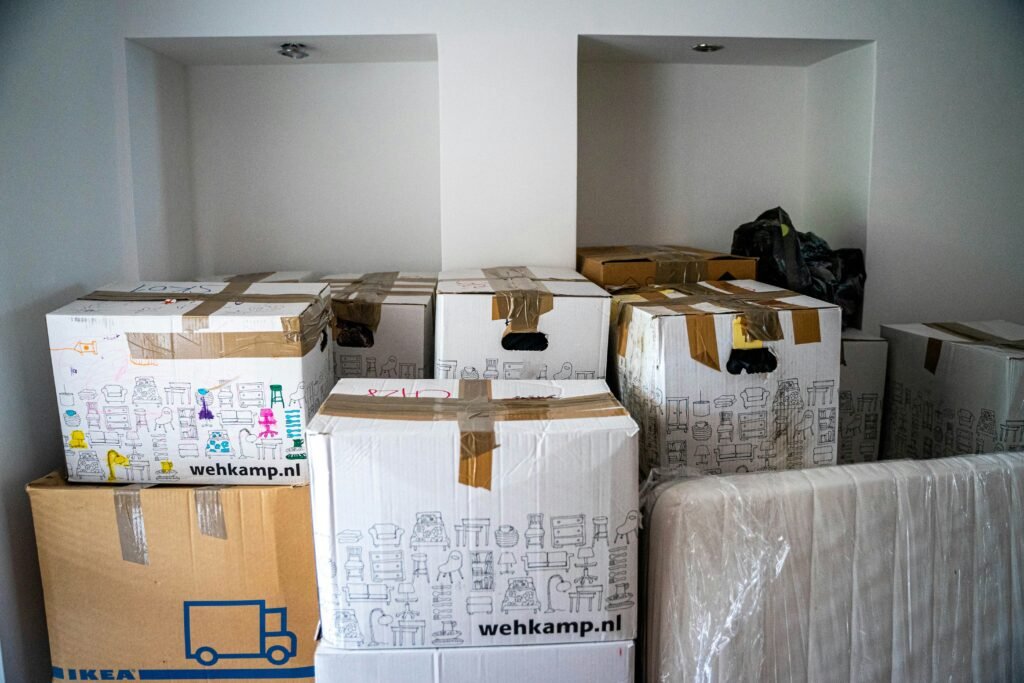

Moving and closing dates do not always align perfectly. You may need to leave your current home several days before the new property is ready, or you might gain access to the new home while still responsible for your existing one.
A short gap or overlap can create additional costs and logistical challenges, but it does not have to disrupt the entire move. The key is to identify the timing problem early, understand which dates are confirmed and create a flexible plan for your belongings, accommodation, transportation and essential documents.
This guide explains what to do when your moving and closing dates don’t line up and how to prepare for either a gap or an overlap between homes.
Why Moving and Closing Dates May Not Match
A real estate closing involves lenders, buyers, sellers, title or settlement professionals and other parties. A delay affecting any part of the transaction may change when ownership transfers or when you receive access to the property.
Common reasons dates may not align include:
- Financing or underwriting delays
- Appraisal issues
- Title problems
- Inspection-related negotiations
- Repairs that have not been completed
- Missing documents or signatures
- Delayed sale proceeds
- Scheduling problems between parties
- Delayed new construction
- Changes elsewhere in a chain of transactions
- Problems discovered during the final walkthrough
- Differences between the closing date and possession date
The closing date does not always determine exactly when you can move into the property. The purchase agreement may establish a different possession time or allow the seller to remain temporarily after closing.
Review the written agreement and confirm the possession terms with the appropriate real estate or legal professional before scheduling movers.
First, Determine the Type of Timing Problem
The right plan depends on whether you have a gap or an overlap.
| Timing situation | What it means | Main planning concern |
|---|---|---|
| Gap between homes | You must leave your current home before gaining access to the new one | Temporary accommodation and storage |
| Overlap between homes | You receive the new home before leaving the current one | Carrying costs and coordinating two properties |
| Same-day transition | Both transactions and the move are expected to happen on the same day | Delays and limited flexibility |
| Uncertain closing | The closing date may change but has not been officially postponed | Avoiding nonrefundable commitments |
| Delayed possession | Closing occurs, but you cannot immediately occupy the property | Written possession terms and temporary arrangements |
Do not assume a scheduled closing is guaranteed until the necessary parties confirm it. If the move depends on multiple real estate transactions, build additional flexibility into the schedule.
Confirm Which Dates Are Actually Established
Several dates may affect your move:
- Closing date for your current home
- Date you must vacate
- Closing date for the new home
- Date and time you receive possession
- Mortgage funding or disbursement date
- Lease expiration date
- Moving-company reservation
- Storage pickup and delivery dates
- Utility activation dates
- School or employment start dates
Ask for important dates and changes in writing. A verbal statement that the property “should be ready” may not provide enough certainty to schedule movers, cancel accommodation or arrange delivery.
If you are purchasing a home with a mortgage, carefully review your final loan documents. The Consumer Financial Protection Bureau explains that borrowers generally receive a Closing Disclosure at least three business days before the scheduled mortgage closing. Review the closing date, loan terms and amount needed to close, and promptly ask about unexpected information.
Contact Everyone Involved
Once you know there may be a timing problem, communicate with the people and businesses affected by the change.
Depending on your circumstances, that may include:
- Real estate agent
- Attorney or settlement professional
- Lender
- Title or escrow company
- Buyer of your current home
- Seller of your new home
- Landlord or property manager
- Moving company
- Storage facility
- Utility providers
- Insurance provider
- Employer
- School or childcare provider
- Pet boarding provider
- Temporary accommodation provider
Explain that the schedule may change and ask about rescheduling requirements, cancellation terms, availability and possible additional charges.
Do not cancel your current housing, storage or transportation arrangements based solely on an expected closing date. Wait for reliable confirmation when possible.
Consider Negotiating an Occupancy Arrangement
In some transactions, the parties may agree that someone can occupy a property before or after closing. The terminology and legal structure vary by location.
Possible arrangements include:
- The buyer remaining in the former home briefly after selling it
- The seller remaining in the property temporarily after closing
- The buyer receiving access before closing
- An extended closing date
- A revised possession date
These arrangements may appear convenient, but they can create questions involving payment, insurance, utilities, property damage, repairs, security deposits and responsibility for delays.
Any arrangement should be documented in writing and reviewed by an appropriate real estate professional or attorney. The document may need to address:
- Beginning and ending dates
- Daily or monthly occupancy payment
- Security deposit
- Utility responsibility
- Insurance requirements
- Property maintenance
- Damage responsibility
- Access rights
- Move-out conditions
- Penalties for remaining beyond the agreed date
- What happens if the closing does not occur
Do not rely on an informal handshake agreement when ownership and possession will occur at different times.
Arrange Temporary Accommodation
When you must leave one home before entering another, determine where every household member will stay.
Possible options include:
- Hotel
- Extended-stay accommodation
- Short-term rental
- Temporary corporate housing
- Staying with relatives or friends
- Month-to-month rental
- Recreational vehicle or campground, when appropriate
Compare more than the nightly price. Consider:
- Taxes and service charges
- Parking
- Laundry
- Cooking facilities
- Internet access
- Pet policies
- Accessibility
- Distance from work or school
- Cancellation terms
- Minimum-stay requirements
- Storage space
- Security
- Extension availability
If the closing date remains uncertain, flexible cancellation and extension terms may be more valuable than the lowest advertised rate.
Confirm where important mail, packages and closing documents can be received. USPS allows eligible customers who are temporarily relocating for between 15 days and one year to submit a temporary change-of-address request. Mail-forwarding options and requirements can change, so review the current USPS instructions before submitting a request.
Decide Where Your Belongings Will Go
A housing gap often means your belongings cannot move directly from one property to the other.
Common options include:
Moving Company Storage
Some moving arrangements allow belongings to remain in storage between pickup and final delivery. Ask whether the service includes storage-in-transit, where the belongings will be kept and how the final delivery will be scheduled.
Request written information about:
- Daily or monthly storage charges
- Minimum charges
- Warehouse location
- Access to belongings
- Loading and redelivery charges
- Delivery notice requirements
- Valuation or protection terms
- Storage duration
- Climate control
- Security
- Extension fees
Self-Storage
A self-storage unit may offer more direct access, but it can require loading and unloading belongings twice.
Choose a unit based on the amount and type of property being stored rather than selecting only by price. Consider access hours, climate conditions, security, insurance requirements and the distance from your eventual home.
Before using a unit, review what should and should not go into a storage unit.
Portable Storage Container
A portable container may be delivered to your current property, transported to a storage location and later delivered to the new home. Availability may depend on local rules, parking, driveway access and property restrictions.
Confirm:
- Where the container may legally be placed
- How long it can remain at each property
- Transportation charges
- Storage charges
- Delivery availability
- Weight restrictions
- Prohibited items
- Lock requirements
- Responsibility for property damage
Pack for the Gap, Not Just the Move
When belongings will remain in storage, pack as though you may not have access to them for longer than expected.
Prepare separate luggage or accessible containers containing:
- Clothing
- Medication
- Identification
- Financial and closing documents
- Work equipment
- School materials
- Toiletries
- Chargers
- Pet supplies
- Children’s comfort items
- Basic kitchen supplies
- Important keys
- Valuables
- Irreplaceable belongings
Keep these items with you rather than placing them inside a moving truck or storage unit.
Your needs during a two-day delay are different from your needs during a three-week delay. Pack additional medication, seasonal clothing and work or school supplies when the timeline is uncertain.
Use the moving day essentials box checklist as a starting point, but expand it to cover the entire expected housing gap.
Build a Temporary Living Kit
In addition to personal luggage, prepare a small temporary-living kit.
It might contain:
- Basic cookware
- Reusable dishes and utensils
- Laundry supplies
- Paper towels
- Trash bags
- Basic cleaning supplies
- Bedding
- Towels
- First-aid supplies
- Flashlight
- Extension cord
- Portable chargers
- Important contact information
What you need will depend on whether you are staying in a furnished rental, hotel or someone else’s home.
Label this kit clearly and keep it separate from stored household belongings.
Create a Gap Budget
A difference of only a few days can add several unplanned expenses.
Potential costs include:
| Expense | What to consider |
|---|---|
| Temporary accommodation | Nightly rate, taxes, parking and extension charges |
| Storage | Unit, warehouse or container charges |
| Additional handling | Loading, unloading and redelivery |
| Transportation | Rental vehicle, fuel, parking and tolls |
| Food | Restaurant meals or limited cooking facilities |
| Pet care | Boarding, deposits or pet accommodation fees |
| Utility overlap | Service at two properties |
| Insurance | Coverage for temporary housing and stored belongings |
| Work disruption | Unpaid leave or reduced working time |
| Cleaning | Additional visits or rescheduled services |
| Childcare | Coverage during closing or moving days |
| Schedule changes | Moving-company or accommodation rescheduling fees |
Maintain a contingency reserve because an estimated three-day gap could become longer.
Ask every provider which costs are refundable, which are nonrefundable and what happens if you need to extend or shorten the arrangement.
Understand Your Moving Company’s Policies
Before booking, explain that your closing date may change.
Ask the moving company:
- How much notice is required to change the date?
- Is the deposit refundable or transferable?
- What happens if pickup occurs but delivery cannot?
- Is storage available?
- How are storage and redelivery priced?
- How much notice is needed to schedule delivery?
- Can delivery dates be guaranteed?
- What happens if the new property is inaccessible?
- Are waiting-time charges possible?
- How are belongings protected while stored?
- Can essential items be retrieved during storage?
Request written answers whenever possible. Review your estimate and agreement instead of relying on general statements.
If you are still comparing providers, use these questions to ask before hiring a moving company.
Avoid Scheduling Everything for Closing Day
A same-day closing and move can work, but it leaves very little room for delays.
Problems may arise when:
- Documents require correction
- Funds are not transferred on time
- Keys are not available
- The previous occupant has not left
- The final walkthrough reveals a problem
- The closing appointment runs longer than expected
- Movers arrive before possession is authorized
- The property cannot accommodate the moving vehicle
- An elevator or loading area is unavailable
When possible, schedule the move after possession has been confirmed. If a same-day move is unavoidable, ask the moving company about waiting charges and backup storage options.
Do not instruct movers to enter or unload at a property until you have the legal right and practical permission to access it.
Handle an Overlap Between Homes Carefully
An overlap can make moving easier because you may transfer belongings gradually, clean without rushing and complete repairs before fully moving in.
However, an overlap may also mean paying expenses for two properties.
Plan for possible overlapping costs such as:
- Mortgage payments or rent
- Property taxes
- Homeowners or renters insurance
- Utilities
- Security systems
- Lawn or property maintenance
- Parking
- Cleaning
- Transportation between homes
Use the extra time strategically. Move nonessential belongings first, prepare the new property and reserve the final day for furniture and everyday necessities.
Keep both properties insured and secure until your responsibility for the former home officially ends.
Confirm Insurance and Responsibility
Moving, storage and temporary occupancy can affect which policy or agreement applies when belongings are lost or damaged.
Contact the relevant insurance provider and ask:
- Whether stored belongings are covered
- Whether coverage applies at temporary accommodation
- Whether a vacant home is treated differently
- When coverage for the old property should end
- When coverage for the new property should begin
- Whether a portable storage container is covered
- What deductibles and exclusions apply
- Whether additional coverage is available
Do not assume a moving company’s valuation option is the same as insurance. Review the terms and limitations of each form of protection.
Keep Important Documents Accessible
Do not place closing, financial or identity documents in storage.
Keep accessible copies of:
- Purchase agreement
- Sale agreement
- Lease
- Closing Disclosure
- Loan Estimate
- Moving estimate
- Moving agreement
- Inventory
- Storage agreement
- Temporary accommodation reservation
- Insurance policies
- Identification
- Contact information
- Receipts
- Utility confirmations
- Written schedule changes
Store digital copies securely, but keep any original documents required for closing with you.
Prepare a Backup Plan
Every timing plan should include an alternative.
Your backup plan should answer:
- Where will everyone stay if closing is delayed?
- Where will belongings go if delivery cannot occur?
- How will you extend accommodation?
- Who will contact the moving company?
- Which belongings must remain accessible?
- How much extra money is available?
- Who can care for children or pets?
- What happens if the delay extends beyond one week?
- Which reservations can be changed?
- Who must approve important decisions?
Write down the plan and share it with the household. During a delay, it is easier to follow an established plan than make every decision under pressure.
Frequently Asked Questions
What happens if I must leave my home before the new home closes?
You may need temporary accommodation and short-term storage. Confirm your vacate date, possession date and moving-company options before selecting an arrangement.
Can I stay in my old home after selling it?
The buyer and seller may sometimes negotiate a temporary occupancy arrangement. It should be written, legally appropriate and clear about payment, insurance, utilities, damage and the final move-out date.
Can I move into a house before closing?
Pre-closing occupancy may be possible in some circumstances, but it creates legal, financial and insurance risks. Do not move in based on an informal agreement. Obtain appropriate professional advice and written authorization.
What happens if movers arrive before I receive the keys?
Contact the moving company immediately. The shipment may need to wait or go into temporary storage, potentially creating additional charges. Do not authorize entry without confirmed access.
Should I book movers before the closing date is certain?
Movers often need to be reserved in advance, especially during busy periods. Before paying, understand the company’s cancellation, rescheduling, storage and deposit policies.
How much extra money should I budget for a closing delay?
The amount depends on accommodation, storage, transportation, food, pet care and the potential length of the delay. Create a daily estimate and maintain a reserve for a longer-than-expected gap.
Where should I keep valuables during temporary housing?
Keep money, jewelry, identification, medication, legal documents, important electronics and irreplaceable belongings under your direct control. Do not place them in general storage or an ordinary household shipment.
Is an overlap between homes better than a gap?
An overlap is often easier logistically because it provides more time to move, but it may cost more because you are temporarily responsible for two properties. Compare convenience with the total carrying expenses.
What should I do if the closing date changes at the last minute?
Confirm the change in writing, notify movers and accommodation providers, review rescheduling costs, arrange storage if necessary and preserve all documents and receipts.
When your moving and closing dates don’t line up, focus first on confirmed possession dates rather than expected ones. Secure flexible accommodation, choose an appropriate storage plan, keep essential belongings with you and maintain enough financial room for an extended delay.
A well-prepared gap plan can protect you from rushed decisions even when the closing schedule changes unexpectedly.
Note: Real estate contracts, closing procedures, possession rights, insurance requirements and occupancy arrangements vary by transaction and location. This article provides general moving information and is not legal, financial or real estate advice. Consult the appropriate qualified professionals before entering an occupancy agreement or making decisions related to a delayed closing.