
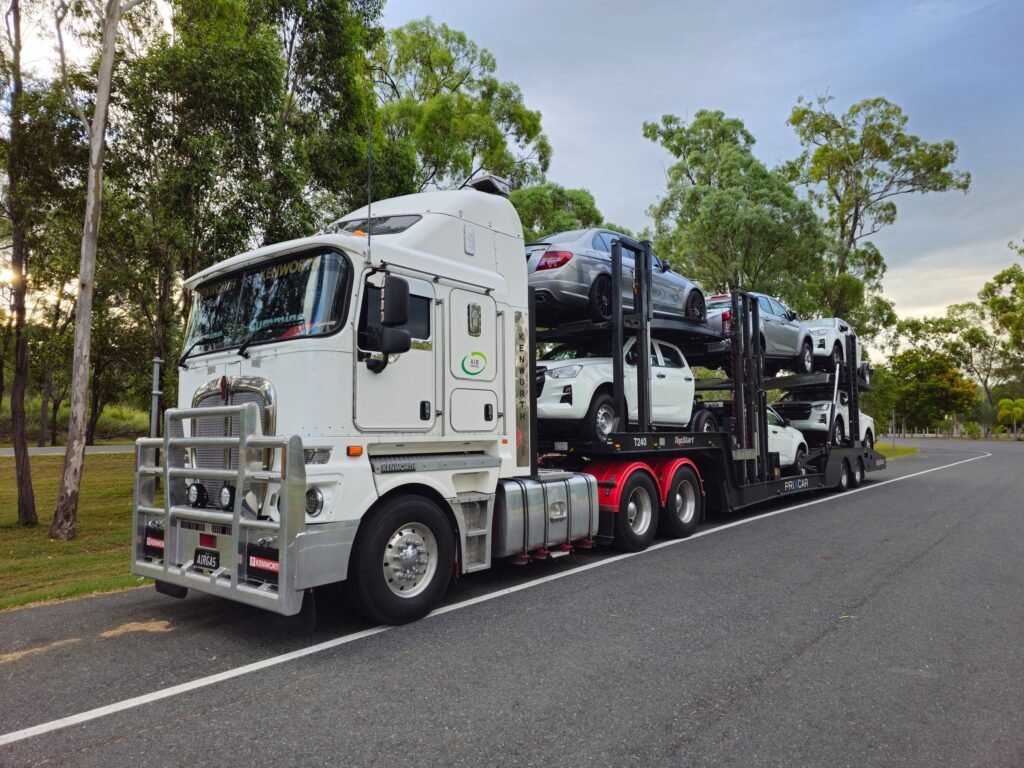
Your household belongings are only one part of a long-distance move. You also need to decide how your car will reach the new location, who will drive it and whether it will be available when you arrive.
The main options are driving the car yourself, having another household member drive it, towing it behind another vehicle or hiring an auto transporter. The right choice depends on distance, time, cost, vehicle condition, family travel needs and how comfortable you are with a long road trip.
Make the decision early. Vehicle transportation can affect your moving budget, travel schedule, insurance arrangements and the date you can begin work or other responsibilities at your destination.
Your Main Options for Moving a Car
Start by comparing the four most common choices.
| Option | Main advantage | Main drawback | May work best when |
|---|---|---|---|
| Drive the car yourself | You keep control of the vehicle | Adds mileage, travel time and road expenses | The car is reliable and the drive is manageable |
| Have someone else drive it | The car arrives without hiring a transporter | Requires a trusted, insured driver | Another household member or authorized driver is available |
| Tow the car | Keeps mileage off the car | Requires suitable equipment and towing knowledge | You are already driving an appropriate vehicle |
| Use an auto transporter | Avoids a long drive and additional mileage | Can cost more and may involve a delivery window | The distance is considerable or driving is impractical |
There is no single best solution for every long-distance move. Compare the complete cost and effort rather than choosing based on transportation price alone.
Decide Whether Driving Makes Sense
Driving your own car is often the simplest option because you maintain control over the vehicle and can carry personal travel essentials. It also provides transportation immediately after you arrive.
However, a long drive may involve more expense and effort than expected.
Consider:
- Total driving distance
- Number of travel days
- Fuel or charging costs
- Tolls
- Hotels
- Meals
- Parking
- Vehicle maintenance
- Additional mileage
- Weather along the route
- Driver fatigue
- Children and pets
- The vehicle’s age and condition
- Whether you need to arrive by a specific date
A road trip that appears cheaper than vehicle shipping may become more expensive after accommodation, meals and lost work time are included.
For help coordinating the rest of the relocation, use our guide on how to plan a long-distance move.
Have the Car Inspected Before a Long Drive
Do not begin a multi-day drive without determining whether the vehicle is ready for the trip. Schedule an inspection early enough to complete any necessary work.
Depending on the vehicle and manufacturer’s maintenance schedule, areas to check may include:
- Tires and tire pressure
- Spare tire or repair kit
- Brakes
- Battery
- Engine oil
- Coolant
- Transmission fluid
- Windshield wipers
- Exterior lights
- Belts and hoses
- Air conditioning or heating
- Charging equipment for an electric vehicle
- Warning lights on the dashboard
Ask a qualified professional about concerns specific to your vehicle. Avoid treating a general moving checklist as a substitute for mechanical advice.
Keep roadside assistance information, vehicle documents and emergency contacts accessible during the trip.
Plan the Driving Route Carefully
The fastest route on a map is not always the most practical route for a household move. Construction, severe weather, mountain roads, traffic and limited charging facilities can affect the journey.
Plan:
- Overnight stops
- Fuel or charging locations
- Rest breaks
- Toll roads
- Alternate routes
- Weather-related backups
- Secure overnight parking
- Pet-friendly or family-appropriate stops
- Emergency service locations
- Your expected arrival time
Avoid planning an overly demanding driving schedule. Fatigue can make a long-distance move more dangerous and stressful.
If more than one person will drive, confirm that each driver is legally permitted and properly insured to operate the vehicle.
Calculate the Full Cost of Driving
Use a complete estimate rather than looking only at fuel.
Driving-Cost Worksheet
| Expense | Amount to estimate |
|---|---|
| Fuel or charging | $_____ |
| Tolls | $_____ |
| Hotels | $_____ |
| Meals | $_____ |
| Parking | $_____ |
| Pre-trip maintenance | $_____ |
| Emergency supplies | $_____ |
| Additional insurance or roadside assistance | $_____ |
| Lost work time | $_____ |
| Total | $_____ |
You should also consider the effect of mileage and wear on the vehicle. These costs may not require immediate payment, but they are still part of the decision.
Consider Shipping the Car
An auto transporter can move your vehicle while you travel separately. This may be useful when:
- The destination is several days away.
- You are flying to the new location.
- You have multiple vehicles.
- The car is not suitable for a long drive.
- A medical or mobility issue makes driving difficult.
- You are traveling with young children or pets.
- Weather conditions make the route challenging.
- You must arrive quickly for work or housing responsibilities.
- You want to avoid adding substantial mileage.
Vehicle shipping does not normally provide an exact delivery time in every situation. Pickup and delivery may be offered as windows because weather, traffic, vehicle breakdowns and other deliveries can affect the schedule.
Arrange temporary transportation at the destination if you cannot function without a car while waiting for delivery.
Auto Transporter vs. Auto Transport Broker
Understanding who you are hiring is important.
Auto Transporter
An auto transporter or carrier physically moves the vehicle using its own operating authority and transportation equipment.
Auto Transport Broker
A broker arranges transportation with another company but does not necessarily move the vehicle itself.
The Federal Motor Carrier Safety Administration advises consumers to determine whether they are dealing with a broker or transporter. Interstate auto transport brokers and carriers must be registered with FMCSA, and consumers can verify identifying information before booking. Review the agency’s consumer advisory about automobile transporters before choosing a company.
Ask:
- Are you the broker or the carrier?
- What is your legal business name?
- What is your MC number?
- What is your USDOT number, when applicable?
- Which company will physically transport the car?
- When will I receive the carrier’s information?
- Who handles questions, damage reports and complaints?
- Which business will collect payment?
Do not assume that the company advertising the service will be the company that arrives to collect your car.
Compare Open and Enclosed Transportation
Auto transportation is commonly offered using either an open or enclosed carrier.
| Feature | Open transport | Enclosed transport |
|---|---|---|
| Vehicle exposure | Exposed to normal road and weather conditions | Protected inside an enclosed trailer |
| Availability | Generally more widely available | May have more limited availability |
| Typical cost | Usually lower | Usually higher |
| Common use | Everyday passenger vehicles | Classic, luxury, rare or highly valuable vehicles |
| Capacity | Often carries more vehicles | Usually carries fewer vehicles |
Enclosed transportation may provide additional physical protection, but it does not eliminate every risk. Review the written terms and insurance information for either option.
What Affects the Cost of Shipping a Car?
Vehicle-shipping prices can vary significantly. Important factors include:
- Transportation distance
- Pickup and delivery locations
- Vehicle size and weight
- Whether the vehicle operates
- Open or enclosed transport
- Seasonal demand
- Fuel costs
- Route availability
- Delivery timing
- Door-to-door or terminal service
- Expedited service
- Modifications that change vehicle dimensions
- Accessibility for a large carrier
A larger pickup truck or sport utility vehicle may cost more to transport than a compact car because it occupies more space and adds weight.
An inoperable vehicle may also cost more because special equipment may be needed to load and unload it.
Ask for a Detailed Written Quote
Do not book vehicle transportation based only on a telephone price or online advertisement.
The written quote should explain:
- Total estimated price
- Deposit
- Remaining balance
- Accepted payment methods
- Pickup window
- Delivery window
- Cancellation terms
- Rescheduling terms
- Additional charges
- Insurance information
- Vehicle-condition requirements
- Personal-item rules
- Inoperable-vehicle charges
- Claims procedure
- Broker involvement
- Carrier information
Ask whether the quote is guaranteed or may change after a carrier accepts the shipment. Understand what could cause the price to increase.
Our article on moving estimates explains how to examine written pricing, additional charges and payment terms.
Check Insurance Before Shipping the Vehicle
Do not assume that every type of damage is fully covered.
Before the vehicle is collected:
- Ask the transporter for proof of applicable insurance.
- Confirm that the policy information is current.
- Ask what types of loss or damage are covered.
- Review coverage limits and exclusions.
- Ask whether a deductible applies.
- Confirm how and when damage must be reported.
- Contact your own auto insurer.
- Keep written records of all answers.
Your personal auto policy may provide different protection while the vehicle is in transit. Coverage varies, so obtain information directly from your insurer.
Keep copies of the transportation agreement, inspection report, photographs, payment records and communications.
Prepare the Car for Transportation
The transporter should provide specific preparation instructions. Follow those requirements even when they differ from a general checklist.
Common preparation steps include:
- Wash the exterior so existing damage can be seen.
- Photograph all sides of the vehicle.
- Photograph the roof, wheels and windows.
- Record existing scratches, dents and chips.
- Remove personal belongings.
- Remove toll tags or deactivate them.
- Remove removable accessories.
- Secure convertible tops and loose parts.
- Reduce the fuel level as instructed.
- Check for fluid leaks.
- Inflate the tires appropriately.
- Charge the battery.
- Disable alarms.
- Provide working keys.
- Record the odometer reading.
- Tell the carrier about mechanical problems.
- Confirm whether the vehicle must be operable.
Remove valuables, documents, medication and irreplaceable belongings. A vehicle should not be treated as an additional household moving container unless the transporter explicitly permits particular items in writing.
Should You Pack Personal Belongings in a Shipped Car?
Usually, the safer choice is to remove personal belongings. Transporter policies, weight limitations and insurance treatment can differ.
Items left in a vehicle may:
- Shift and damage the interior
- Be stolen
- Add unreported weight
- Violate the transportation agreement
- Be excluded from coverage
- Create problems during inspection
- Affect safe loading
Never place hazardous materials, illegal items, important documents, medication, electronics or valuables inside the vehicle.
If the transporter permits limited personal property, obtain the weight and placement restrictions in writing.
Complete a Detailed Pickup Inspection
Inspect the vehicle with the driver before it is loaded.
The inspection record should identify existing:
- Scratches
- Dents
- Paint chips
- Cracked glass
- Wheel damage
- Missing accessories
- Interior damage
- Mechanical concerns
Compare the written condition report with the car itself before signing. Add missing damage to the document and retain a copy.
Take your own photographs and video in good lighting. Include wide views and close-ups, and preserve the original files so their dates remain available.
Record:
- Mileage
- Fuel level
- Pickup date
- Pickup time
- Driver’s name
- Carrier’s name
- Truck information
- Contact details
Do not rely entirely on photographs taken by another party.
Prepare for Vehicle Delivery
Confirm where the carrier can safely and legally unload the car. Large transport vehicles may be unable to enter narrow residential streets, apartment complexes or roads with low branches.
You may need to meet the carrier at:
- A large parking area
- A nearby commercial road
- An accessible public location
- A terminal
- Another location agreed upon in advance
Confirm the delivery process, identification requirements and payment method before the driver arrives.
Keep a backup transportation plan in case delivery occurs later than your own arrival.
Inspect the Car Before Accepting Delivery
Do not sign the final condition report without examining the vehicle.
Whenever possible, inspect it in daylight. Compare its condition with:
- Your pickup photographs
- The original inspection report
- The recorded mileage
- The documented fuel level
- Notes about existing damage
Check:
- Every exterior panel
- Windows and mirrors
- Roof
- Wheels and tires
- Bumpers
- Lights
- Undercarriage where visible
- Interior
- Removable accessories
- Whether the car starts and operates normally
Document new damage on the delivery report before signing. Take photographs immediately and retain all paperwork.
If poor weather or darkness prevents a complete inspection, note the conditions on the document and follow the reporting procedure stated in your agreement.
What to Do If the Car Is Damaged During Transportation
When you identify possible transportation damage:
- Photograph the damage immediately.
- Mark it clearly on the delivery inspection report.
- Obtain the driver’s acknowledgment where appropriate.
- Keep copies of every document.
- Notify the transporter promptly in writing.
- Follow the claims procedure in the agreement.
- Preserve repair estimates, receipts and correspondence.
- Notify your own insurer when appropriate.
- Observe every reporting deadline.
For problems involving an interstate auto transporter or broker, FMCSA provides information about filing a consumer complaint. Filing a government complaint does not automatically replace the contractual claims process, so review and follow both where applicable.
Towing the Car Behind Another Vehicle
Towing may appear convenient when you are already operating a moving vehicle or recreational vehicle. However, you need the correct equipment, vehicle ratings and experience.
Possible methods include:
- Flatbed trailer
- Tow dolly
- Flat towing with all wheels on the road
Not every car can be towed using every method. The wrong setup can damage the transmission, drivetrain, tires or steering system.
Before towing:
- Review both vehicle manufacturers’ instructions.
- Confirm the tow vehicle’s rated capacity.
- Include the trailer and vehicle weight in your calculations.
- Use properly rated equipment.
- Check lighting and braking requirements.
- Confirm whether special equipment is required.
- Understand applicable state laws.
- Verify insurance and rental terms.
- Practice turning, braking and backing up safely.
Do not rely on a general online recommendation for compatibility. Consult the vehicle manuals and qualified equipment provider.
Can You Put the Car Inside a Household Moving Truck?
A passenger vehicle should not be placed inside a household moving truck unless the vehicle and transportation service are specifically designed and authorized for that purpose.
Cars contain fuel, batteries, fluids and considerable weight. Improvised loading can create serious safety, weight-distribution, equipment and legal problems.
Use a properly designed vehicle trailer or authorized auto-transport service.
Moving More Than One Vehicle
Households with two or more cars may use a combination of transportation methods.
For example:
- Drive one car and ship the second.
- Have two household members drive separately.
- Tow one vehicle behind an appropriate vehicle.
- Ship all vehicles and fly.
- Sell one car before moving and replace it later.
Compare the cost of transporting each car with its current value, condition and usefulness at the destination. Shipping an unreliable or low-value vehicle a considerable distance may not be financially practical.
However, replacing a car after moving involves its own taxes, registration costs, availability issues and financing considerations.
Remember Registration, Licensing and Insurance
After an interstate move, you may need to update your:
- Driver’s license
- Vehicle registration
- Vehicle title
- Auto insurance address
- License plates
- Inspection or emissions records
- Toll account
- Parking permit
- Personal property or vehicle tax records
Requirements and deadlines differ by state. Use the official state motor vehicle services directory to find the appropriate government agency for your destination.
Contact your insurer before moving. Your address can affect coverage, premiums and policy availability, and the company may need to issue documents for the new state.
Our moving to another state checklist covers additional records and household tasks that may need attention.
Keep Essential Items Outside the Car
Whether you drive or ship the vehicle, keep essential documents and valuables under your direct control.
Carry:
- Driver’s license
- Vehicle registration
- Proof of insurance
- Transportation agreement
- Inspection reports
- Keys and spare keys
- Medication
- Identification
- Payment information
- Emergency contacts
- Travel itinerary
- Hotel confirmations
- Roadside assistance details
Do not pack original vehicle documents inside the household shipment or leave them in a car being transported.
Long-Distance Vehicle Planning Timeline
| Time before moving | Recommended task |
|---|---|
| Six to eight weeks | Compare driving, towing and shipping |
| Four to six weeks | Request written transportation quotes |
| Three to four weeks | Verify registration and insurance information |
| Two to three weeks | Book transportation or plan the driving route |
| One to two weeks | Complete maintenance and collect documents |
| Several days | Clean the car and remove belongings |
| Pickup day | Photograph and inspect the vehicle |
| Delivery day | Compare condition before signing |
| After arrival | Update registration, licensing and insurance |
Availability can be limited during busy moving periods, so begin earlier when your dates are not flexible.
Car Planning Checklist for a Long-Distance Move
When Driving
- Confirm the vehicle is suitable for the trip.
- Schedule appropriate maintenance.
- Plan fuel or charging stops.
- Reserve overnight accommodation.
- Review weather and road conditions.
- Carry emergency supplies.
- Confirm insurance and roadside assistance.
- Avoid an unsafe driving schedule.
When Shipping
- Determine whether you are dealing with a broker or carrier.
- Verify applicable registration.
- Obtain a written quote.
- Review insurance information.
- Read cancellation and delivery terms.
- Remove personal belongings.
- Photograph the vehicle.
- Complete the pickup inspection.
- Arrange temporary transportation.
- Inspect the vehicle before accepting delivery.
After Arriving
- Update your address with the insurer.
- Check destination-state registration requirements.
- Update your driver’s license when required.
- Obtain applicable inspections.
- Update toll and parking accounts.
- Store all transportation documents.
Frequently Asked Questions
Is it better to drive or ship a car when moving?
Driving may be more practical when the distance is manageable, the car is reliable and you need transportation immediately. Shipping may be preferable when the drive is lengthy, time is limited or the vehicle should not accumulate substantial mileage. Compare total costs for both options.
How far in advance should I arrange car transportation?
Several weeks of lead time is generally sensible, with more time allowed during busy seasons or when dates are inflexible. Confirm the actual pickup window before arranging flights or other travel.
Can I ship household items inside my car?
Policies vary, but personal belongings may be restricted or excluded from coverage. Remove valuables and obtain any permitted weight and placement limits in writing.
Does car shipping provide an exact delivery date?
Not always. Many services use pickup and delivery windows because traffic, weather, mechanical problems and route schedules can cause changes. Review the written terms carefully.
Will my auto insurance cover transportation damage?
Coverage depends on your policy and the circumstances. Ask both the transporter and your own insurer for written information before the vehicle is collected.
Should I wash my car before shipping it?
A clean exterior makes scratches, dents and chips easier to identify during the pickup and delivery inspections.
Can an electric vehicle be transported?
Electric vehicles can generally be transported, but the carrier may have instructions concerning the battery charge, alarm system and vehicle operation. Disclose that the vehicle is electric when requesting the quote.
What happens if my car arrives before I do?
Ask whether another authorized adult may accept delivery and what identification or written authorization will be required. Storage or waiting charges could apply if no one is available.
Should I choose the cheapest auto-shipping quote?
Not automatically. Compare registration, carrier identity, insurance information, delivery terms, cancellation policies and possible additional charges. A low initial quote may not represent the final price.
What if the car does not run?
Tell the transporter before booking. An inoperable vehicle may require a winch or other loading equipment and may cost more to transport.
Your car should be part of the long-distance moving plan from the beginning—not a decision left until the household packing is finished. Compare driving, towing and transportation based on the complete cost, travel demands and vehicle condition. Whichever option you choose, document the car carefully, keep important records with you and prepare for registration and insurance requirements after arrival.
Moving Note: Vehicle-registration deadlines, towing requirements, insurance rules and transportation regulations vary by state and type of move. Confirm current requirements with the appropriate government agencies, insurer and transportation provider before relocating.