
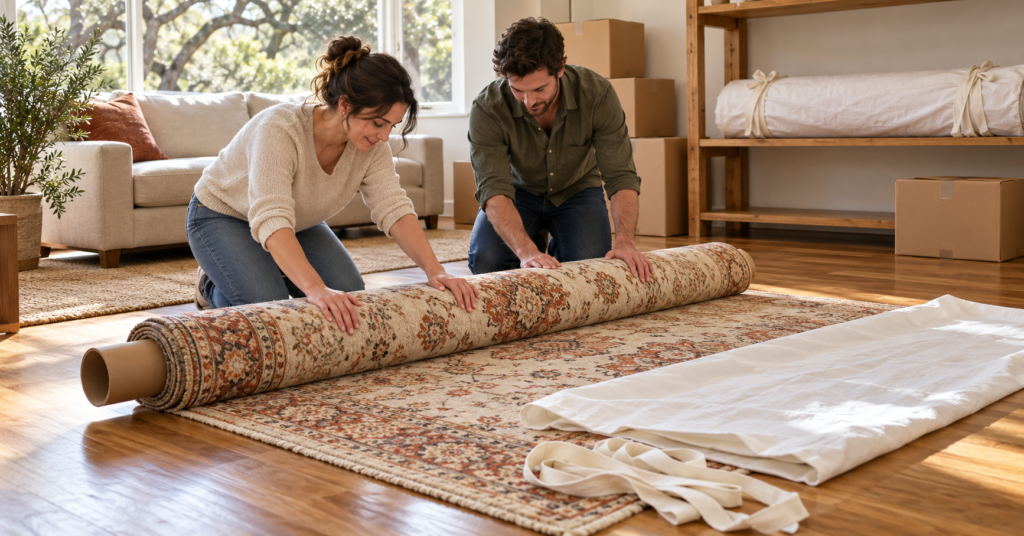
A rug can be easy to overlook when preparing a home for storage. Once the furniture is removed, rolling it up seems like a quick final task. However, trapped moisture, tight folds, unsuitable wrapping, and pressure from other belongings can create damage that is only discovered when the rug is opened again.
Austin rug storage starts with understanding the rug’s construction and choosing an arrangement suitable for both transport and the time it will remain packed. A sturdy synthetic runner, a wool area rug, and a fragile heirloom should not automatically receive the same treatment.
Before moving day, check the care instructions, prepare a clean working area, and decide how the finished roll will be supported.
Identify the Material and Backing
Look for a care label, purchase record, or manufacturer information identifying the rug’s fibers and construction.
Check the backing as well as the visible surface. A rug may combine different materials, and its backing can affect which cleaning, rolling, and storage methods are suitable.
Record existing concerns such as loose edges, damaged fringe, cracking, or areas where the backing is separating. Photograph the front, back, and any worn sections before packing.
If the rug is antique, unusually valuable, or structurally fragile, seek advice from a textile conservator or an appropriately experienced specialist before handling it. Do not test a tight roll on a damaged section to see whether it will hold.
Clean According to the Rug’s Instructions
Remove loose dirt using a method appropriate for the rug. Follow its care instructions rather than applying the same vacuum setting or cleaning product used elsewhere in the home.
Pay attention to fringes, loose fibers, and delicate surfaces that could catch in powered brushes. Avoid aggressive treatment of areas that are already weak.
If professional cleaning is needed, explain that the rug will enter storage. Ask about the recommended preparation and when it can safely be wrapped.
Do not spray fragrance or household chemicals onto the rug to make it smell fresh before packing. An unexplained odor should be investigated rather than covered up.
Allow Enough Time for Thorough Drying
A rug that feels dry on top may still retain moisture in its backing or thicker sections.
Schedule cleaning early enough for the entire rug to dry before packing. The time required depends on the material, cleaning method, thickness, and drying conditions.
Check both sides and any dense edges. If you are uncertain whether drying is complete, ask the cleaner before rolling it.
Keep the prepared rug away from damp floors and other wet belongings. Do not place it beside freshly cleaned upholstery that is still drying.
The Canadian Conservation Institute’s guidance on caring for carpets and rugs emphasizes that rugs should be clean and dry before being rolled for storage.
Choose the Rolling Method for That Rug
Avoid forcing a large rug into a small folded package simply to fit the available space. Sharp folds can concentrate stress and leave persistent creases.
However, rolling is not automatically appropriate for every rug either. Fragile fibers, damaged backing, or decorative features may require a different arrangement.
Check the recommended rolling direction and orientation with the manufacturer or specialist. Do not assume that every rug should be rolled with the pile facing the same way.
Where a support tube is appropriate, use one with a suitable diameter and protective covering. A narrow or exposed ordinary cardboard tube may not provide the support or material compatibility needed for prolonged storage.
Choose the storage arrangement before you begin, so the rug does not need repeated handling.
Roll Evenly Without Forcing the Edges
Prepare a clean surface large enough to lay out the rug. Remove grit or small objects that could become trapped between its layers.
Use enough assistance to keep a large rug aligned. Work gradually, checking that the edges remain even and that the material is not wrinkling or pulling sideways.
Stop if the backing resists bending or you hear or see signs of deterioration. Do not use body weight to compress the roll.
Keep fringe smooth and protected according to the chosen method. Avoid allowing loose strands to bunch into a tight ridge inside the roll.
The goal is a supported, orderly package rather than the smallest possible cylinder.
Select Wrapping for the Storage Period
Ask which wrapping material suits the rug and the expected storage conditions.
A clean, appropriate textile covering can provide dust protection, while delicate pieces may require conservation-grade materials. Avoid placing printed paper or materials with uncertain dyes directly against the rug.
Do not assume that tightly sealing a rug in household plastic is a suitable long-term solution. Wrapping cannot correct moisture already present inside the package.
If a mover uses an outer transport covering, ask whether it should remain in place during storage or be replaced after delivery.
Secure the package without applying adhesive directly to the rug. Avoid tight cords or straps that compress the pile or leave deep indentations.
Inspect What “Climate-Controlled” Means
For Austin storage, ask about the conditions inside the actual space rather than choosing on the basis of a label alone.
Find out whether temperature and humidity are both managed, how conditions are monitored, and what happens during an equipment failure. A cooled building does not necessarily provide the same humidity management as another facility.
Inspect the unit for signs of leaks, condensation, unusual odors, and pest activity before moving the rug inside. Report concerns and resolve them before unloading.
Avoid treating wrapping as a substitute for a suitable environment. For valuable rugs, obtain advice on appropriate storage conditions for the specific materials.
Our guide to what should and should not go into a storage unit can help you assess the other belongings sharing the space.
Plan Support Before the Unit Is Loaded
Decide where the rug will sit before boxes and furniture occupy the unit.
A long roll needs suitable support so it does not sag, bend, or carry concentrated pressure. Ask a specialist how to support fragile or valuable pieces.
Do not automatically stand the rug on one end. Its weight and construction may make that unsuitable, and an unstable roll can fall against other belongings.
Keep it away from possible water exposure and avoid direct contact with a damp floor. Use an appropriate clean support arrangement permitted by the facility.
Leave enough room to retrieve the rug without dragging it across the floor or dismantling an unsafe stack.
Keep Heavy Belongings Off the Roll
A rolled rug should not become a convenient base for cartons or furniture.
Tell the moving crew where it belongs and explain any handling instructions. Label the outer covering so the item can be identified without opening it.
When loading, prevent the roll from being crushed between heavy pieces or bent around other cargo. Ask how it will be restrained during transport without damaging the rug.
If a long roll affects the truck layout or storage arrangement, provide its packed dimensions before the appointment. That information is more useful than listing it only as “one rug.”
Store Rug Pads and Records Separately
Check the rug pad’s material and care instructions before deciding whether to keep it.
A deteriorating pad may need replacement rather than storage. If it is retained, prepare it separately unless the manufacturer recommends another method.
Label the pad so it can be matched to the correct rug later. Keep cleaning records, photographs, dimensions, and any appraisal information outside the storage unit.
Add the rug’s position to your inventory. This helps you find it without opening several wrapped items, particularly when multiple rugs look similar once packed.
Inspect Before Returning the Rug to Use
When storage ends, open the covering in a clean area and inspect the rug before placing furniture on it.
Look for moisture, unusual odors, pest evidence, changes to the backing, and damage around the edges. Photograph concerns before cleaning or altering the affected area.
Unroll it gently using the handling method appropriate for its condition. Do not force it flat with heavy furniture or apply heat, steam, or water without suitable guidance.
Check that the floor and rug pad are clean and dry before placement. If the rug has developed damage or persistent distortion, ask an appropriate specialist to assess it.
Moving Note: Rolling direction, support, cleaning, and wrapping requirements vary by rug material, backing, age, and condition. Follow manufacturer instructions, seek specialist advice for fragile or valuable rugs, and confirm the storage environment before packing.