A board game can arrive with its box intact and still be impossible to play. Cards may have slipped beneath an insert, expansion pieces could be packed with another title, or a small bag of essential tokens might have been mistaken for spare packaging.
Packing board games requires attention to the contents as well as the outer box. Original packaging often works well on a shelf, but it may not keep components in place when a carton is tilted, carried, and loaded into a moving vehicle.
Before packing your collection, check what belongs together, secure anything that can escape, and choose outer cartons that protect the games without becoming excessively heavy.
Review Each Game Before Closing It
Open each game and check its current contents. You do not necessarily need to count every token in a large collection, but you should identify loose pieces, damaged containers, and components stored elsewhere.
Look for cards left in deck holders, miniatures displayed on shelves, and accessories kept in separate drawers. Return borrowed pieces to the correct game before packing.
Photograph the arrangement inside complicated boxes. That reference can help you restore the setup after delivery, especially when several trays fit together in a particular order.
Record known missing components now. Otherwise, you may spend time searching moving cartons for a piece that was absent before the move.
Contain Small Pieces Within the Game Box
Tokens, dice, markers, and counters need containers that remain closed during handling.
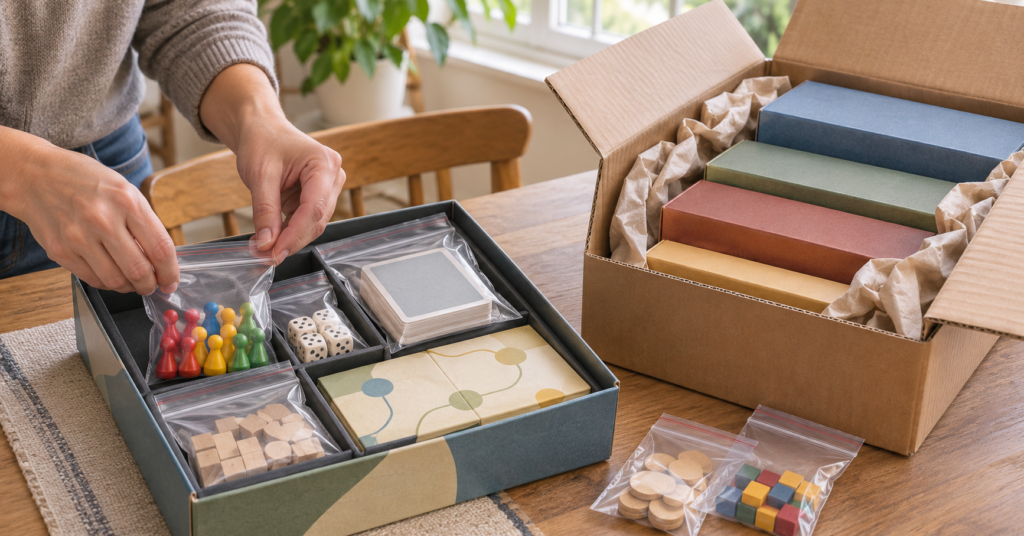
Use appropriately sized resealable bags or secure compartments, provided they are suitable for the components. Avoid overfilling a bag until its closure is under strain.
Group pieces according to how the game is organized. Player sets can stay together, while shared resources can have their own container. Keep sharp or pointed miniatures away from bags they could puncture.
Label ambiguous groups with a small note placed inside the container. This is especially useful when several games use similar wooden cubes or generic counters.
Keep small components away from children and pets while the boxes are open.
Check Whether Inserts Actually Restrain the Contents
A fitted insert can organize a game without holding everything securely when the box changes position.
Look for shallow trays, removable dividers, and spaces that allow cards to slide underneath. Gently assess whether components can leave their compartments when the closed box is slightly tilted.
Add suitable internal containment where needed. Do not rely on the lid pressing everything down if there is a large gap above the insert.
Avoid forcing extra cushioning into delicate trays. Thin plastic inserts can crack when overfilled or subjected to pressure.
If an insert no longer fits sleeved cards or added expansions, adjust the packing arrangement rather than pushing the lid into place.
Protect Cards Without Bending Them
Gather decks into orderly groups and place them in suitable bags, deck boxes, or compartments.
Choose a container that supports the cards without squeezing their edges. A bundle that is too loose can shift, while an overfilled deck box can bow cards or damage its closure.
Avoid putting elastic bands directly around valuable cards. They can apply uneven pressure and catch against edges.
Check that cards are not trapped beneath a board or along the side of an insert before replacing the lid.
If the collection includes particularly valuable trading cards, decide whether those should travel personally. Keep condition photographs and relevant records separately from the shipment.
Keep Expansions and Accessories Identifiable
Decide whether expansions will remain in their original boxes or travel inside the base game.
Either arrangement can work if the components fit securely and remain identifiable. Do not combine everything merely to reduce the number of boxes if doing so overloads the packaging.
Create a short contents note for combined sets. Identify which expansions, promotional cards, or upgraded pieces are inside.
Pack oversized accessories separately when necessary, then give them a matching reference. For example, an outer carton label could indicate that a game’s playmat is in another numbered carton.
Keep rulebooks and setup guides with the relevant set so the game can be checked after delivery.
Record Games That Are Still in Progress
Some games contain an ongoing campaign, a saved scenario, or a partially completed puzzle.
Photograph the current arrangement and use the game’s intended save system where one exists. Record character information, deck order, or other details necessary to continue.
Avoid mixing concealed or unopened campaign materials into ordinary components. Keep them separated and clearly identified without exposing information players have not reached.
If a game cannot be preserved in its current state, decide how it will be paused before moving day. A clear record is more dependable than expecting a loose setup to survive transportation unchanged.
Store that record somewhere accessible outside the packed collection.
Close Lids Without Damaging the Packaging
Original game boxes may have loose lids, split corners, or an existing gap caused by additional contents.
Check that the lid sits naturally. If it does not, reorganize the contents or use another suitable container instead of compressing the box.
Avoid applying packing tape directly to printed surfaces. Removing it can lift artwork or tear the covering.
Where needed, use a suitable protective enclosure or an external securing method that does not crush the corners. Follow any collector-specific preservation requirements for valuable packaging.
Mark damaged boxes for extra protection so they are not treated as strong supports for other games.
Choose Outer Cartons by Weight and Fit
A carton filled with board games can become heavy before it appears full. Dense cards, wooden pieces, and large collections of tokens add weight quickly.
Use manageable cartons and check their condition and rated capacity. Do not select an oversized box simply because it can hold the whole collection.
Arrange games so their boxes are supported. Avoid balancing a large box across a gap or forcing a smaller one into a space that bends its lid.
Use appropriate cushioning to prevent shifting, particularly around irregular sizes. Keep heavy contents from pressing onto fragile boxes.
Our room-by-room packing guide can help you organize the collection alongside the rest of the household shipment.
Label Cartons for Retrieval
Number the outer cartons and keep a list of the games inside each one.
A brief inventory is more useful than writing only “games” on every box. It lets you locate a particular title without opening the entire collection.
Choose one or two games for an accessible arrival carton if you expect to use them soon. Pack the rest according to storage or unpacking priority.
For expensive collections, keep detailed titles and values in your private inventory rather than advertising them on the outside.
Photograph completed carton contents before sealing. This provides a reference if you later need to work out where a particular game was placed.
Plan Storage Around the Collection’s Materials
Board games commonly combine cardboard, paper, wood, plastic, and adhesives. Choose a clean, dry storage environment and protect cartons from leaks and direct floor moisture.
Ask the facility what temperature and humidity conditions it maintains rather than relying only on the phrase “climate-controlled.”
Avoid placing the collection beneath heavy furniture or other loads that could crush the cartons. Keep enough access to inspect boxes when storage continues longer than expected.
Do not store food or drink with the games. Check for spills and crumbs before packing, and keep scented products or leaking liquids elsewhere.
Our guide to what should and should not go into a storage unit covers other items that could affect the surrounding storage conditions.
Check the Collection Before Discarding Packaging
After delivery, inspect the outer cartons and original game boxes for visible damage.
Open each game over a clear surface where loose pieces can be seen. Compare complicated sets with your photographs and check any saved campaign materials.
Examine cushioning and empty bags before throwing them away. A small token or accessory can remain hidden in folded paper.
If something is missing, consult the carton inventory and matching accessory references before opening unrelated boxes. Record any damage and follow the mover’s reporting procedure when relevant.
Return games to shelving only when the boxes and contents are dry and ready for use. Keeping the collection organized through unpacking completes the work started before the move.
Moving Note: Board-game packaging, component materials, and storage needs vary. Use manageable cartons, avoid pressure on original boxes, and seek appropriate preservation advice for rare or valuable collections. Confirm packing responsibilities and protection terms with your mover before pickup.