
An apartment viewing can help you judge the layout, light, and condition of a home. It cannot tell you everything about past pest problems. Before moving into a New York City rental, review its bedbug records while there is still time to ask questions and adjust your plans.
Checking NYC bedbug history involves several sources: the building’s annual report, the disclosure supplied to an incoming tenant, and any relevant complaints or violations. Each answers a different question.
The aim is to understand what happened, how it was addressed, and what information is available about the apartment you intend to occupy.
Find the Correct Building in HPD Online
Start with the city’s HPD Online building information service. NYC311 identifies it as a resource for annual bedbug reports, complaints, violations, and other building records.
Use the exact street address and borough. Compare the result with the proposed lease, especially when a listing uses a building name, an alternate entrance, or an address covering several properties. Ask the managing agent to clarify any mismatch.
Save the relevant records with the date you accessed them. If a landlord later refers to a different report, you will be able to compare the same building and reporting period.
A search that returns no useful information leaves a question to resolve. It does not establish that the apartment has been inspected or that no infestation has occurred.
Request the Tenant Bedbug Disclosure
New York City’s disclosure requirement is separate from the annual building report. The official Notice to Tenant: Disclosure of Bedbug Infestation History, Form DBB-N, is provided to tenants signing a vacancy lease and addresses the property’s history over the preceding year.
The form distinguishes between building and apartment history. It includes entries for affected floors and whether eradication measures were employed. This makes it useful for asking about the particular unit you are considering.
Check that the address, apartment number, lease date, and applicable boxes are completed. Request clarification of blank or contradictory entries before signing, and retain the completed notice with your lease documents.
If you are joining an existing household or subletting, ask what disclosure and treatment information is available for that arrangement. Do not assume a document supplied to another occupant describes conditions up to your own arrival date.
Read Annual Report Counts Without Misinterpreting Them
HPD’s annual report combines information for the building. It does not identify the history of every individual apartment. The city’s reporting guidance distinguishes the following figures:
| Report entry | What it describes |
|---|---|
| Total dwelling units | The number of units in the building |
| Infested dwelling units | Units reported or otherwise known to have had bedbugs during the reporting period |
| Eradicated dwelling units | Units where eradication measures were employed during that period |
| Re-infested dwelling units | Units reported as infested after eradication measures were employed |
These categories can overlap. Do not add all three infestation-related figures together and assume the result represents different apartments.
Also, the eradicated-unit field records that measures were taken. It should not be read as a current professional clearance for every treated apartment. HPD explains the fields in its annual bedbug reporting FAQ.
Use the counts to shape follow-up questions. A recorded recurrence warrants asking when it happened, which areas were involved, and what follow-up work occurred.
Check the Period Covered by Each Record
Annual reports are filed in December and cover November 1 of the previous year through October 31 of the filing year. The filing date and the end of the reporting period are therefore different.
For example, someone moving in January might review a report filed the previous December that covers activity only through October. That report would not describe anything occurring during November or December.
Compare the report’s coverage dates with the date of the tenant disclosure and any treatment records. Ask management specifically about activity since the annual reporting period ended.
An older infestation outside the disclosure’s one-year window can still be relevant to your questions. Keep its date clear so you do not present a historical event as a current condition.
Separate Complaints From Confirmed Violations
A complaint records a reported problem. HPD states that it issues a bedbug violation when an inspector visually confirms live bedbugs. Those entries should not be treated as interchangeable.
Read the description, date, location, and status of each relevant record. A violation for failing to file an annual report concerns reporting compliance; it does not itself document an inspector finding bedbugs.
Likewise, a closed complaint should be read alongside its explanation. NYC311 says HPD can close a complaint after the tenant reports that the condition was corrected. Closure alone does not tell you every detail of treatment or follow-up.
If a record concerns another apartment, ask about its relationship to your intended unit without assuming the same condition exists throughout the building.
Ask What Happened After Treatment
When management confirms a previous infestation, request a dated explanation of the response. Useful details include the areas inspected, when treatment occurred, and the findings of subsequent visits. Ask whether a service summary can be shared without disclosing another tenant’s personal information.
NYC Health recommends professional pest management, attention to surrounding apartments when an infestation is found, and follow-up visits. It also advises owners to inspect vacant units before a new tenant moves in.
If treatment is ongoing, ask the pest management professional for preparation and re-entry instructions. Establish whether additional visits are scheduled and whether furniture delivery would interfere with the work.
Document any agreed change to the handover or moving date. Discuss rescheduling charges with the mover, and obtain tenant-specific advice if the situation affects a signed lease or possession of the apartment.
Arrange a Walkthrough Before Furniture Arrives
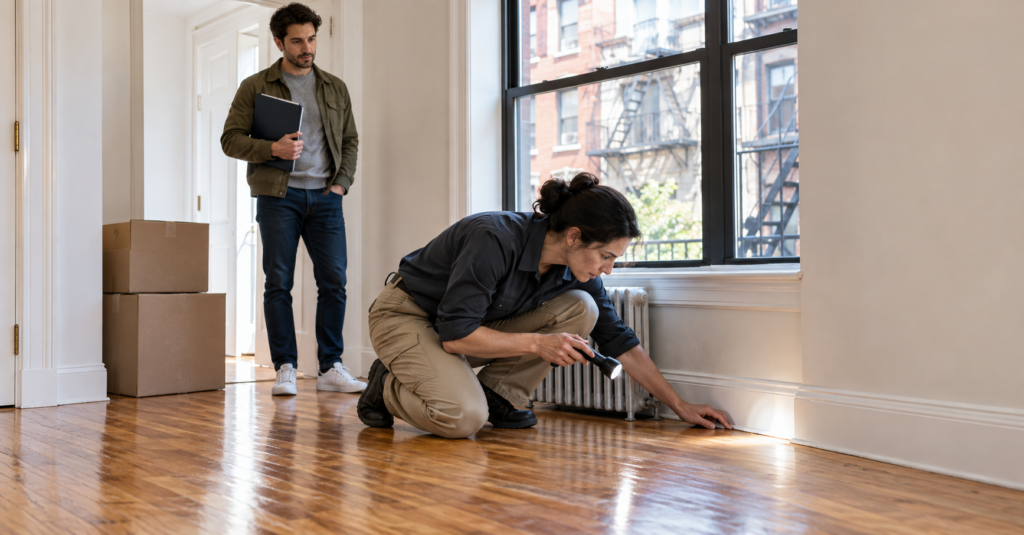
Request access to the empty apartment before unloading when practical. If the rental is furnished, include the provided bed, sofa, and other upholstered items in the discussion about inspection.
The EPA identifies possible signs such as live bedbugs, shed skins, eggs, dark spotting, and reddish stains on bedding or mattresses. Its bedbug identification guidance also explains that small infestations can be difficult to detect and other insects may be mistaken for bedbugs.
Photograph anything concerning and ask for professional identification. Avoid dismantling electrical fixtures or applying pesticides during a viewing.
For a move arranged remotely, ask a trusted person to attend the walkthrough or request a professional inspection. Treat this as one part of researching a new city before moving, alongside verifying the property and understanding local housing conditions.
Know Who to Contact After Moving In
Keep the landlord’s and managing agent’s contact details accessible. If you suspect bedbugs after arrival, report the concern promptly in writing and record the dates, locations, and any photographs.
If the owner does not address the condition, tenants can use the city’s bedbug complaint guidance or call 311. The reporting route depends on the housing type; NYCHA residents have a separate maintenance complaint process.
Preserve the disclosure, downloaded records, and correspondence together. A clear timeline helps explain what was reported before the move and what was observed afterward, without relying on memory or assumptions about where the problem began.
Note: This article provides general relocation information, not legal advice or a pest inspection. Historical records cannot establish an apartment’s current condition; unresolved concerns should be assessed by a qualified pest management professional.