
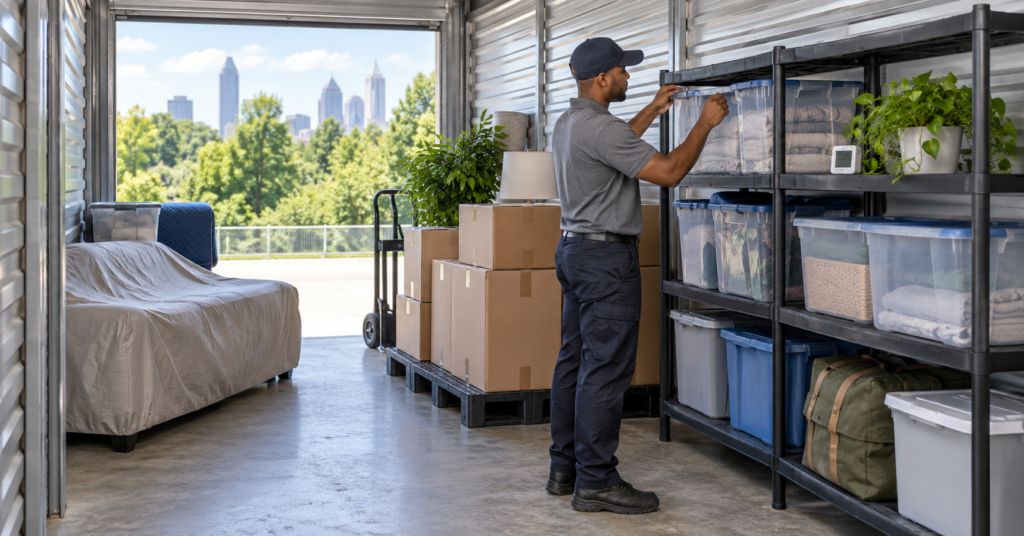
Atlanta’s warm, humid conditions can make storage more complicated than placing belongings in boxes and closing the unit. Moisture may weaken cardboard, encourage musty odors and affect furniture, fabrics, books and electronics. Food residue and poorly sealed containers can also attract insects or rodents.
Effective Atlanta storage unit packing begins before anything enters the facility. Belongings should be clean, completely dry and packed according to how long they will remain stored. The unit itself should also be inspected for water intrusion, pest evidence and ventilation problems.
Decide Whether Climate Control Is Necessary
An indoor unit described as climate-controlled may provide more stable conditions than an outdoor drive-up unit, but the term does not guarantee a precise temperature or humidity level. Ask the facility what is actually controlled and whether the system operates continuously.
Climate-controlled storage deserves consideration for:
- Solid-wood and veneered furniture
- Leather upholstery
- Books and paper records
- Photographs and artwork
- Electronics
- Musical instruments
- Mattresses and upholstered furniture
- Clothing stored for several seasons
- Items with financial or sentimental value
A standard unit may be sufficient for weather-resistant tools, patio furniture and sealed household goods stored briefly. The condition and value of each item should guide the decision.
Inspect the Unit Before Moving In
Packing cannot compensate for an unsuitable storage space. Visit the exact unit rather than relying only on photographs of the facility.
Look for:
- Water stains on walls or ceilings
- Rust around doors or metal joints
- Gaps beneath the entry door
- Condensation or a persistent musty smell
- Droppings, insect remains or damaged insulation
- Standing water near the building
- Damaged seals or visible daylight around exterior openings
Ask how the property handles roof leaks, pest monitoring and storm-related water. Confirm whether management permits freestanding shelves, floor barriers or moisture-monitoring devices.
Photograph the empty unit before moving anything inside. These images establish its original condition and may help if water or pest damage is discovered later.
Clean and Dry Everything Before Packing
Dirt, crumbs, body oils and moisture create avoidable storage problems. Upholstered furniture should be vacuumed, kitchen items degreased and clothing washed before packing.
Allow cleaned belongings to dry fully. Do not pack freshly shampooed rugs, damp outdoor furniture or recently defrosted appliances on the same day they are cleaned.
Moisture sealed inside a plastic bin or furniture wrap cannot escape easily. Even a climate-controlled unit may not prevent mustiness if an item was packed while damp.
Choose Containers Based on the Contents
Cardboard moving boxes remain useful because they are affordable, stackable and easy to label. However, they can absorb moisture and provide less protection against insects than rigid containers.
Use sturdy cardboard boxes for dry, low-risk belongings that need ventilation or will be stored briefly. Choose lidded plastic containers for items requiring a stronger barrier against dust and pests.
Plastic bins work well for:
- Seasonal decorations
- Non-delicate household supplies
- Clean linens
- Children’s toys
- Kitchen accessories
- Frequently retrieved items
Containers should be clean and fully dry before filling. Avoid packing anything damp inside an airtight bin. Silica-gel packets may help with minor residual moisture, but they cannot correct a wet item or a poorly controlled unit.
Do not reuse grocery or food boxes. Odors and residue may remain even when the cardboard appears clean.
Keep Boxes Away From the Floor and Walls
A box sitting directly on concrete is more exposed to condensation, minor leaks and pests traveling along the floor. Create separation using facility-approved shelving, plastic pallets or another permitted raised platform.
Leave a small gap between stored belongings and exterior walls. This improves inspection access and helps prevent unnoticed contact with condensation.
Place heavier containers at the bottom of each stack. Avoid building unstable columns that press against the ceiling or fire-suppression equipment. Facility rules may establish minimum clearance requirements.
Packing Wooden Furniture for Atlanta Storage
Wood reacts to changing environmental conditions. Excess moisture can contribute to swelling, warped components or damaged finishes, while rapid drying can create cracking or joint movement.
Before storage:
- Clean the surface with a suitable product
- Let the furniture dry completely
- Remove drawers when necessary to reduce lifting weight
- Disassemble approved pieces carefully
- Keep screws and fittings in labeled bags
- Cover surfaces with clean moving blankets or breathable furniture covers
Avoid placing plastic wrap directly around wooden furniture for extended storage. An airtight covering can trap moisture against the finish. Plastic may be useful during transportation, but a breathable cover is generally more appropriate once the item is inside the unit.
Do not place heavy boxes on tables, dressers or upholstered seats. Extended pressure may damage joints, finishes or cushions.
Protecting Sofas, Mattresses and Fabric Furniture
Vacuum upholstery carefully, including seams and the areas beneath removable cushions. Check for food debris, existing insects and dampness before applying a cover.
Use a purpose-made cover that protects against dust without sealing in moisture. If a plastic transportation cover is used during the move, consider replacing it with a breathable storage cover after the furniture reaches the unit.
Follow the manufacturer’s guidance for mattress positioning. Some mattresses may deform when stored upright for an extended period, while others require support beneath the full surface.
Keep upholstered items away from exterior walls and allow limited airflow around them. Do not use the sofa as shelving for heavy containers.
Storing Clothing, Linens and Shoes
Wash and dry textiles before storage. Stains and body oils can become harder to remove over time and may attract insects.
Fold clothing loosely rather than compressing delicate fabrics for an extended period. Use clean bins or garment containers appropriate for the material. Avoid placing fabric in thin disposable bags that can tear or trap condensation.
Shoes should be cleaned, dried and packed with enough space to retain their shape. Do not store wet athletic shoes or outdoor footwear with clothing.
Label containers by clothing type or season instead of using a general description such as “bedroom.” Specific labels make partial retrieval easier without opening every bin.
Books, Documents and Photographs
Paper readily absorbs moisture and odors. Books should be dry, clean and packed flat or upright with adequate support. Do not place them on their spines or overfill boxes until they become difficult to lift.
Use smaller containers because books become heavy quickly. Important documents and photographs may need archival-quality sleeves or containers rather than ordinary moving boxes.
Place paper belongings away from the unit entrance, floor and exterior walls. Highly valuable or irreplaceable records may be better kept somewhere with closely monitored environmental conditions.
Preparing Appliances for Storage
Refrigerators, freezers, washers and dishwashers can retain water after disconnection. Remaining moisture may produce odors, corrosion or mold.
Before moving an appliance into storage:
- Disconnect it according to manufacturer instructions
- Drain supply lines, pumps and reservoirs
- Defrost cold-storage appliances
- Clean food residue and detergent buildup
- Allow the interior to dry thoroughly
- Secure removable shelves for transportation
Once positioned, refrigerator and freezer doors should generally remain slightly open when permitted and safely supported. This allows air circulation inside the cabinet.
Never store food, grease, trash or water inside an appliance.
Reducing Pest Attraction
Pest prevention starts with removing food and organic residue. Do not store pantry goods, pet food, birdseed, plants or open candles unless the facility expressly allows them and they can be stored safely.
Inspect belongings before packing, particularly items from garages, basements, patios and sheds. Look inside drawers, folded furniture, appliance cavities and fabric seams.
Avoid scattering mothballs, pesticide powders or unapproved pest-control products around the unit. These products may create health risks, damage belongings or violate the rental agreement. Report pest evidence to facility management rather than attempting to treat the building independently.
Arrange the Unit for Inspection and Retrieval
A completely packed wall of boxes makes it difficult to notice leaks, damaged containers or pest activity. Create a narrow central aisle and keep important labels facing outward.
Place frequently needed belongings near the front. Seasonal or long-term items can go toward the back. Maintain a simple inventory showing which containers hold important belongings.
A practical arrangement includes:
| Storage area | Suitable belongings |
|---|---|
| Front | Frequently retrieved boxes and seasonal items |
| Center | Furniture and medium-term storage |
| Back | Rarely needed, securely packed belongings |
| Shelving | Small containers and fragile boxes |
| Raised floor area | Heavy bins and stable furniture |
Do not hide facility equipment, vents, sprinkler components or electrical panels.
Check the Unit After Severe Weather
Long-term storage should not be treated as a completely hands-off arrangement. Inspect the unit periodically and after extended heavy rain, severe storms or reported building problems.
During each visit, check for:
- New odors
- Soft or discolored cardboard
- Condensation inside clear bins
- Water marks near the entrance
- Pest droppings or damaged packaging
- Rust on metal belongings
- Changes in wood or upholstery
- Unexplained movement of stored items
Addressing a small moisture problem quickly may prevent damage from spreading across several boxes.
Questions to Ask an Atlanta Storage Facility
Before signing the agreement, ask:
- Does climate control include humidity management?
- What temperature or humidity range is targeted?
- How are leaks and pest reports handled?
- Has the specific building experienced water intrusion?
- Are units inspected between renters?
- Which items are prohibited?
- Can customers use shelving or raised floor platforms?
- What access hours apply?
- Does the property remain accessible after severe weather?
- What protection is provided by the rental agreement?
Review any separate insurance or protection-plan terms carefully. A secure building and careful packing reduce risk, but they do not guarantee that stored belongings will remain undamaged.
Note: Storage conditions, permitted materials and insurance requirements vary by facility. Confirm the rules for the specific Atlanta storage property before packing or placing belongings inside the unit.