
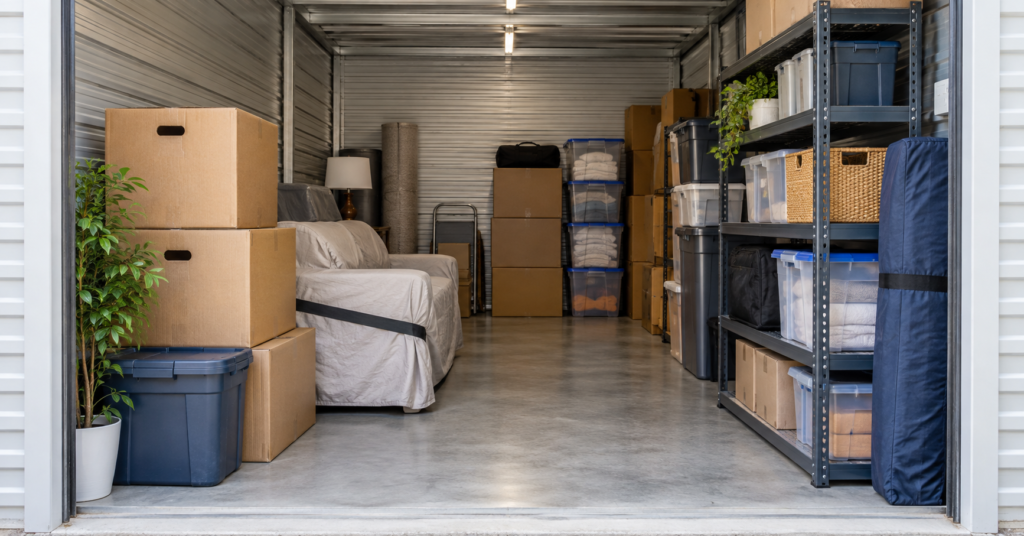
Temporary storage is often arranged when a new home is not ready, a property closing is delayed or a household moves into short-term accommodation. Belongings may initially be packed with the expectation that they will remain stored for only a few weeks.
When the delay extends into several months or longer, the original packing and storage arrangement may no longer be suitable. Cardboard boxes can weaken, furniture coverings may trap moisture and frequently needed belongings may be buried behind the rest of the shipment.
Converting temporary moving storage into a long-term arrangement requires more than extending the rental period. The belongings, facility conditions, inventory and access plan should all be reviewed.
Why Temporary Packing May Not Be Suitable
Packing for a move is designed to protect belongings during handling and transportation. Packing for long-term storage must also account for environmental exposure, material deterioration and the pressure created by months of stacking.
Temporary packing may rely on:
- Previously used cardboard boxes
- Loose plastic wrapping
- Unlabeled cartons
- Furniture drawers containing belongings
- Bags placed between larger items
- Boxes stacked according to loading order
- Limited access to items at the back
These methods may be acceptable for a short transition but become inconvenient or risky when the storage period changes.
Determine How Long Storage May Continue
It may be impossible to select an exact removal date. However, the difference between three additional months and several years can change the required storage plan.
Consider:
- The earliest realistic removal date
- Whether the destination property has been confirmed
- How often the unit will be accessed
- Whether belongings will be removed gradually
- Whether another relocation is expected
- Which items are likely to remain stored indefinitely
If the timeline is still uncertain, prepare the unit as though it will be used longer than expected. Repacking after deterioration begins will be more difficult.
Inspect the Belongings Before Repacking
Do not automatically seal every box more tightly. Open a sample from different sections of the unit and examine the contents.
Look for:
- Damp cardboard
- Musty odors
- Condensation inside plastic
- Crushed box corners
- Pest activity
- Rust on metal objects
- Changes in wood or upholstery
- Leaking containers
- Items packed while dirty or damp
A problem affecting one box may indicate a wider environmental or packing issue. Identify the cause before transferring everything into new containers.
Replace Weak Cardboard Boxes
Cardboard can lose strength when exposed to humidity, floor moisture or pressure from excessive stacking. A box that survived transportation may not remain structurally sound through an extended storage period.
Replace cartons that are:
- Crushed or bulging
- Soft along the bottom
- Torn near the handles
- Stained by moisture
- Overfilled
- Unable to close flat
- Supporting excessive weight
Use cartons of consistent sizes where practical. Uniform boxes are easier to stack without creating unstable gaps.
Avoid creating boxes that are too heavy to retrieve safely. Books, tools and dishes should be divided among smaller cartons instead of concentrated in large boxes.
Plastic Bins Are Not a Complete Solution
Plastic containers resist minor water exposure better than cardboard and may provide improved protection against dust. However, they do not make every stored item safe.
Sealed plastic can trap moisture when clothing, linens or household goods are not completely dry. Thin bins may also crack or collapse when overloaded.
When using plastic containers:
- Confirm that the contents are clean and dry
- Avoid placing excessive weight inside
- Use lids designed for the container
- Do not force the lid closed over protruding contents
- Avoid stacking beyond the manufacturer’s limits
- Label the side as well as the top
- Inspect bins periodically for cracks
Choose containers according to the belongings rather than transferring every item into plastic automatically.
Repack Furniture for Long-Term Storage
Furniture prepared for transportation may be covered in stretch wrap to keep drawers closed or hold protective blankets in place. Leaving certain materials tightly wrapped for an extended period can restrict airflow and trap moisture.
Before long-term storage:
- Clean and dry every surface
- Empty cabinets and drawers
- Remove food particles
- Detach suitable shelves and legs
- Keep hardware in labeled bags
- Use breathable furniture covers where appropriate
- Protect corners without sealing the entire piece unnecessarily
- Store cushions according to their material requirements
- Keep furniture raised from a bare concrete floor
Do not stack heavy boxes on sofas, mattresses or delicate wood furniture. Continuous pressure can alter upholstery, damage frames or leave permanent marks.
Protect Mattresses Without Trapping Moisture
A mattress should be clean and completely dry before entering storage. A protective bag can reduce exposure to dust and dirt, but sealing residual moisture inside can create odor or mold problems.
Store the mattress according to the manufacturer’s guidance. Some designs should remain flat rather than standing on one edge for an extended period.
Avoid placing sharp furniture, heavy cartons or metal components against the mattress. Inspect its covering whenever the unit is opened.
Decide Whether Climate Control Is Needed
Standard storage does not necessarily maintain stable temperature and humidity. Climate-controlled storage may be worth considering for belongings that are vulnerable to environmental changes.
Potentially sensitive items include:
- Wood furniture
- Leather
- Electronics
- Musical instruments
- Photographs
- Important documents
- Books
- Artwork
- Collectibles
- Certain fabrics
- Media collections
Climate control does not eliminate the need for correct packing. It reduces certain environmental risks but cannot protect belongings from trapped moisture, weak boxes or careless stacking.
Ask the facility what “climate controlled” means at that location. Temperature control, humidity management and indoor access are not always the same service.
Review the Storage Facility
Extending the storage agreement is an opportunity to reconsider whether the existing facility still fits the household’s needs.
Large operators such as Public Storage may appear alongside regional and independent facilities during the comparison process. Brand recognition alone should not replace a review of the specific property, unit and contract.
Evaluate:
- Indoor or outdoor unit access
- Climate-control terms
- Pest-management practices
- Drainage around the building
- Lighting and access hours
- Gate and entry procedures
- Security features
- Available unit sizes
- Rate-change policies
- Insurance requirements
- Notice required before leaving
Conditions can vary between facilities operated under the same brand. Inspect the exact property and unit whenever possible.
Create a New Inventory
A hurried moving inventory may list broad descriptions such as “kitchen boxes” or “bedroom furniture.” Long-term storage requires enough detail to locate belongings without opening multiple cartons.
Assign each box or container a unique number. Record:
- Container number
- General contents
- Fragile items
- Replacement value where relevant
- Storage-unit location
- Date packed or inspected
- Owner of the belongings
- Priority for retrieval
Photograph valuable items and the contents of important containers before closing them. Store the inventory somewhere outside the unit, such as a secure digital file.
Do not write detailed descriptions of expensive belongings where they can be read from outside the container.
Build an Access Aisle
A unit packed for short-term storage may be arranged to maximize every available inch. That approach becomes inconvenient when belongings need to be retrieved over time.
Create an aisle that allows access to different sections without unloading the entire unit. Position frequently needed belongings close to the entrance.
The layout might separate:
- Seasonal clothing
- Documents
- Children’s belongings
- Kitchen items
- Furniture
- Tools
- Holiday decorations
- Items intended for donation
- Belongings scheduled for early removal
Leave labels facing the aisle. Boxes with upward-facing labels may become unreadable after other items are stacked on top.
Keep Belongings Off the Floor
A concrete floor can transfer moisture and may be vulnerable to water intrusion. Pallets, shelving or another suitable raised platform can create separation between stored belongings and the floor.
The platform must be stable and approved by the facility. Avoid materials that create pest or fire concerns.
Do not allow furniture legs to rest unevenly across unstable supports. Weight should be distributed so the item cannot tip or warp.
Improve Air Circulation
Packing every item tightly against walls can reduce circulation and make inspection difficult. Where space permits, leave a small gap between belongings and the unit walls.
Avoid sealing damp materials inside plastic or placing wet outdoor equipment into storage. Clean and dry refrigerators, freezers and washing machines before storing them.
Appliance doors may need to remain slightly open to reduce odor and trapped moisture. Secure them so they cannot swing or create an unsafe obstruction.
Remove Items Unsuitable for Long-Term Storage
A storage unit should not become a place to postpone decisions about unsafe or prohibited belongings.
Remove:
- Perishable food
- Flammable liquids
- Fuel
- Pressurized containers
- Wet materials
- Open chemicals
- Unapproved batteries
- Live plants
- Trash
- Items prohibited by the facility
Policies vary, so review the rental agreement instead of relying on a general storage checklist.
Hazardous materials may require disposal through an appropriate local program. Do not place them in ordinary trash without checking applicable requirements.
Review Insurance and Coverage Limits
A moving company’s transportation coverage may end after delivery to storage. The storage facility’s property insurance also may not automatically cover the customer’s belongings.
Determine:
- Whether insurance is required
- Which events are covered
- Whether water damage is included
- Whether pests or mold are excluded
- How valuables are treated
- Whether coverage has a maximum amount
- What documentation is needed for a claim
- Whether a homeowners or renters policy applies
Maintain photographs, receipts, serial numbers and inventory records outside the unit. Documentation created after a loss may be less useful.
Reconsider the Unit Size
A temporary unit may have been selected quickly or packed to maximum capacity. Long-term storage often requires more room for shelving, airflow and retrieval.
A larger unit may improve accessibility but increase the monthly cost. A smaller unit may be possible after decluttering and removing unwanted belongings.
Compare the expense of additional space with the cost of repeated labor whenever buried items must be retrieved. The cheapest monthly rate may not offer the lowest practical cost.
Understand Long-Term Storage Costs
The monthly rental rate is only one part of the expense.
Long-term costs may include:
- Monthly rent
- Insurance
- Climate-control premiums
- Replacement boxes and containers
- Shelving or approved floor protection
- Professional repacking
- Transportation to another unit
- Access fees
- Lock replacement
- Administrative charges
- Rate increases
- Final removal and cleaning
Ask how promotional rates expire and how rent increases are communicated. Calculate the likely annual expense rather than judging affordability from the first month.
Moving Belongings to Another Unit
Changing facilities or transferring to a different unit may require professional moving help, especially when the shipment includes furniture or heavy cartons.
Before requesting an estimate, prepare:
- A complete inventory
- Photographs of the current unit
- Unit dimensions
- Floor and elevator information
- Distance from the unit to truck parking
- Access hours
- Gate procedures
- Details about heavy items
- The destination unit number and location
A mover may charge minimum hours, travel time and labor at both facilities. Ask whether repacking services and packing materials are included.
Plan for Partial Retrieval
Long-term storage does not always mean that everything remains untouched. A household may remove seasonal items, documents or furniture at different times.
Place likely retrieval items near the aisle and avoid using them as structural support for other stacks. Update the inventory whenever something enters or leaves the unit.
Record:
- Removal date
- Person retrieving the item
- New location
- Containers opened
- Items returned
- Damage observed
This prevents confusion when several family members have access.
Set Rules When Storing Someone Else’s Belongings
Temporary storage frequently becomes complicated when belongings belong to a friend or family member. A vague promise to hold “a few things” may eventually involve furniture, dozens of boxes and no firm pickup date.
Agree in writing on:
- What is being stored
- Who pays the expenses
- How long the arrangement will last
- Who can access the belongings
- Whether items may be moved to another facility
- What happens if payments stop
- The notice required before retrieval
- What happens after the agreed deadline
The agreement should reflect applicable law and the facility contract. Do not sell, discard or relocate another person’s property without understanding the owner’s rights.
Schedule Periodic Inspections
Long-term storage should not be treated as completely maintenance-free. Visit the unit periodically when practical.
During an inspection:
- Check for moisture or odors
- Examine the lowest boxes
- Look for pest activity
- Confirm that covers remain secure
- Inspect container lids
- Review furniture supports
- Check for leaning stacks
- Confirm that contact and payment information is current
- Update the inventory
Document problems with photographs and notify facility management promptly when the issue relates to the property.
Questions to Ask Before Extending Storage
Ask the facility:
- Will the monthly rate change?
- Is climate control available?
- Can the unit be transferred?
- What insurance is required?
- Are there restrictions on shelving?
- Which belongings are prohibited?
- How often can the unit be accessed?
- What notice is required before leaving?
- Are there fees for changing units?
- What happens after a missed payment?
- How are property problems reported?
Request current terms in writing. The agreement signed for short-term storage may not reflect later pricing or service changes.
Frequently Asked Questions
Can moving boxes remain in storage for several years?
They can, but their condition depends on box quality, stacking weight and environmental exposure. Damaged or damp cartons should be replaced before the storage period is extended.
Should furniture remain wrapped in plastic?
Plastic can protect furniture during transportation, but certain materials may trap moisture when left tightly wrapped. Furniture should be clean and dry, with coverings selected for the material and storage environment.
Is climate-controlled storage necessary?
Not for every shipment. It may be beneficial for wood, leather, electronics, artwork, documents and other environmentally sensitive belongings.
How should a storage unit be reorganized?
Create an aisle, face labels outward, place frequently needed belongings near the entrance and keep boxes off the floor. Heavy containers should remain at the bottom of stable stacks.
Does storage-facility insurance cover everything?
Coverage and exclusions vary. Review limits, deductibles and excluded events, and determine whether another insurance policy applies.
When should professional movers be hired?
Professional help may be appropriate when furniture, appliances, heavy cartons or a complete unit must be transferred. Minimum labor hours and travel charges may apply.
Note: Facility conditions, insurance requirements and prohibited items vary. Review the rental agreement, inspect stored belongings and obtain written estimates before extending, repacking or transferring a storage arrangement.