Long-term furniture storage requires more preparation than simply placing everything inside a storage unit and covering it with plastic. Wood can swell, crack or warp, upholstery can develop odors or mold, metal can corrode, and leather can dry out when furniture is exposed to unstable temperatures, moisture, dust or improper stacking.
To store furniture long-term without causing damage, clean and dry every piece, disassemble appropriate items, use breathable protective coverings, keep furniture off the floor and inspect the storage space periodically.
The correct preparation method depends on the furniture’s materials, construction and condition. A solid wood table requires different protection from an upholstered sofa, leather chair or metal bed frame.
What Can Damage Furniture in Long-Term Storage?
Most storage damage develops gradually. Furniture may appear properly protected when stored but show deterioration months later.
Common causes include:
| Risk | Possible damage |
|---|---|
| High humidity | Mold, mildew, swelling, warping and corrosion |
| Extremely dry conditions | Cracking, shrinking and brittle materials |
| Temperature fluctuations | Expansion, contraction and weakened joints |
| Direct contact with concrete | Moisture transfer and staining |
| Improper plastic wrapping | Trapped condensation and mold |
| Dust and dirt | Stains, odors and surface abrasion |
| Poor stacking | Crushed upholstery and broken frames |
| Pest activity | Chewed fabric, nesting and contamination |
| Direct sunlight | Faded fabric and discolored finishes |
| Insufficient airflow | Condensation, odors and mold growth |
| Moving furniture while dirty | Permanent stains and scratched finishes |
The U.S. Environmental Protection Agency explains that controlling moisture is central to preventing mold. The EPA generally recommends keeping indoor humidity below 60%, with a range between approximately 30% and 50% considered ideal when possible.
A storage space does not necessarily need to feel wet for moisture to cause problems. Humid air, condensation, roof leaks and moisture entering through concrete can all affect stored furniture.
Choose the Right Storage Environment
The storage space has a major effect on how well furniture survives.
Before moving anything into a storage unit, basement, garage or other space, inspect it for:
- Water stains
- Roof or plumbing leaks
- Condensation
- Musty odors
- Visible mold
- Pest activity
- Gaps around doors
- Poor drainage
- Direct sunlight
- Large temperature changes
- Dirt or standing water
- Inadequate security
Do not store furniture in a damp space and assume wrapping will protect it. Coverings cannot correct an underlying moisture problem.
Our guide explaining what should and should not go into a storage unit can help you determine which belongings may require another storage arrangement.
Is Climate-Controlled Storage Necessary?
Climate-controlled storage may be worth considering when furniture is valuable, antique, sentimental or particularly sensitive to temperature and humidity.
It can also be helpful for:
- Solid wood furniture
- Veneered or inlaid furniture
- Leather upholstery
- Musical instruments
- Fine fabrics
- Antique furniture
- Furniture containing adhesives
- Items stored in very hot, cold or humid climates
- Storage lasting several seasons
Climate control does not guarantee that furniture cannot be damaged. You still need to clean, cover and position everything correctly.
Ask the storage provider what “climate controlled” means. Some facilities regulate temperature without controlling humidity, while others may maintain both within specified ranges.
Questions to ask include:
- Is temperature actively regulated?
- Is humidity monitored or controlled?
- What ranges are maintained?
- Is the storage area indoors?
- Is backup power available?
- How are leaks and water intrusion handled?
- How frequently is pest control performed?
- Can customers monitor the unit’s condition?
For ordinary furniture stored for a relatively short period in a mild climate, standard storage may be sufficient if the space remains clean and dry. Long-term storage across changing seasons creates greater risk.
Clean Furniture Before Storing It
Never place dirty furniture into long-term storage. Dust, food particles, body oils, pet hair and spills can attract pests, cause odors and become more difficult to remove over time.
Use a cleaning method appropriate for the material and follow the manufacturer’s care instructions.
Wooden Furniture
Remove dust with a clean, soft cloth. Clean the surface using a product appropriate for the finish, then allow it to dry completely.
Avoid saturating wood with water. Excess moisture can enter joints, veneers and unfinished areas.
Inspect wooden furniture for:
- Loose joints
- Lifting veneer
- Cracks
- Water marks
- Insect activity
- Unstable legs
- Damaged finishes
Complete necessary repairs before storage when practical. Moving and disassembling an already weakened piece may make the damage worse.
Upholstered Furniture
Vacuum all surfaces, seams, cushions and crevices. Remove crumbs, pet hair and loose debris.
Treat stains according to the fabric’s care instructions. If the furniture is professionally cleaned, allow enough drying time before wrapping or moving it into storage.
Never cover damp upholstery. Moisture trapped inside cushions can cause mold and persistent odors.
Leather Furniture
Remove dust with a soft cloth and use cleaning products approved for that particular type of leather.
Some leather furniture may benefit from an appropriate conditioner before storage, but unsuitable products can discolor or damage the surface. Follow the manufacturer’s instructions and test products on an inconspicuous area when advised.
Allow the leather to dry completely before covering it.
Metal Furniture
Clean dirt, grease and residue from metal surfaces. Dry the furniture carefully, especially around joints, screws and hollow sections.
Check for existing rust. Address corrosion appropriately before storage because it may continue spreading.
Glass and Mirrored Furniture
Clean and dry glass surfaces before packing. Inspect for chips, cracks and loose mounting hardware.
Do not apply adhesive tape directly to glass, mirrors or finished frames. Tape residue can be difficult to remove and may damage surrounding finishes.
Make Sure Everything Is Completely Dry
Drying is one of the most important parts of long-term furniture storage.
Furniture may feel dry on the surface while moisture remains inside:
- Upholstery foam
- Cushion filling
- Wood joints
- Woven materials
- Furniture undersides
- Hollow metal components
- Recently cleaned fabric
- Areas beneath protective pads
Allow cleaned furniture to dry in a well-ventilated area. Do not move it directly from steam cleaning or outdoor washing into a sealed storage space.
The EPA advises drying wet materials as quickly as possible—ideally within 24 to 48 hours—to reduce the risk of biological growth. Furniture that remains damp or already shows mold should be evaluated and treated before storage.
Disassemble Furniture When Appropriate
Disassembling furniture can reduce the amount of space required and make large pieces easier to carry. However, not every item should be taken apart.
Disassemble only components designed to be removed, such as:
- Table legs
- Bed frames
- Shelving units
- Headboards
- Removable sofa legs
- Modular furniture
- Detachable table leaves
- Removable cabinet shelves
Before disassembling a piece:
- Photograph it from several angles.
- Photograph the connection points.
- Review the manufacturer’s instructions.
- Label every component.
- Use the correct tools.
- Avoid forcing stuck hardware.
- Place screws and fittings in labeled bags.
- Protect each component individually.
Do not tape hardware bags directly to finished wood, leather or fabric. Adhesive may stain or pull away the finish.
Place all hardware bags inside one clearly labeled container or attach them to a protected, unfinished section using a method that will not cause damage.
Antique, custom-built or fragile furniture may require professional handling. Repeated disassembly can weaken particleboard, fiberboard and some ready-to-assemble furniture.
Protect Furniture With the Right Covering
Furniture needs protection from dust, debris, light contact and surface abrasion. However, the covering should not trap moisture against the material.
Use Breathable Covers for Long-Term Storage
Good long-term covering options may include:
- Clean cotton sheets
- Furniture blankets
- Breathable furniture covers
- Clean moving pads
- Material-specific protective covers
The Smithsonian Museum Conservation Institute notes that washable cotton sheeting can provide protection from dust for stored textiles. Breathable coverings can allow some air movement while shielding furniture from debris.
Make sure every covering is clean and completely dry.
Be Careful With Plastic Wrap
Plastic stretch wrap can be useful during transportation because it keeps drawers closed and protects certain surfaces from brief exposure to dirt or weather.
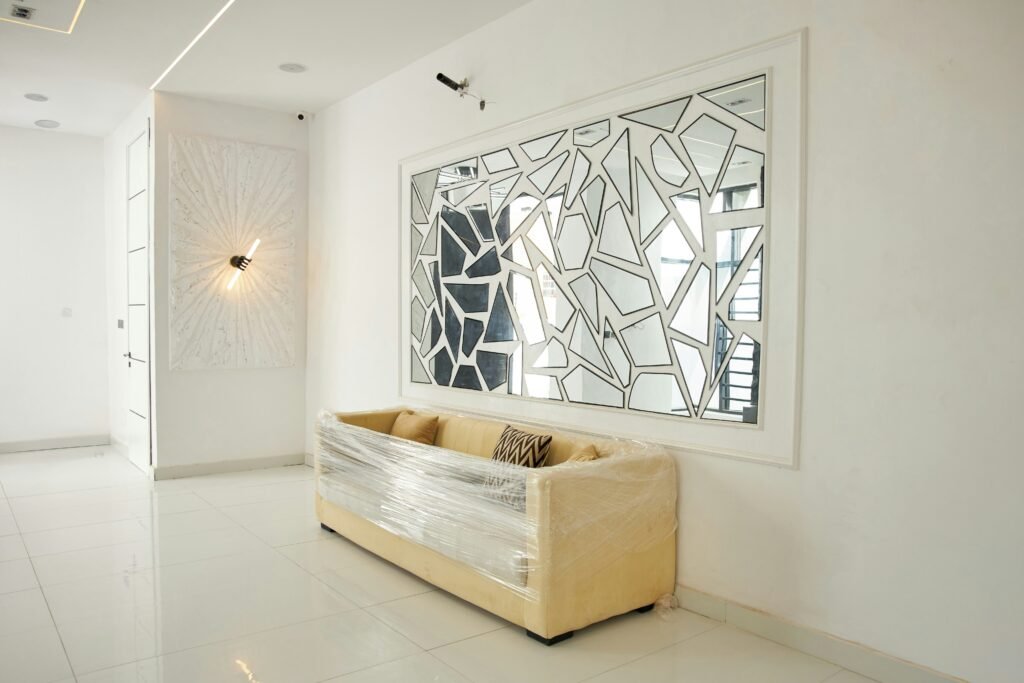
For long-term storage, tightly sealed plastic can trap condensation and moisture. This is especially risky for wood, leather and upholstered furniture.
If plastic is required for a particular item, avoid placing it directly against moisture-sensitive surfaces for an extended period. Use an appropriate breathable protective layer first and avoid completely sealing furniture unless a specialist or manufacturer recommends it.
Never wrap damp furniture in plastic.
Protect Corners and Edges
Use appropriate corner protectors, furniture pads or clean cushioning around:
- Table corners
- Chair arms
- Headboards
- Cabinet edges
- Decorative trim
- Glass frames
- Carved details
Secure the protection without applying adhesive directly to finished surfaces.
Keep Furniture Off the Floor
Storage-unit floors may be affected by condensation, minor leaks or water entering beneath a door.
Create separation between the furniture and floor using suitable supports such as:
- Storage racks
- Shelving
- Clean pallets
- Raised platforms
- Furniture risers
Make sure every support is stable, level, dry and capable of carrying the furniture’s weight.
The National Park Service recommends leaving space between storage furniture and the floor when possible to assist with cleaning and provide protection from water intrusion. Although household storage differs from museum storage, the same principle can reduce exposure to minor moisture problems.
Avoid placing upholstered or wooden furniture directly on bare concrete. Also avoid unstable scrap wood, damaged pallets or supports that can stain, collapse or transfer contaminants.
Leave Space Around the Furniture
Packing a storage unit too tightly can limit airflow and make inspections difficult.
Leave enough room to:
- Walk through the unit
- Inspect furniture surfaces
- Check walls and floors for moisture
- Look for pest activity
- Remove an item without unloading everything
- Allow some air circulation
- Reach items stored at the back
A narrow center aisle can make a significant difference.
Avoid pressing furniture tightly against exterior walls. Wall surfaces may become cold or develop condensation, particularly when temperatures fluctuate.
Position Each Type of Furniture Correctly
Different furniture types require different storage positions.
Sofas and Upholstered Chairs
Store sofas and chairs in their normal upright position whenever possible.
Do not place a sofa vertically on one arm unless the manufacturer or a qualified professional confirms that its frame can support that position. Upright storage may place stress on the frame and crush upholstery.
Remove detachable cushions and cover them separately. Store cushions without heavy objects on top.
Avoid placing boxes, tables or other furniture on sofa seats.
Wooden Tables
Remove legs if they are designed to detach safely. Wrap the tabletop and legs separately.
If the table remains assembled, do not overload its surface. A dining table is designed for normal household use, not necessarily for supporting stacks of heavy boxes for months.
Store removable leaves flat with proper support unless the manufacturer recommends another position.
Dressers and Cabinets
Empty drawers and cabinets before moving them. Leaving belongings inside increases the weight and may strain the frame.
Clean and dry the interior. Depending on the furniture design and storage conditions, leaving doors or drawers slightly open may promote airflow. Make sure doing so does not place stress on hinges or create a safety hazard.
Do not use adhesive tape to keep drawers closed. Use moving wrap during transport and remove or loosen it for long-term storage when appropriate.
Mattresses
Follow the mattress manufacturer’s storage instructions.
Many mattresses should be stored flat on a clean, supportive surface. Storing some mattresses upright for long periods can cause layers to shift or the structure to sag.
Use a breathable or purpose-made mattress cover and make sure the mattress is completely dry. Do not place heavy boxes or furniture on top.
Glass and Mirrors
Use mirror or picture boxes, corner protection and suitable cushioning.
Store large mirrors and glass panels upright with appropriate support rather than laying them flat beneath other belongings. Mark them clearly and prevent them from tipping.
Do not lean unsupported glass against a wall.
Bed Frames
Disassemble frames according to their instructions. Group related rails and components together without allowing metal hardware to scratch finished surfaces.
Keep all brackets, bolts and screws in a labeled hardware container.
Metal Furniture
Protect metal from moisture and avoid direct contact with damp floors or walls.
Separate metal components from delicate surfaces so they cannot scratch wood, glass, leather or upholstery.
Do Not Stack Heavy Items on Furniture
Using furniture as storage shelving may save space, but it can cause permanent damage.
Heavy boxes may:
- Dent cushions
- Distort upholstery foam
- Scratch finishes
- Bow tabletops
- Break cabinet shelves
- Stress furniture joints
- Make the stack unstable
Use freestanding shelving designed to carry the expected weight.
If a lightweight item must be placed on a strong piece of furniture, distribute the load carefully and use suitable padding. Never assume a surface can safely support long-term weight simply because it feels solid.
Create a Furniture Inventory
Document every item before placing it into storage.
Your inventory should include:
| Information | Why it matters |
|---|---|
| Item description | Identifies the furniture |
| Condition | Records existing scratches or damage |
| Photographs | Provides a visual record |
| Disassembled components | Helps prevent missing pieces |
| Hardware location | Makes reassembly easier |
| Storage position | Helps locate the item |
| Estimated value | Supports insurance discussions |
| Special instructions | Records handling requirements |
Photograph furniture before wrapping it and again after it is positioned in storage.
Keep the inventory somewhere other than inside the storage unit. A digital backup can be useful.
Check Insurance and Storage Terms
Do not assume furniture is automatically protected against every type of loss.
Review:
- Homeowners or renters insurance
- Storage-facility requirements
- Available storage coverage
- Deductibles
- Coverage limits
- Water-damage exclusions
- Mold exclusions
- Pest exclusions
- Requirements for valuable items
- Documentation needed for a claim
The storage agreement may limit the facility’s responsibility for damage. Read the complete contract and ask questions before moving furniture into the unit.
High-value antiques, artwork and custom furniture may need an appraisal or separate insurance arrangement.
Inspect Furniture During Storage
Long-term storage should not mean leaving furniture untouched for years.
Inspect the unit periodically for:
- Water intrusion
- Condensation
- Musty odors
- Mold or mildew
- Pest droppings
- Insect activity
- Torn covers
- Shifting stacks
- Rust
- Warping
- Cracks
- Sagging cushions
- Security problems
Check after severe weather or major seasonal changes when possible.
If you discover moisture, identify and correct the source immediately. Move affected furniture to a dry location and obtain appropriate help when necessary.
Do not simply cover mold or wet furniture again.
Common Long-Term Furniture Storage Mistakes
Avoid these frequent errors:
- Storing furniture before it is completely dry
- Wrapping wood or upholstery tightly in plastic
- Placing furniture directly on concrete
- Stacking heavy boxes on sofas and tables
- Leaving food or crumbs inside furniture
- Using adhesive tape on finished surfaces
- Forgetting to label hardware
- Overpacking the storage unit
- Blocking all access to furniture
- Storing mattresses incorrectly
- Ignoring humidity and temperature changes
- Failing to inspect the unit
- Assuming all damage is insured
- Using dirty or damp moving blankets
- Leaning mirrors or glass without support
Long-Term Furniture Storage Checklist
Before leaving the storage space, confirm that:
- Every piece has been cleaned.
- All furniture is completely dry.
- Existing damage has been photographed.
- Appropriate furniture has been disassembled.
- Hardware is labeled and stored safely.
- Wood, fabric and leather have breathable protection.
- Plastic is not trapping moisture.
- Corners and edges are protected.
- Furniture is raised off the floor.
- Nothing is pressed tightly against an exterior wall.
- Sofas and chairs are in their normal position.
- Mattresses are stored according to manufacturer instructions.
- Mirrors and glass have proper support.
- Heavy boxes are not stacked on furniture.
- An inspection aisle remains open.
- Insurance and storage terms have been reviewed.
- The furniture inventory is stored elsewhere.
- A future inspection date has been scheduled.
Frequently Asked Questions
Should furniture be wrapped in plastic for long-term storage?
Tightly sealed plastic can trap moisture against wood, leather and upholstery. Breathable furniture covers, clean cotton sheets or appropriate moving blankets are generally more suitable for extended storage. Plastic may be useful during transportation, but it should not enclose damp furniture or trap condensation.
Is climate-controlled storage worth it for furniture?
It may be worthwhile for wood, leather, antiques, valuable pieces and furniture stored through periods of extreme heat, cold or humidity. Ask whether the facility regulates both temperature and humidity.
Can furniture be stored directly on concrete?
It is safer to raise furniture above concrete using stable, clean and weight-appropriate supports. Concrete floors may be affected by condensation, seepage or minor flooding.
Should furniture be disassembled before storage?
Disassemble components that were designed to be removed safely. Avoid taking apart antique, fragile or poorly constructed furniture without appropriate knowledge.
Can I store belongings inside dresser drawers?
Emptying drawers reduces the furniture’s weight and prevents strain during moving. It also allows you to clean the interior and check for moisture or pests.
How should a sofa be stored?
Clean and dry it thoroughly, remove detachable cushions, cover it with a breathable protective material and keep it in its normal upright position. Do not stack heavy objects on the seats.
How should a mattress be stored?
Follow the manufacturer’s instructions. Many mattresses should be cleaned, completely dried, covered and stored flat on a supportive surface without anything heavy placed on top.
How often should stored furniture be inspected?
There is no universal schedule, but periodic inspections are important. Inspect more frequently when the space is not climate controlled, the climate is humid or severe weather has occurred.
Can wooden furniture crack in storage?
Yes. Major changes in temperature and humidity can cause wood to expand, contract, split, warp or develop loose joints. A stable storage environment helps reduce the risk.
What should I do if furniture develops mold in storage?
Avoid disturbing extensive mold without appropriate protection. Identify and correct the moisture source, separate affected items and seek qualified remediation or conservation assistance when necessary. Do not wrap wet or moldy furniture and return it to storage.
Proper long-term furniture storage begins with a clean, dry and stable environment. Prepare each material correctly, use breathable protection, keep furniture elevated and avoid placing unnecessary weight on vulnerable surfaces.
Regular inspections are just as important as the initial preparation. Finding moisture, pests or shifting furniture early may prevent a small problem from becoming permanent damage.
Note: Furniture materials, finishes and construction methods vary. Follow manufacturer care instructions and seek qualified assistance for antiques, valuable pieces, existing mold or structurally damaged furniture. Storage conditions, insurance protection and facility responsibilities also vary, so review all agreements before storing your belongings.