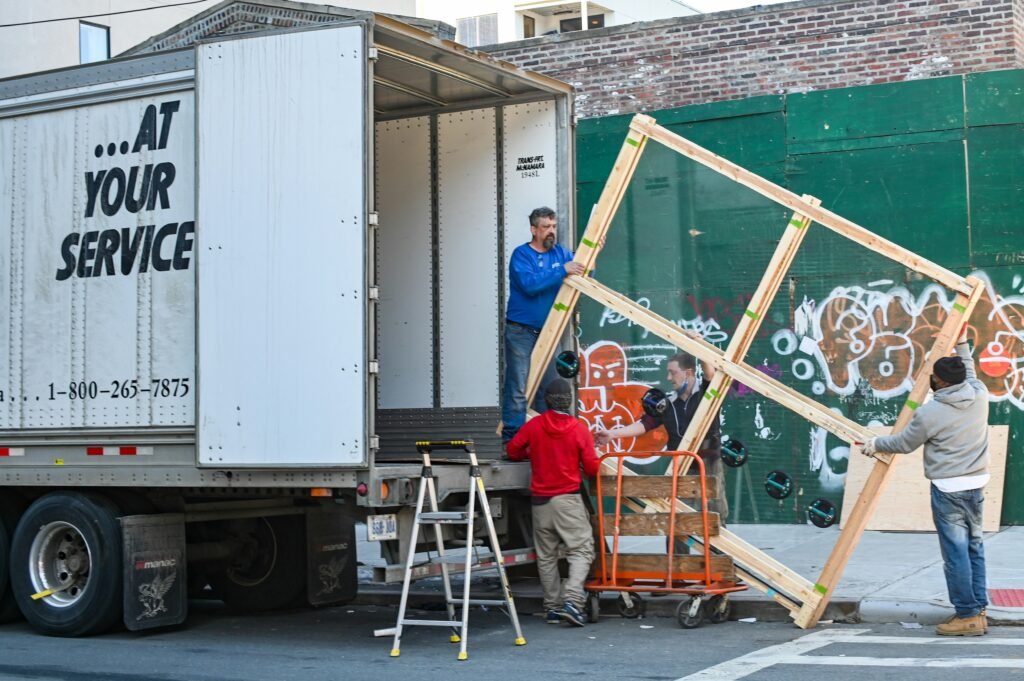

Dallas apartment moving cost is influenced by more than the number of boxes and furniture pieces being transported. The floor of the apartment, elevator availability, parking distance and walking route can substantially change how long a local move takes.
A short move between two Dallas apartments may still become expensive when movers must carry everything through long hallways, cross a parking garage or make repeated trips up several flights of stairs. Understanding these access conditions makes it easier to request an accurate estimate and compare moving quotes fairly.
Average Dallas Apartment Moving Cost
A local Dallas apartment move is commonly priced by the hour. The hourly rate normally reflects the number of movers assigned, the truck and basic moving equipment. Many companies also impose a minimum number of billable hours.
The following ranges can be used for early budgeting:
| Apartment size | Typical local moving range |
|---|---|
| Studio apartment | $350–$650 |
| One-bedroom apartment | $450–$900 |
| Two-bedroom apartment | $700–$1,400 |
| Three-bedroom apartment | $1,000–$2,000 |
These are planning estimates for local apartment moves rather than guaranteed prices. Packing, specialty items, travel charges, difficult building access and unusually large inventories can push the total above these ranges.
A two-person crew with a truck may cost approximately $130 to $170 per hour in the Dallas market. A three-person crew may fall closer to $180 to $240 per hour. The larger crew has a higher hourly rate, but it may complete a difficult apartment move more quickly.
How Floor Access Changes the Price
Floor access affects the amount of labor required to remove belongings from one apartment and place them in another. Movers can complete a ground-floor move more efficiently when the truck is parked near the entrance and there are no stairs or elevators to navigate.
An upper-floor apartment introduces additional steps into the carrying route. The crew may need to load items into an elevator, wait for the elevator, unload into a hallway and then carry everything to the unit. If there is no elevator, every item must be carried manually on the stairs.
The effect on the final price depends on how the mover calculates the charge. Floor access may result in:
- Additional hourly labor because the move takes longer
- A stair fee based on the number of flights
- An elevator or building-access charge
- A larger crew requirement
- A separate fee for unusually difficult items
Some movers include ordinary elevator use in their hourly rate. Others identify it as a separate charge. The quote should explain which pricing method applies.
Dallas Moving Stair Fees
A Dallas moving stair fee may apply when the apartment is above or below the entrance level and movers cannot use a suitable elevator. The fee could be charged per flight, per item or as additional labor time.
Stairs become especially important when the move includes heavy or awkward belongings such as sectionals, dressers, exercise equipment or solid-wood furniture. Narrow landings and sharp turns may require furniture to be disassembled before it can be carried safely.
A third-floor apartment does not always mean two or three billable flights. Building layouts differ, and exterior staircases may contain several smaller sections. Ask the estimator how the company defines a flight and whether the charge applies at the pickup location, destination or both.
Providing photographs of the staircase can help the mover evaluate width, turns, railings and overhead clearance before moving day.
What Is a Long-Carry Fee?
A long-carry fee applies when the moving truck cannot park within the mover’s normal carrying distance from the apartment entrance or unit. Each company may use a different distance threshold, so the term should be defined in the written estimate.
Long carries frequently occur at Dallas apartment communities where trucks cannot enter resident garages, loading areas are limited or the available parking is separated from the building by courtyards and walkways.
The relevant distance is not always measured from the street to the front door. It may include:
- The route from the truck to the building entrance
- A walk through a parking garage
- Interior hallways between the elevator and apartment
- Courtyards or pedestrian-only areas
- Multiple controlled-access doors
- Ramps connecting different building levels
A route that looks short on a map may involve hundreds of feet of actual carrying. When pricing is hourly, that distance can increase the total without appearing as a separate long-carry charge.
How Long Carries Affect an Hourly Move
A longer route increases the time needed for every trip between the apartment and truck. The financial effect becomes larger as the number of boxes and furniture pieces increases.
Consider a one-bedroom apartment that requires 30 trips to the truck. If each round trip takes four additional minutes because of distant parking, the access route adds roughly two labor hours to the job. At an hourly crew rate of $170, that delay could add about $340 before any other charges.
This example shows why the distance matters even when a mover does not list a separate long-carry fee. The customer may still pay for the extra time through hourly billing.
Movers may use dollies or rolling bins to reduce the number of trips, but these tools are not suitable for every surface. Stairs, curbs, narrow doors and uneven walkways can limit their usefulness.
Elevators Can Help or Delay the Move
An elevator usually reduces the physical difficulty of an upper-floor move, but it does not automatically make the job fast. The crew may lose time when residents share the elevator, access requires a key or the doors close too quickly for safe loading.
A reserved freight elevator is generally more efficient than an unrestricted passenger elevator. Before requesting quotes, ask the apartment office about:
- Freight elevator availability
- Reservation times and time limits
- Loading-dock access
- Move-in or move-out hours
- Elevator padding requirements
- Deposits or building fees
- Certificate of insurance requirements
If the reservation is shorter than the anticipated move, find out whether additional time can be requested. Losing elevator access before unloading is complete could leave the crew waiting or require the remaining items to be moved through a slower route.
Parking Conditions That Increase Moving Costs
The distance between the truck and apartment is often determined by parking rules. A truck may not fit inside a low-clearance garage, and fire lanes cannot be treated as regular loading spaces.
Street parking can also be uncertain near busy apartment buildings. Even when the property has a loading zone, another delivery vehicle or moving truck may already be using it.
Contact property management before the move to confirm where the truck can legally stop. Ask whether the entrance has a height restriction, gate code or limited turning space. If the property assigns loading areas, obtain written confirmation of the reservation.
Do not assume that a standard resident parking space will accommodate a moving truck. Discovering that the truck must remain outside the complex can transform a convenient move into a long-carry job.
Estimating a Dallas Apartment Move With Access Problems
A basic planning formula is:
Estimated cost = hourly crew rate × estimated hours + access charges + materials + travel-related charges
Suppose a two-bedroom apartment move is expected to require five hours at $200 per hour. The initial labor estimate would be $1,000. If distant parking and elevator delays add 90 minutes, the labor portion becomes $1,300.
The calculation may be different when the quote includes a separate stair or long-carry fee. In that case, the hourly time and access surcharge should both appear in the pricing explanation.
Request clarification if an estimate lists vague terms such as “access fee” or “additional labor.” You should know what triggers the charge and how it will be calculated.
Information to Give Movers Before Requesting Quotes
An accurate apartment moving quote depends on accurate access information. Give each mover the same details so the estimates can be compared on equal terms.
Include:
- The floor at both addresses
- The number of stair flights
- Whether elevators can be reserved
- The distance from the loading area to each unit
- Garage or entrance height restrictions
- Long interior hallways
- Gate codes and controlled entrances
- Furniture that may require disassembly
- Items that are unusually heavy or oversized
- Building restrictions on moving hours
A video walkthrough can be useful when the route is complicated. Start at the expected truck location and record the complete path to the apartment. This allows the estimator to see ramps, doors, elevators, turns and surface changes that may not be obvious from a written description.
Comparing Dallas Apartment Moving Quotes
The cheapest hourly rate does not always produce the lowest total cost. One estimate may include travel, stairs and basic materials, while another may add these charges after the move begins.
Compare the following details:
| Quote detail | What to verify |
|---|---|
| Crew size | Number of movers included |
| Hourly rate | What equipment and services are covered |
| Labor minimum | Minimum billable time |
| Travel time | When billing begins and ends |
| Stair charges | Rate and definition of a flight |
| Long-carry policy | Included distance and additional charge |
| Elevator use | Included or separately billed |
| Materials | Charges for wrap, boxes, tape or padding |
| Overtime | Rate after the estimated period |
| Maximum price | Highest amount payable for listed services |
For a move conducted entirely within Texas, the mover must provide a written proposal before loading begins. The proposal should state the maximum amount the customer may be required to pay for the transportation and related services listed in it. The Texas Department of Motor Vehicles also advises customers to use licensed movers and review the proposal and moving-services contract before signing.
Special conditions such as stairs, elevators and long carries should be disclosed before the proposal is prepared. Additional charges should not appear unexpectedly after the contract has been signed without written agreement.
Reducing Floor-Access and Long-Carry Costs
Some access problems cannot be removed, but preparation can reduce the time spent on them.
Reserve the closest permitted loading area and freight elevator as early as the building allows. Confirm the arrangements shortly before moving day instead of relying on an old email or verbal conversation.
Finish packing before the crew arrives. Loose belongings require more individual trips and are harder to move efficiently through hallways and elevators. Label boxes by destination room so they can be unloaded without repeated directions.
Disassemble furniture that cannot fit safely through doors or stairway turns, provided the item can be taken apart without damage. Keep hardware organized and identify which piece it belongs to.
Move personal vehicles away from the loading route. Ensure gate codes, elevator keys and building contacts are immediately available. Small access delays can become expensive when the entire crew is billing by the hour.
When a Larger Crew May Cost Less Overall
Adding another mover increases the hourly rate, but it may reduce the total number of hours. This can be worthwhile when the apartment has a lengthy carrying route.
A three-person crew can divide the job into stages. One person may handle items inside the apartment, another may operate the elevator route, and the third may organize the truck. This arrangement can reduce idle time and keep belongings moving continuously.
A larger crew is not automatically the better choice for every apartment. Narrow hallways, small elevators and limited loading space may prevent multiple movers from working efficiently. Ask the estimator which crew size suits the building rather than choosing solely by hourly price.
Questions to Ask Before Booking
Ask these questions before accepting a moving proposal:
- Is the quoted price hourly, binding or not-to-exceed?
- Does the estimate include both apartment floors?
- How is a long carry measured?
- Is there a charge for each flight of stairs?
- Does elevator use create a separate fee?
- Is travel time included in the estimate?
- What happens if the truck cannot use the expected loading area?
- Can access-related charges change on moving day?
- Will any packing materials be billed separately?
- What information must be documented if the scope changes?
Answers should appear in the written proposal or contract when they affect the price. Verbal assurances are harder to verify if a disagreement occurs.
Dallas Apartment Moving Cost FAQs
Does an upper-floor apartment always cost more to move?
Not necessarily. A reserved freight elevator near the loading area can make an upper-floor apartment relatively efficient. Costs are more likely to rise when movers must use stairs, share an elevator or travel through long hallways.
How far is considered a long carry?
There is no single distance used by every mover. Some include a set carrying distance in the base price, while others rely entirely on hourly billing. Request the company’s measurement method and included distance in writing.
Are long-carry and stair fees included in the hourly rate?
Policies differ. A mover may charge only for the additional time, apply a separate access fee or use both methods for specific conditions. The estimate should identify the pricing structure.
Can the final price exceed the apartment moving estimate?
The result depends on the type of proposal, the services listed and whether the scope changes. Undisclosed stairs, additional belongings or an unavailable loading area can alter the job. Texas customers should review the stated maximum price and any written amendments before authorizing extra work.
Should the apartment manager be contacted before obtaining quotes?
Yes. Information about truck parking, elevators, loading docks and permitted moving hours helps movers prepare a more realistic estimate. Building rules can also determine whether the proposed schedule is workable.
Note: The prices in this article are general planning ranges, not guaranteed quotes. Actual Dallas apartment moving costs depend on inventory, crew size, access conditions, timing and the terms of the written moving proposal.