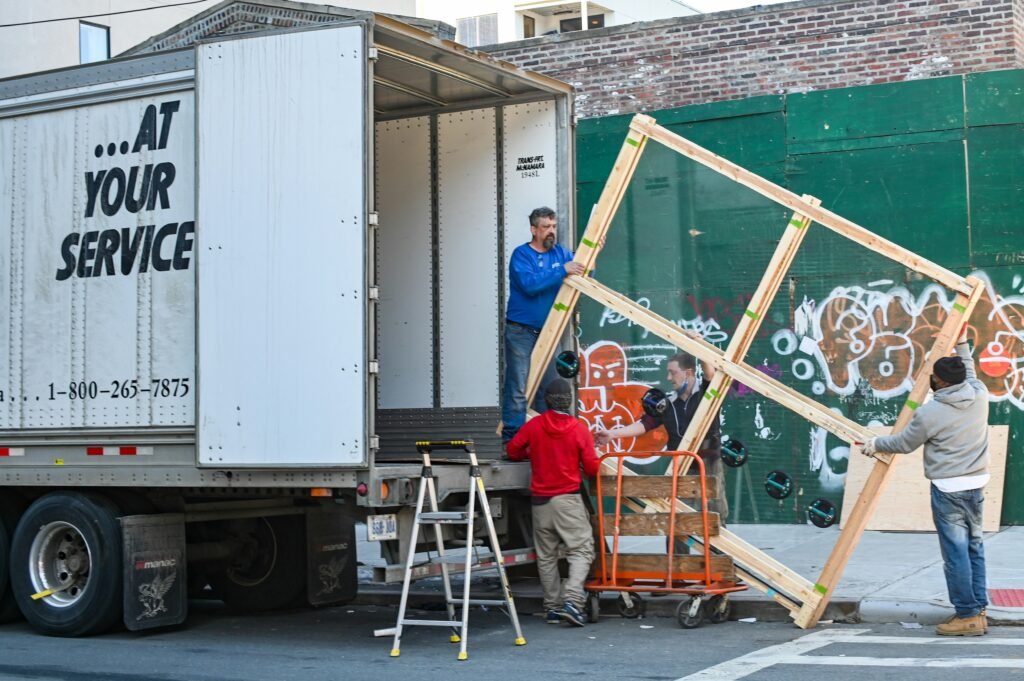

Average Moving Cost NYC estimates generally range from approximately $550 for a small local studio move to more than $6,000 for a large apartment or house. Moving a typical one-bedroom apartment within New York City may cost around $800 to $1,500, while a two-bedroom move may range from approximately $1,200 to $2,500.
NYC moving costs depend on more than the distance between addresses. Building access, stairs, elevator reservations, parking, carrying distance, packing and the number of belongings can have a greater effect than mileage on a move within the five boroughs.
The prices below are broad 2026 planning ranges in US dollars. They are not guaranteed quotes. A written estimate based on your inventory, addresses and requested services is the most reliable way to budget.
Average NYC Moving Cost at a Glance
| Home size | Typical crew | Estimated duration | Broad local cost |
|---|---|---|---|
| Studio apartment | 2 movers | 2–4 hours | $550–$1,000 |
| One-bedroom apartment | 2 movers | 3–6 hours | $800–$1,500 |
| Two-bedroom apartment | 2–3 movers | 5–8 hours | $1,200–$2,500 |
| Three-bedroom apartment or house | 3–4 movers | 6–10 hours | $1,800–$4,000 |
| Four-bedroom home | 4–5 movers | 8–12+ hours | $2,500–$6,000+ |
| Five-bedroom or larger home | 4–6+ movers | Full day or multiple days | $3,500–$8,000+ |
These ranges generally assume that the belongings are packed before the crew arrives. Professional packing, storage, specialty items and difficult access can increase the total.
How Much Do Movers Cost in NYC?
Local NYC movers may charge approximately $160 to $400 per hour for a complete crew and truck, depending on the number of workers, location, moving date and services included. Some moves are priced at a flat rate instead of hourly.
A two-person crew may cost approximately $160 to $300 per hour. A three- or four-person crew will usually have a higher hourly rate but may complete a larger move more quickly.
When comparing NYC moving company prices, ask whether the quoted rate includes:
- The moving truck
- Fuel and mileage
- Travel time
- Tolls
- Furniture protection
- Basic disassembly and reassembly
- Stairs
- Packing materials
- Certificate-of-insurance preparation
- Parking-related expenses
- Minimum booking time
A low hourly rate can produce a high final bill when travel time, materials and access charges are added separately.
Average NYC Moving Cost by Apartment Size
Studio apartment moving cost in NYC
The average cost to move a studio apartment in NYC may range from approximately $550 to $1,000.
A lightly furnished studio with elevator access and nearby parking may take two movers between two and four hours. A walk-up apartment, distant loading area or extensive furniture may push the cost above the usual range.
Studio customers should ask about minimum booking requirements. Even if loading takes only an hour, a company may require payment for a minimum number of labour hours.
One-bedroom apartment moving cost in NYC
A local one-bedroom apartment move may cost approximately $800 to $1,500.
A typical move may require two movers working for three to six hours. The total can increase when the apartment contains a large sectional, heavy furniture, many books or belongings stored elsewhere in the building.
Moving between two elevator buildings may be less physically demanding than moving between walk-ups, but elevator reservations can limit the available schedule.
Two-bedroom apartment moving cost in NYC
The average cost to move a two-bedroom apartment in NYC may range from approximately $1,200 to $2,500.
The move may require two or three workers for five to eight hours. A third mover can sometimes reduce the total duration enough to justify the higher crew rate.
A two-bedroom unit used partly as a home office may contain desks, filing cabinets, electronics and additional boxes. Include these belongings when requesting estimates.
Three-bedroom moving cost in NYC
Moving a three-bedroom apartment or house within NYC may cost approximately $1,800 to $4,000.
The job commonly requires three or four movers and most of a working day. Large inventories, walk-up stairs, multiple pickup locations or restricted elevator times can increase the cost.
A three-bedroom house with a basement, garage and outdoor furniture may cost more than an apartment with the same number of bedrooms.
Four-bedroom moving cost in NYC
A local four-bedroom move may cost approximately $2,500 to $6,000 or more.
The job may require four or five movers, a large truck and a full working day. More than one truck or day may be needed when the property is heavily furnished.
An in-person or detailed video survey is particularly useful for a large NYC household.
Five-bedroom moving cost in NYC
A five-bedroom or larger NYC move may cost approximately $3,500 to $8,000 or more.
Large homes vary too significantly for one dependable average. Packing, storage, custom crating, specialty belongings and complex delivery access can push the price beyond the range.
NYC Moving Cost by Number of Movers
| Crew arrangement | Broad hourly range | Common use |
|---|---|---|
| Two movers and truck | $160–$300 per hour | Studios and one-bedroom apartments |
| Three movers and truck | $240–$375 per hour | Larger one-bedroom and two-bedroom moves |
| Four movers and truck | $300–$500 per hour | Three-bedroom and larger homes |
| Five or more movers | Individually estimated | Large or time-sensitive moves |
These are approximate crew rates, not per-person wages or guaranteed company prices. Minimum hours, travel time and other fees may apply.
A larger crew can be useful when the building provides a short elevator reservation. However, hallways, elevators and loading areas must be large enough for the additional workers to operate efficiently.
NYC Flat-Rate Versus Hourly Moving Prices
New York City moves may be quoted using hourly or flat-rate pricing.
| Pricing method | How it works | Potential advantage | Main concern |
|---|---|---|---|
| Hourly rate | Customer pays according to crew time | Can cost less for a simple, well-prepared move | Traffic and access delays can increase the total |
| Flat rate | Price is based on inventory, access and services | Provides greater price predictability | Missing items or inaccurate information may change the agreement |
| Minimum charge | Customer pays for a required minimum period | Simple starting structure | Very small moves may still pay for unused time |
Hourly pricing may work well for a short move with predictable access. Flat-rate pricing may be more useful when the inventory and building conditions can be documented accurately.
The written estimate should explain which services are included. Our guide to moving estimates outlines the details customers should review.
What Affects Moving Costs in New York City?
Apartment stairs
Walk-up apartments generally take longer to load and unload. The crew may need additional workers for heavy or awkward furniture.
Ask whether the estimate includes every flight of stairs at both addresses. Do not describe a fourth-floor apartment as having only three flights unless that matches the actual carrying route.
Elevator reservations
Many condominiums and managed apartment buildings require residents to reserve a service elevator. Reservations may be limited to particular weekdays and hours.
A short reservation can require a larger crew. If the crew arrives late or the elevator is unavailable, waiting time or rescheduling charges may apply.
Confirm the elevator before selecting the mover’s arrival time.
Certificate of insurance requirements
Some buildings require the moving company to submit a certificate of insurance, often called a COI, before workers can enter.
Ask management for the exact insurance requirements and submission instructions. Send them to the mover early enough for corrections.
A company may prepare an ordinary COI without charge or include the administrative work in its estimate. Unusual insurance requirements may affect availability or cost.
Parking and curb access
The ability to park near the entrance can significantly affect NYC moving prices. If the truck must park farther away, the crew spends more time carrying each item.
New York City parking signs distinguish among No Parking, No Standing and No Stopping rules. Under the NYC Department of Transportation parking regulations, a No Parking zone may permit active loading or unloading of merchandise under certain conditions, while No Standing and No Stopping restrictions are more limiting.
Check the signs at both properties. Do not assume that a moving truck can block a lane, bus stop, fire hydrant, bicycle lane or restricted curb.
Long carries
A long carry occurs when movers must transport belongings farther than the distance included in the quoted service.
This can happen when:
- The truck cannot park outside the building
- The loading dock is behind the property
- The apartment is far from the elevator
- Construction blocks the nearest entrance
- The building requires a particular loading route
Ask whether the estimate includes the expected distance from the apartment to the truck.
Traffic and travel time
Traffic between boroughs can increase an hourly moving bill. Bridges, tunnels, road restrictions, construction and time of day can affect the route.
Find out when travel billing begins and ends. Some companies charge from their facility to the pickup address and back, while others charge only between the two homes or use a flat travel fee.
Tolls
A local NYC move can involve tolled bridges or tunnels. Ask whether tolls are included in the estimate or added after the move.
The route selected for a commercial vehicle may differ from the route suggested for a passenger car.
Number of belongings
Home size provides only a preliminary estimate. A lightly furnished two-bedroom apartment may cost less than a crowded one-bedroom apartment containing books, artwork and heavy furniture.
Prepare a detailed inventory before requesting prices. Include storage lockers, balconies, closets and items located in another part of the building.
Furniture disassembly
Beds, sectionals, desks, tables and large cabinets may need to be disassembled to fit through NYC apartment doors, hallways or elevators.
Basic disassembly may be included, while complicated furniture or custom work may cost extra. Confirm whether reassembly is included at the destination.
Moving date
Weekends and the beginning or end of the month may have stronger demand. Summer is also a popular moving period.
Customers with flexible schedules may find better availability by requesting:
- A weekday appointment
- A mid-month date
- An early-morning start
- Several acceptable moving days
- A date outside the summer peak
Availability and prices vary, so no specific day is guaranteed to be cheaper.
Manhattan Moving Costs
Moving within Manhattan may cost more when traffic, limited curb space, high-rise requirements and long loading routes increase the job’s duration.
A Manhattan apartment move may involve:
- Service-elevator reservations
- Loading-dock appointments
- COI requirements
- Restricted moving hours
- Limited legal parking
- Doorman or management coordination
- Long interior hallways
- Furniture that will not fit in the elevator
The borough itself does not create a fixed surcharge. The actual access conditions matter.
Brooklyn Moving Costs
Brooklyn moving prices vary significantly between neighbourhoods and building types.
A brownstone walk-up can involve narrow stairs and difficult furniture turns. A newer high-rise may provide an elevator but impose loading and insurance requirements. Residential streets can offer more curb space than Manhattan, but double parking, street cleaning, bicycle lanes and construction may still interfere.
Give the estimator photographs of the complete carrying route.
Queens Moving Costs
Queens moves may involve longer driving distances between neighbourhoods than some Manhattan or Brooklyn moves. Apartment buildings, detached homes and multi-family properties also create different access conditions.
A house with a driveway may simplify loading, but the crew still needs enough space for the truck to enter, exit or turn safely.
Bronx Moving Costs
Bronx moving prices depend on inventory, distance, parking and building access. Elevator buildings may require reservations, while older walk-ups can increase labour time.
Ask whether the mover’s travel charge includes the trip to the pickup property and return travel after delivery.
Staten Island Moving Costs
Staten Island moves may involve longer travel and toll considerations, particularly when the other address is in another borough.
A detached home can offer easier loading than a high-rise apartment, but basements, garages, stairs and large household inventories can extend the job.
Average NYC Packing Service Cost
Professional packing may add approximately $300 to more than $5,000, depending on home size and the number of fragile belongings.
| Home size | Broad packing cost |
|---|---|
| Studio | $250–$700 |
| One bedroom | $350–$1,000 |
| Two bedrooms | $600–$1,800 |
| Three bedrooms | $1,000–$3,000 |
| Four bedrooms | $1,500–$4,500 |
| Five bedrooms or more | $2,000–$6,000+ |
Packing prices may include labour, boxes, paper, tape and protective materials. Custom crates, specialty cartons and unpacking may be separate.
If you plan to pack independently, follow a room-by-room process using our guide on how to pack a house for moving.
Additional NYC Moving Charges
A quote may exclude services that become necessary on moving day.
| Possible charge | Why it may apply |
|---|---|
| Travel fee | Covers crew and vehicle travel |
| Stair charge | Belongings must be carried between floors |
| Long-carry charge | Truck cannot park near the entrance |
| Shuttle charge | A smaller vehicle is required |
| Waiting time | Elevator, keys or loading area is unavailable |
| Packing materials | Boxes and protective supplies are provided |
| Packing labour | Crew packs unpacked belongings |
| Bulky-item charge | Large or heavy items require extra work |
| Extra stop | Shipment is collected from or delivered to another address |
| Storage | Delivery cannot occur immediately |
| Rescheduling | Date changes after the company’s deadline |
| Disposal | Customer requests removal of unwanted belongings |
Ask for both the potential charge and the method used to calculate it. “Additional fees may apply” is not enough information for budgeting.
Cost of Moving Out of NYC
A move from New York City to another state is priced differently from a local move. Distance, shipment weight or volume, delivery timing and additional services become major factors.
| Destination distance | Studio or one bedroom | Two or three bedrooms | Four or more bedrooms |
|---|---|---|---|
| 100–250 miles | $1,500–$4,000 | $2,500–$7,000 | $4,500–$10,000+ |
| 250–500 miles | $2,000–$5,000 | $3,500–$8,500 | $5,500–$12,000+ |
| 500–1,000 miles | $2,500–$6,500 | $4,500–$10,000 | $7,000–$15,000+ |
| 1,000–1,500 miles | $3,000–$7,500 | $5,500–$12,000 | $8,000–$17,000+ |
| Cross-country | $4,000–$9,000 | $7,000–$15,000 | $10,000–$22,000+ |
These estimates do not include every possible service. Packing, storage, direct delivery, vehicle transportation and difficult access can increase the total.
For interstate moves, use the official FMCSA Protect Your Move resources to verify federal registration and review consumer guidance.
Direct Versus Consolidated Long-Distance Moves
A direct move generally uses equipment reserved primarily for one customer. It may offer faster delivery and fewer transfers but can cost more.
A consolidated shipment combines compatible moves travelling in a similar direction. Sharing truck capacity may reduce the price, but the customer typically receives a wider delivery window.
Ask whether:
- Other customers’ belongings will share the truck
- The shipment may enter a warehouse
- Belongings may be transferred between vehicles
- Delivery is guaranteed for one day or provided as a range
- The quote includes storage or handling
Our guide explains why belongings may be transferred between moving trucks during some long-distance moves.
Cost of Moving Into NYC
Moving into New York City can involve many of the same access expenses as moving out. The destination building may require a COI, elevator reservation, loading appointment or refundable deposit.
Before accepting a quote, obtain the building’s moving instructions and send them to the estimator.
Confirm:
- Permitted moving days
- Approved hours
- Service-elevator availability
- Loading entrance
- Truck-size restrictions
- Insurance requirements
- Deposit amount
- Parking conditions
- Building contact details
Do not assume the destination will allow unloading whenever the truck arrives.
Cost of Moving Within the Same Building
A same-building NYC move may cost approximately $300 to $1,200, depending on inventory, elevator access and furniture handling.
The absence of a truck does not eliminate labour expenses. Movers may still need to:
- Protect furniture
- Pack fragile belongings
- Disassemble large items
- Reserve elevators
- Carry belongings between floors
- Reassemble furniture
- Protect walls and floors
Ask whether the company has a lower minimum for labour-only or same-building moves.
Cost of a Small NYC Move
A small move involving a few furniture pieces or boxes may cost approximately $300 to $900. Minimum hourly charges can apply even when the work takes less time.
A small move may include:
- Moving one room
- Relocating furniture between apartments
- Collecting an online furniture purchase
- Moving belongings into storage
- Transporting several large items
- Completing a partial household move
Provide exact dimensions and photographs of large items when requesting a price.
NYC Storage and Moving Costs
When the new property is not ready, the shipment may need temporary storage. The customer may pay for:
- Initial pickup
- Warehouse handling
- Storage space
- Minimum storage period
- Shipment release
- Redelivery
- Additional valuation or protection
Ask whether the shipment remains sealed in a container or is unloaded into a warehouse. Also confirm how much notice is required to arrange redelivery.
If your dates do not align, review the options for situations where moving and closing dates do not line up.
How to Get an Accurate NYC Moving Estimate
Build a complete inventory
List every furniture piece and provide a realistic box count. Include closets, balconies and storage areas.
Document both properties
Send photographs or videos of the entrances, stairs, elevators, loading docks and parking areas.
Confirm building requirements
Obtain COI instructions, elevator times, deposits and loading rules before requesting the final estimate.
Request the same services from each company
Every estimate should cover the same inventory, addresses, packing requirements and access conditions.
Ask what is excluded
Find out whether the total excludes materials, travel time, tolls, parking, stairs or waiting time.
Get the estimate in writing
Do not rely on a telephone price. The written estimate should explain the services, pricing method and conditions that could change the total.
How to Compare NYC Moving Quotes
| Estimate detail | What to review |
|---|---|
| Pricing method | Hourly, flat-rate or another calculation |
| Crew size | Number of movers included |
| Estimated duration | Expected working and travel time |
| Inventory | Whether all belongings are listed |
| Access | Stairs, elevators and carrying distance |
| Truck | Vehicle size and parking requirements |
| Packing | Labour and materials included |
| Travel | When billing begins and ends |
| Tolls | Included or added separately |
| Storage | Handling, duration and redelivery |
| Valuation | Responsibility for lost or damaged belongings |
| Deposit | Amount and refund conditions |
| Cancellation | Deadlines and rescheduling terms |
Review the questions to ask before hiring a moving company before choosing a quote.
How to Reduce NYC Moving Costs
Move during a quieter period
Weekday and mid-month appointments may offer better availability than weekends and month-end dates.
Declutter before receiving final estimates
Removing unwanted furniture and boxes can reduce labour and truck-space requirements. Finish decluttering before requesting the final quote.
Pack ordinary belongings yourself
Self-packing clothing, linens and non-breakable possessions may reduce labour costs. Use suitable boxes rather than bags or damaged containers.
Reserve the elevator early
A missed elevator appointment can produce waiting time or prevent the move from being completed as planned.
Prepare the loading route
Clear hallways, remove small obstacles and determine where the truck can legally stop.
Avoid adding items on moving day
Update the written inventory if the shipment changes. Unexpected furniture and boxes may increase the price.
Separate items that are not being moved
Clearly identify belongings that must remain at the property so the crew does not spend time asking about each item.
Frequently Asked Questions
What is the average moving cost in NYC?
The average cost of a local NYC move may range from approximately $550 for a small studio to more than $6,000 for a large home. One-bedroom moves commonly cost around $800 to $1,500, while two-bedroom moves may cost $1,200 to $2,500.
How much do NYC movers charge per hour?
A complete crew and truck may cost approximately $160 to $400 per hour, depending on crew size, date, location and included services. Minimum booking times and travel fees may apply.
How much does it cost to move a studio in NYC?
A local studio move may cost approximately $550 to $1,000. A lightly furnished unit with easy access may cost less than a walk-up with difficult parking.
How much does it cost to move a one-bedroom apartment in NYC?
A one-bedroom apartment move may cost approximately $800 to $1,500. Packing, stairs, elevator delays and long carrying distances can increase the total.
How much does it cost to move a two-bedroom apartment in NYC?
A local two-bedroom move may cost approximately $1,200 to $2,500. The move commonly requires two or three movers working for five to eight hours.
How much does it cost to move a three-bedroom apartment in NYC?
A three-bedroom move may cost approximately $1,800 to $4,000. Large inventories, walk-up stairs and full packing can raise the price.
Are NYC movers more expensive on weekends?
Weekend availability may be more limited because many customers prefer those dates. Some companies charge the same rate, while others use different pricing. Compare written estimates for several dates.
Do NYC movers charge for stairs?
Some companies include a certain number of stairs, while others charge separately or account for them in a flat rate. Disclose the correct floor and ask for the terms in writing.
Do NYC movers charge for travel time?
Many do, but the calculation differs. Travel may be charged from the company’s facility, between addresses, or as a flat fee.
Is a COI included in the moving cost?
Preparing an ordinary certificate of insurance may be included, but policies differ. Ask the building for its requirements and confirm that the mover can satisfy them.
Is it cheaper to move in the middle of the month?
It can be. Beginning- and end-of-month dates often experience greater demand. Mid-month flexibility may provide more appointment choices.
How far ahead should movers be booked in NYC?
Consider booking two to four weeks ahead for an ordinary local move and four to eight weeks ahead for summer, weekend, month-end or complicated building moves.
Is a flat-rate mover cheaper than an hourly mover?
Neither pricing method is automatically cheaper. Hourly service may suit a simple move, while an accurate flat rate can provide more predictability for complicated access.
What is the cheapest way to move within NYC?
A DIY or labour-only move may have the lowest initial cost for a small shipment. Include vehicle rental, parking, fuel, equipment, helpers and personal time when comparing the total.
Moving Note: Average Moving Cost NYC figures are useful for preliminary budgeting, but building access often matters as much as apartment size. Confirm the inventory, elevator, COI, parking and possible additional charges in writing before moving day.