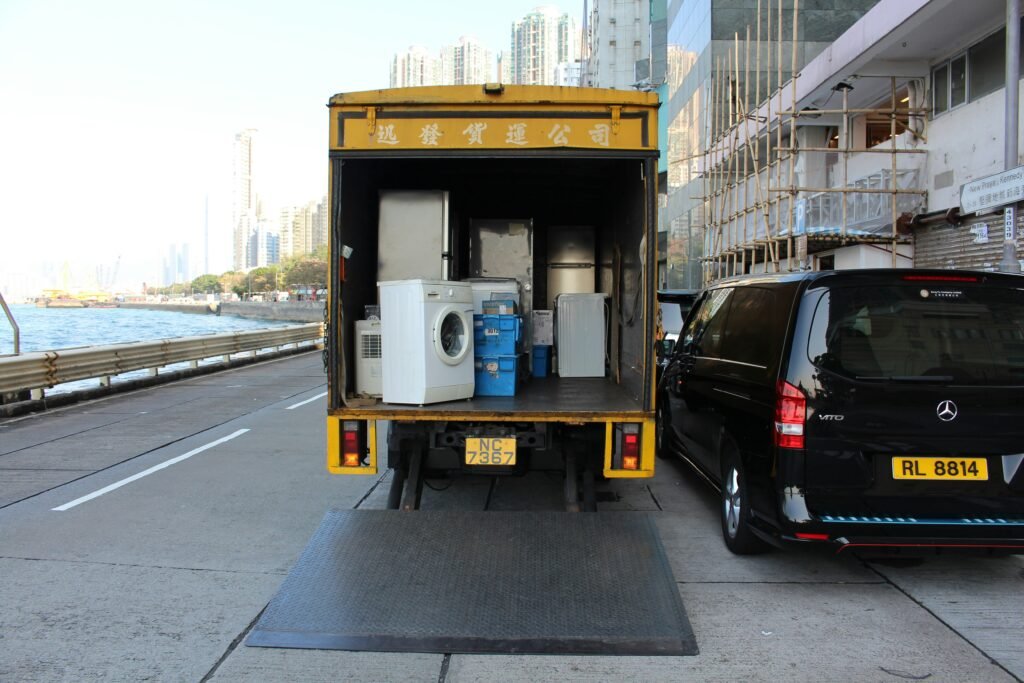

Hiring a moving company means trusting another business with furniture, electronics, documents and possessions that may be difficult or impossible to replace. Asking detailed questions before signing an agreement can help you understand who will handle your belongings, how the price is calculated and what happens when plans change.
The most important questions to ask before hiring a moving company cover registration, business identity, estimates, additional charges, valuation options, delivery dates and complaint procedures. Clear answers should be supported by written documents rather than verbal promises alone.
Quick List of Questions to Ask
Use this table as a preliminary interview checklist.
| Question | Why It Matters |
|---|---|
| Are you the mover or a broker? | Identifies who is arranging and who is performing the move |
| What is your legal business name? | Allows you to verify registration and business records |
| Which license or registration applies? | Helps confirm that applicable requirements are met |
| Who will physically transport my belongings? | Reveals whether another company will become involved |
| How is the estimate calculated? | Explains the basis of the expected cost |
| Is the estimate binding or non-binding? | Shows whether and how the final price may change |
| Is my complete inventory attached? | Helps ensure the estimate includes everything |
| What additional charges could apply? | Identifies costs not included in the initial total |
| What valuation options are available? | Explains what may happen if belongings are lost or damaged |
| How much is the deposit? | Clarifies your upfront financial commitment |
| What are the cancellation terms? | Explains the cost of changing your plans |
| What is the delivery window? | Helps you prepare for arrival and possible delays |
| How are claims submitted? | Shows how loss or damage should be reported |
| What documents will I receive? | Confirms that the agreement will be properly recorded |
| Who is my contact during the move? | Gives you a clear communication channel |
Do not evaluate an answer only by how confident it sounds. Check whether it matches the estimate, inventory and other documents.
Are You a Moving Company or a Broker?
This should be one of your first questions.
A moving company or carrier performs the transportation. A broker generally arranges for another company to complete the move.
The Federal Motor Carrier Safety Administration explains the difference between movers and brokers. Interstate brokers have their own federal responsibilities, including providing required disclosures and working with appropriately registered carriers.
Ask the following follow-up questions:
- Will your employees arrive on moving day?
- Do you own or operate the vehicle being used?
- Will another company receive my information?
- When will I know the carrier’s legal name?
- Who is responsible when a problem occurs?
- Which company will appear on my paperwork?
- Which company will collect payment?
A Concerning Answer
Be cautious when the representative avoids identifying whether the business is a carrier or broker, or cannot tell you who may physically handle the shipment.
What Is Your Full Legal Business Name?
Advertisements and websites may use a trade name that differs from the company’s registered legal name.
Ask for:
- Full legal business name
- Any trade or “doing business as” names
- Physical address
- Telephone number
- Registration or license numbers
- Website
- Email address
Compare this information across the estimate, registration records and payment instructions.
A Concerning Answer
Investigate further when different names appear without a clear explanation or when the address and phone number do not match public records.
Which Registration or License Applies to My Move?
Requirements depend on whether the move is local, within one state or between states.
Companies transporting household goods across state lines generally fall under federal oversight. Consumers can use the FMCSA’s Protect Your Move resources to review registration and consumer information.
For a move completed entirely within one state, check the appropriate state transportation, public-utility or consumer-protection agency.
Ask:
- Which agency regulates this move?
- What is your registration or license number?
- Under which legal name is it registered?
- Does the registration cover the service being offered?
- Where can I verify the information independently?
A Concerning Answer
A number displayed on a website does not prove it belongs to that company. Stop and investigate when registration details cannot be verified or belong to a different business.
Who Will Physically Handle My Belongings?
Even after confirming whether you are speaking with a carrier or broker, ask whether another business may participate.
Long-distance shipments may involve different drivers, vehicles or facilities. You should understand how the move is expected to work.
Ask:
- Will another carrier transport the shipment?
- Could my belongings be transferred to another vehicle?
- Will the same crew handle pickup and delivery?
- Who will store the belongings if storage becomes necessary?
- Who should I contact during transportation?
- Who is responsible for damage or loss?
A Concerning Answer
Be careful when another company appears on moving day without prior explanation or when no one will identify who is responsible for the shipment.
How Will You Prepare My Estimate?
A detailed estimate requires accurate information about your belongings and both properties.
Ask whether the estimate will be based on:
- An in-person inspection
- A virtual household survey
- A written inventory
- Shipment weight
- Space or volume
- Labor time
- Travel distance
- Requested services
Show every room and storage area, including closets, the garage, basement, attic and outdoor spaces.
The Federal Trade Commission recommends obtaining written estimates and checking that the listed inventory accurately represents everything being moved. Its consumer guidance explains how to avoid moving scams.
A Concerning Answer
An estimate provided without asking about your belongings, property access or destination may not reflect the actual work.
Is the Estimate Binding or Non-Binding?
Ask for the estimate type to be identified directly on the written document.
Binding Estimate
A binding estimate generally establishes the price for the listed belongings and services. Changes to the inventory, access or requested work may still affect the price.
Non-Binding Estimate
A non-binding estimate is an approximation. The final cost may depend on the actual shipment weight, services provided and applicable pricing terms.
Binding Not-to-Exceed Estimate
This type of estimate generally establishes a maximum for the inventory and services described. The specific conditions should be explained in writing.
The FMCSA’s official moving glossary defines common terms used for interstate household moves.
A Concerning Answer
Do not rely on statements such as “the price should be close.” Ask how the estimate is classified and which circumstances could change it.
Does the Estimate Include My Complete Inventory?
Review the written inventory line by line.
Make sure it covers:
- Furniture
- Appliances
- Electronics
- Boxes
- Closets
- Garage contents
- Basement and attic contents
- Outdoor belongings
- Storage areas
- Fragile items
- Oversized items
The estimate may be inaccurate when major belongings or entire rooms are excluded.
Use our guide on how to choose a reliable moving company for additional verification steps.
A Concerning Answer
Be cautious when you are told that missing belongings can simply be added on moving day without discussing how this could affect the price.
What Services Are Included in the Price?
Do not assume that the estimate includes every service mentioned during the conversation.
Ask whether the price covers:
- Loading
- Transportation
- Unloading
- Furniture protection
- Furniture disassembly
- Furniture reassembly
- Packing labor
- Packing materials
- Appliance preparation
- Storage
- Extra stops
- Special-item handling
- Stairs and elevators
- Travel time
- Fuel and tolls
Request an itemized written estimate that separates included services from optional services.
A Concerning Answer
A single total without a clear description of services may make comparison difficult and leave room for disagreements later.
What Additional Charges Could Apply?
The initial total may change when unexpected work or property-access problems occur.
Ask specifically about:
| Possible Charge | Question to Ask |
|---|---|
| Stairs | Is there an additional charge per flight? |
| Elevator | Does elevator access affect labor time or price? |
| Long carry | How close must the vehicle be to the entrance? |
| Shuttle vehicle | When would a smaller vehicle be required? |
| Waiting time | What happens when property access is delayed? |
| Packing | How are labor and materials charged? |
| Furniture preparation | Is disassembly or wrapping included? |
| Storage | Are handling and redelivery charged separately? |
| Extra stop | What does an additional pickup or delivery cost? |
| Special item | Which belongings require additional handling? |
| Rescheduling | What fee applies when the date changes? |
| Expedited delivery | What does a narrower delivery period cost? |
Ask for the conditions and amounts to be stated in writing when possible.
A Concerning Answer
Statements such as “there might be a few small fees” are not sufficient. You should understand which circumstances create additional charges.
How Much Is the Deposit?
Ask how much must be paid before moving day and whether the deposit is refundable.
Confirm:
- Deposit amount
- Due date
- Accepted payment method
- Name receiving the payment
- Refund rules
- Cancellation deadline
- Rescheduling policy
- Circumstances under which the deposit may be retained
Keep a receipt and make sure the business name matches the company identified in your agreement.
A Concerning Answer
Be cautious about large upfront payments, pressure to pay immediately, payment to an unrelated person or requests involving gift cards or other unusual methods.
What Are the Cancellation and Rescheduling Terms?
A closing delay, lease issue, illness or severe weather could force you to change the date.
Ask:
- How much notice is required?
- Is the deposit refundable?
- Can the deposit be transferred to a new date?
- Does a rescheduling fee apply?
- What happens if the company cancels?
- What happens when severe weather makes travel unsafe?
- Do different policies apply during busy periods?
Our guide on how to choose the best date for your move explains how housing access, work schedules and weather should influence your decision.
A Concerning Answer
Do not accept cancellation terms that are only explained verbally. Review the written policy before paying.
What Valuation or Liability Options Are Available?
Ask what would happen if an item were lost or damaged.
Valuation is not necessarily the same as insurance. Request a written explanation of the available options and how payment would be calculated.
Ask about:
- Available valuation levels
- Cost of each option
- Deductible
- Limits
- Exclusions
- High-value belongings
- Owner-packed boxes
- Claim procedures
- Claim deadlines
- Required photographs or receipts
Do not assume that your belongings will automatically be reimbursed at their full replacement value.
A Concerning Answer
Vague promises that “everything is covered” should be supported by written terms explaining the actual limits and conditions.
How Are High-Value and Special Items Handled?
Identify items that may need special preparation, such as:
- Artwork
- Antiques
- Pianos
- Safes
- Large televisions
- Aquariums
- Exercise equipment
- Collectibles
- Motorcycles
- Oversized furniture
Ask whether special containers, equipment or documentation will be required.
Create photographs and records for valuable belongings before moving day.
A Concerning Answer
Do not wait until loading begins to disclose a heavy or unusually valuable item. The company may be unable to move it safely or may charge for additional work.
What Is the Expected Pickup and Delivery Schedule?
A delivery date and a delivery window are different.
Ask:
- Is the pickup time guaranteed or estimated?
- Is delivery scheduled for one date or a range?
- What is the earliest possible delivery?
- What is the latest expected delivery?
- How will schedule changes be communicated?
- Could storage become necessary?
- What happens when I cannot accept delivery?
- Is faster delivery available at an additional cost?
Keep medication, documents, clothing and essentials with you in case delivery does not occur immediately.
A Concerning Answer
Be careful when a specific delivery promise appears only in a conversation but not in the written agreement.
How Will I Receive Updates?
Clear communication is especially important during a long-distance move.
Ask:
- Who is my primary contact?
- Will I receive a direct phone number?
- How are delays reported?
- Can I track the shipment?
- Who should I contact outside normal hours?
- How quickly are messages usually answered?
- Who handles problems after delivery?
Save the contact information in both your phone and moving folder.
A Concerning Answer
A general phone number with no identifiable contact may make problems more difficult to resolve.
What Happens When Something Is Lost or Damaged?
Ask for the claims procedure before the move rather than after a problem occurs.
Confirm:
- Where a claim must be submitted
- Required documents
- Applicable deadline
- Whether packaging should be retained
- Whether damaged items will be inspected
- How claims are evaluated
- How decisions can be questioned
- Expected response time
Keep your inventory, photographs, receipts and written documents.
A Concerning Answer
An inability or refusal to explain the claims process may indicate that resolving damage will be difficult.
What Documents Will I Receive?
Depending on the move, documents may include:
- Written estimate
- Household inventory
- Order for service
- Valuation selection
- Bill of lading
- Rights and responsibilities information
- Payment receipt
- Storage agreement
- Delivery documentation
For an interstate move, the FMCSA explains that consumers should receive specific information about their rights and responsibilities.
Read every page before signing and keep complete copies.
A Concerning Answer
Never sign blank or incomplete forms. Do not allow anyone to take the only copy of a document you signed.
Will My Belongings Be Combined With Other Shipments?
Long-distance transportation may involve more than one household shipment.
Ask:
- Will my belongings share vehicle space?
- How will the items be separated and identified?
- Could this affect the delivery period?
- Will the shipment be transferred between vehicles?
- How will individual boxes and furniture be tracked?
Clear labels and a detailed inventory become especially important when belongings are transported with other shipments.
What Happens When My New Home Is Not Ready?
Housing delays can occur. Ask whether storage is available and how it would affect the price and delivery schedule.
Clarify:
- Storage location
- Storage cost
- Handling charges
- Minimum storage period
- Access to belongings
- Redelivery charge
- Notice required for delivery
- Valuation while stored
Keeping essential supplies with you can reduce the disruption caused by an unexpected delay.
How Do You Handle Complaints?
Ask how concerns should be reported and who has authority to resolve them.
A clear complaint process should identify:
- Contact person or department
- Submission method
- Required documents
- Expected response time
- Escalation process
For interstate moves, consumers may also review federal complaint information through the FMCSA’s Protect Your Move program.
A Concerning Answer
Be cautious when no one can explain how complaints are documented or escalated.
How Should You Evaluate the Answers?
Use a consistent system to compare responses.
| Evaluation Area | Strong Answer | Weak Answer |
|---|---|---|
| Business identity | Specific and independently verifiable | Vague or inconsistent |
| Pricing | Written and itemized | Verbal or incomplete |
| Inventory | Detailed and accurate | Missing rooms or belongings |
| Additional charges | Clearly explained | Dismissed or undefined |
| Delivery | Realistic written window | Unsupported promise |
| Valuation | Options and limits provided in writing | “Everything is covered” |
| Claims | Procedure and deadline explained | No clear process |
| Communication | Identifiable contact and method | Generic or uncertain |
| Documents | Complete copies provided | Blank or unavailable |
| Payment | Written and consistent | Pressure or unusual request |
A reliable answer should be understandable, consistent and documented.
Frequently Asked Questions
How many moving estimates should I obtain?
Comparing at least three detailed written estimates can help you identify missing services, unusual pricing and differences in estimate types.
Should I ask whether the company is a broker?
Yes. A broker arranges transportation, while a carrier performs it. You should know which company will physically handle your belongings.
Is the lowest estimate usually the best choice?
Not necessarily. Review the inventory, included services, additional charges, valuation options and payment terms before comparing final value.
Should a moving estimate be in writing?
Yes. Verbal prices are difficult to verify and may not include every service or charge.
What should be included in the inventory?
The inventory should include furniture, boxes, appliances, storage areas, outdoor belongings and any fragile, heavy or oversized items.
Can the final price exceed the estimate?
The answer depends on the estimate type, actual belongings, services and property access. Ask for every circumstance that could change the cost to be explained in writing.
Should I pay a deposit?
Deposit practices vary. Understand the amount, payment method, refund conditions and cancellation deadline before paying.
What should I ask about damaged belongings?
Ask about valuation options, exclusions, claim deadlines, documentation requirements and how payment for damage would be calculated.
When should I ask these questions?
Ask before paying a deposit or signing an agreement. Important questions should not be left until moving day.
The quality of the answers matters as much as the questions themselves. Choose a business that provides verifiable information, complete written documents and clear explanations without pressuring you to make an immediate decision.
Note: Registration, licensing, estimate and consumer-protection requirements vary by jurisdiction and type of move. Verify current requirements with the appropriate federal, state or local government agency.