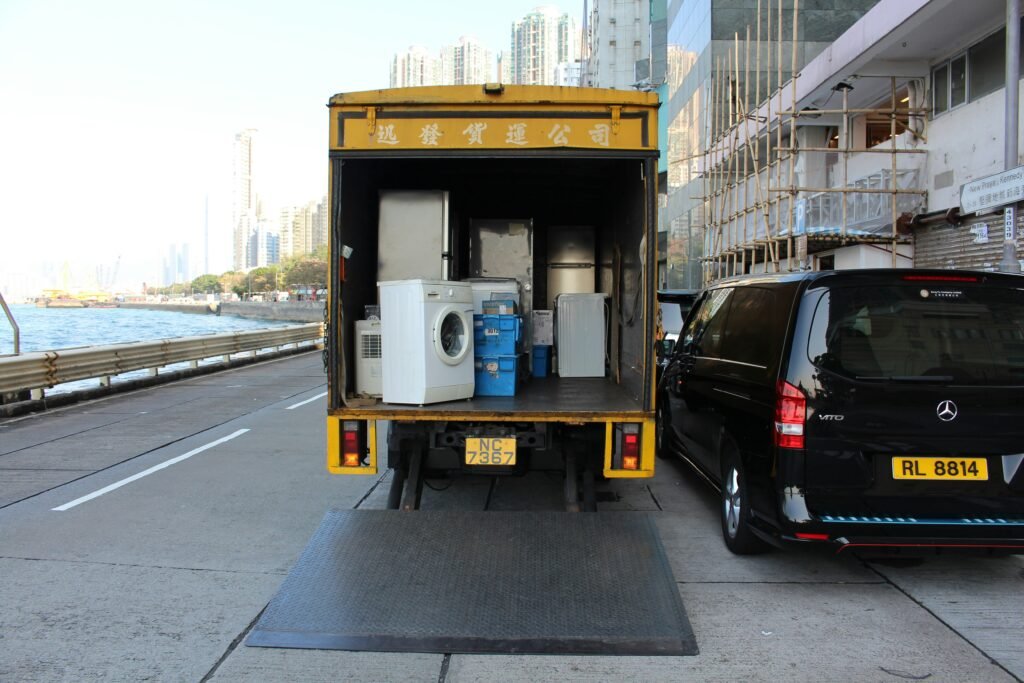

Moving company shuttle fees are additional charges that may apply when the mover’s primary truck cannot safely or legally reach the pickup or delivery property. The mover may transfer the shipment between the large truck and a smaller vehicle to complete the move.
A shuttle fee can add hundreds or even thousands of dollars to a moving bill, depending on the shipment size, distance between the trucks, labor required and the mover’s tariff or pricing method. The most effective way to prevent an unexpected charge is to document access conditions at both properties before accepting the estimate.
Moving Shuttle Fees at a Glance
| Question | Short answer |
|---|---|
| What is a moving shuttle fee? | A charge for using a smaller vehicle and additional labor when the main moving truck cannot reach the property |
| What commonly triggers it? | Narrow roads, low clearances, weight limits, steep driveways, restricted parking and gated entrances |
| How much does it cost? | There is no universal price; it may be calculated by shipment weight, labor time, distance, vehicle use or a minimum charge |
| Can it apply with a binding estimate? | It may apply to an interstate move when qualifying access conditions require impracticable operations under the carrier’s tariff |
| Can it be prevented? | Sometimes, through an access survey, accurate disclosure, reserved parking or use of a suitable truck from the beginning |
| Where should the charge appear? | The estimate, tariff, order for service, bill of lading or a written description of applicable additional services |
What Is a Shuttle Fee in Moving?
A moving shuttle fee covers the additional vehicle, labor and handling required when the main road-haul truck cannot approach the residence closely enough to load or deliver the shipment.
Long-distance shipments are often transported in large trucks or tractor-trailers. These vehicles may not fit on narrow residential roads, enter parking garages, navigate tight turns or travel on streets with vehicle restrictions.
When access is impractical, the crew may park the main truck at a suitable location and use a smaller moving truck to carry the belongings between the residence and the road-haul vehicle. Several trips may be necessary.
The process can involve:
- Renting or dispatching a smaller truck
- Transferring the shipment
- Additional loading and unloading
- More crew hours
- Additional protective handling
- Travel between the property and the large truck
- Temporary staging of household goods
The terms moving shuttle fee, auxiliary service charge, shuttle service charge and small-truck transfer fee may describe similar services. The exact definition and pricing should be confirmed in the mover’s documents.
What Are Impracticable Operations?
For interstate household-goods moves, federal materials use the term impracticable operations for conditions that make it physically impossible for the mover to complete pickup or delivery using its normally assigned road-haul equipment. Specialized equipment or additional labor may then be required.
A shuttle can be one form of impracticable operation. Other examples may include extended carries or unusual access arrangements, depending on the carrier’s tariff.
The official Federal Motor Carrier Safety Administration guidance explains that a mover may collect charges for impracticable operations when those services are required under its tariff. This federal framework applies to qualifying interstate household-goods moves. Local and intrastate moves may be governed by different state rules and contracts.
What Triggers Moving Company Shuttle Fees?
A shuttle charge is normally connected to a specific access problem rather than the distance of the entire move.
Narrow residential streets
A large moving truck may be unable to enter or turn around on a narrow road. Parked vehicles can make the usable space even smaller.
This problem is common in older neighborhoods, historic districts and densely developed urban areas.
Low bridges and overhead clearances
Low bridges, tree branches, utility lines, parking structures and covered entrances may prevent a tall truck from reaching the property.
The route must provide enough clearance for the complete vehicle, not merely the smaller trucks or passenger vehicles normally using the road.
Weight-restricted roads or bridges
Some roads, bridges and private communities restrict vehicle weight. A road may appear wide enough while still being unsuitable for a heavily loaded truck.
The carrier must evaluate whether the vehicle can legally and safely use the available route.
Tight turns and cul-de-sacs
A road-haul truck requires considerable space to turn. Tight corners, small cul-de-sacs and dead-end streets can make entry or departure impractical.
A driver may decline to enter if there is no safe way to turn around.
Steep or weak driveways
A steep driveway may cause clearance or traction problems. A narrow driveway, weak surface, sharp curve or small turnaround area can also prevent access.
The fact that a delivery van or garbage truck uses the driveway does not establish that a fully loaded moving vehicle can do the same.
Gated-community restrictions
A gated community may limit truck length, height, weight or delivery hours. Security procedures can also prevent an unregistered vehicle from entering.
Ask the property manager or homeowner association about commercial moving vehicles specifically, not delivery vehicles generally.
Apartment and condominium restrictions
An apartment complex may require the truck to use a particular loading area. That area could have a height limit or insufficient space for the vehicle assigned to the move.
Elevator reservations, loading appointments and certificates of insurance can create additional requirements but do not themselves necessarily produce a shuttle charge.
No legal parking near the property
If the truck cannot legally stop near the building, the crew may need to park farther away or use a smaller vehicle.
Parking restrictions can instead produce a long-carry charge, depending on the distance and the mover’s pricing rules. In some situations, both a shuttle and additional carry-related labor may be discussed.
Read our guide on what can happen when a moving truck cannot park near your home.
Rural or unpaved roads
Narrow rural roads, soft shoulders, low tree coverage, weak bridges and limited turnaround space can make large-truck access difficult.
Recent rain or snow may change a road that was normally usable into one that the driver considers unsafe.
How Much Do Moving Company Shuttle Fees Cost?
There is no single standard shuttle fee used by every moving company. A charge may range from several hundred dollars for a small shipment to several thousand dollars for a large household requiring multiple transfers.
The amount may be calculated using:
- Shipment weight
- Shipment volume
- Number of smaller-truck trips
- Distance between the property and main truck
- Crew hours
- Vehicle rental or use
- A minimum shuttle charge
- Rates stated in the carrier’s tariff
Some interstate tariffs calculate auxiliary service according to shipment weight, sometimes with a minimum charge. Other moving arrangements may use an hourly, flat-rate or trip-based calculation.
Because the pricing methods differ, an online average cannot reliably predict an individual customer’s charge.
Example of a weight-based shuttle calculation
Suppose a carrier’s disclosed shuttle rate is $0.10 per pound with a $300 minimum charge.
A 6,000-pound shipment would produce the following preliminary calculation:
6,000 pounds × $0.10 = $600
The resulting shuttle charge would be $600 under that hypothetical pricing rule. This is only an illustration and not a standard industry rate.
Example of an hourly shuttle calculation
Suppose the smaller truck and crew are billed at $200 per hour and the transfer requires four hours:
4 hours × $200 = $800
Additional mileage, equipment or minimum-hour requirements could change the total if allowed by the agreement.
Ask the mover to show how the fee would be calculated for your estimated shipment rather than providing only the words “shuttle charges may apply.”
Are Shuttle Fees Included in a Moving Estimate?
A shuttle charge may be included when the access problem is identified before the estimate is prepared. It may also be listed as a possible additional charge when the mover cannot confirm whether the main truck will reach the property.
A useful estimate should state:
- Whether a shuttle is already included
- Which property may require it
- What vehicle restrictions were considered
- How the fee will be calculated
- Whether a minimum charge applies
- Whether additional labor is included
- What happens if the shuttle becomes necessary on moving day
Review the wording carefully. “Shuttle available” does not necessarily mean the service is included in the quoted total.
Our guide to moving estimates explains why the type and scope of an estimate matter.
Can a Shuttle Fee Be Added to a Binding Estimate?
A binding estimate generally covers the shipment and services identified in the estimate. It does not necessarily prevent charges for every later access condition.
For an interstate move, a required shuttle may be treated as an impracticable operation when it qualifies under the carrier’s tariff. Federal rules address how much of those charges may be collected at delivery.
Under 49 CFR § 375.703, the amount collected at delivery for impracticable operations cannot exceed 15% of the other charges due at delivery. Any remaining qualifying amount is handled under the applicable federal billing rules.
This 15% provision is a limit on the impracticable-operation amount collected at delivery. It does not necessarily erase the remaining valid charge.
The rules are technical and depend on whether the move is interstate, the estimate type, the tariff and the service performed. Customers should request a written explanation instead of assuming that “binding” means no access-related charge can ever arise.
Can a Shuttle Fee Apply to a Non-Binding Estimate?
Yes. A non-binding estimate is an approximation rather than a guaranteed total. The final charge is generally calculated using the services performed and the applicable pricing rules.
For qualifying interstate moves, federal rules generally limit the amount a mover can require at delivery under a non-binding estimate to 110% of the estimate, plus permitted charges for customer-requested additional services and qualifying impracticable operations.
The amount for impracticable operations collected at delivery remains subject to the applicable 15% limitation. Remaining valid charges may be billed later.
Customers should not attempt to apply these rules without reading the moving documents and confirming which charges fall into each category.
Shuttle Fee Versus Long-Carry Fee
A shuttle fee and long-carry fee address different access problems.
| Charge | What usually causes it |
|---|---|
| Shuttle fee | The main truck cannot reach the property, so a smaller vehicle transfers the shipment |
| Long-carry fee | The crew must carry belongings farther than the included distance between the truck and entrance |
| Stair fee | The crew must carry belongings over stairs not included in the quoted service |
| Elevator charge | The move requires additional time or handling connected to elevator access |
| Waiting-time charge | The crew or truck is delayed because access is unavailable |
| Parking-related charge | Permits, restrictions or parking arrangements produce additional expense |
A move can potentially involve more than one access charge. For example, a smaller shuttle truck might still need to park a considerable distance from the entrance.
Ask whether the shuttle price already includes the resulting carrying distance and labor.
Shuttle Service Versus a Truck Transfer
A shuttle requires belongings to be transferred between vehicles, but not every truck transfer is a shuttle.
Long-distance carriers may consolidate shipments or transfer belongings during transportation for operational reasons. A shuttle specifically addresses pickup or delivery access that prevents the normal road-haul vehicle from reaching the property.
If you are concerned about handling, ask whether your belongings will be transferred between moving trucks at any stage of the move.
Who Decides Whether a Shuttle Is Necessary?
The driver or carrier generally decides whether the assigned truck can safely and legally reach the property. Customers should not pressure a driver to enter a location that the driver considers unsafe.
A route that looks accessible in photographs may contain a hidden problem, such as:
- An overhead clearance restriction
- A prohibited truck route
- A weak bridge
- Insufficient turning space
- Unstable ground
- A property rule that was not disclosed
- Vehicles blocking the planned loading area
However, the mover should be able to identify the specific reason for the shuttle and connect the charge to its written pricing terms.
A vague statement that “the truck is too large” is less useful than documentation of the actual access restriction.
How to Prevent an Unexpected Shuttle Fee
Request an access review
Provide photographs or video showing the street, driveway, entrance, loading area, gate and turnaround space. Include surrounding intersections when a large vehicle may have difficulty approaching the property.
For a complicated location, ask whether an in-person or live-video survey is available.
Measure height and width restrictions
Ask the destination property about:
- Gate width
- Garage clearance
- Loading-dock height
- Vehicle-length limits
- Weight restrictions
- Turning radius
- Overhead structures
Provide the information in writing before accepting the estimate.
Check both addresses
Customers often concentrate on the property they currently occupy and overlook the destination. Either location can trigger shuttle service.
If the destination address is not yet known, ask how the estimate will change if the selected property cannot accommodate the main truck.
Reserve legal curb space
A curb reservation or temporary no-parking permit may allow the main truck to get closer to the property. Requirements vary by city, so check with the applicable transportation or parking authority.
A reservation does not override truck-route rules, vehicle restrictions or safety concerns.
Ask what size truck will arrive
The vehicle used for a local apartment move may be different from the road-haul truck assigned to an interstate shipment.
Ask for the expected truck type, approximate length and clearance needs. The exact vehicle may change, but the response can help reveal an obvious access conflict.
Obtain the shuttle terms in writing
Ask the mover to identify the potential charge in the estimate or an attached document. The terms should explain the rate, minimum fee and conditions that trigger it.
A verbal promise that a shuttle “probably will not be needed” provides little certainty.
Consider planned shuttle service
When the access problem is obvious, including the shuttle in the original moving plan may be safer than waiting for the driver to discover it.
Advance planning can help ensure that the correct vehicle, labor and schedule are available.
What to Ask Before Hiring a Moving Company
Ask these questions before signing an estimate:
- What type and size of truck is expected?
- Did you review access at both properties?
- Could either address require shuttle service?
- What conditions trigger your shuttle charge?
- Is the shuttle included in the estimate?
- Is the charge based on weight, volume, time or trips?
- Does a minimum charge apply?
- Does the fee include extra handling and labor?
- Could a long-carry fee also apply?
- Who makes the final access decision?
- How will the need for a shuttle be documented?
- When would the charge become payable?
Keep the mover’s written answers with the estimate and other moving records.
What to Do If a Shuttle Fee Appears on Moving Day
Ask the mover to explain why the assigned truck cannot reach the property. Photograph the road, entrance, posted restrictions, clearance limits and truck location when it is safe to do so.
Then review:
- The written estimate
- Order for service
- Bill of lading
- Tariff provisions supplied by the mover
- Access information previously disclosed
- Emails, photographs and survey records
- The fee calculation
Do not sign blank documents or paperwork that does not identify the service and charge. Ask for any modification to be provided in writing.
If the move is interstate, compare the requested payment with the federal rules governing the estimate and charges collected at delivery. The FMCSA’s Your Rights and Responsibilities When You Move booklet explains important documents and consumer responsibilities.
What If the Access Problem Was Disclosed Earlier?
If you provided accurate written information but the shuttle was omitted from the estimate, show the mover the relevant messages, photographs or survey records.
Ask:
- Why was the disclosed condition not included?
- Which contract or tariff provision authorizes the charge?
- How was the amount calculated?
- Which amount is required at delivery?
- Can any disputed remainder be billed separately?
Do not assume that prior disclosure automatically invalidates every charge. The answer can depend on the contract, estimate type, governing rules and whether the service was genuinely necessary.
Detailed records make it easier to have a meaningful discussion or submit a complaint.
Can You Refuse Shuttle Service?
You may question the need for the service or ask about an alternative, but refusing a necessary shuttle can prevent the mover from completing pickup or delivery.
Possible alternatives may include:
- Reserving a closer legal parking space
- Meeting the truck at an accessible location
- Using a different entrance
- Removing a temporary obstruction
- Scheduling delivery when access is available
- Arranging a separate small-truck transfer
Any alternative should be approved by the carrier and property owner where necessary. It must not require illegal parking, unsafe operation or unapproved handling of the shipment.
How Shuttle Service Affects Delivery Time
A shuttle can extend the moving schedule because every item must be handled and transported over an additional segment.
A small shipment may require one transfer. A large household could require several trips between the residence and the main truck.
The service may also be delayed if the appropriate vehicle or crew was not scheduled in advance. Ask whether the shuttle can occur on the original delivery day or whether another appointment may be necessary.
How to Protect Belongings During a Shuttle
Additional handling can create more opportunities for items to be misplaced or damaged. Before the transfer begins:
- Keep a copy of the shipment inventory
- Confirm how items will be checked between vehicles
- Photograph valuable furniture
- Count boxes by inventory number
- Keep hardware attached or clearly labeled
- Report visible damage promptly
- Note missing items before signing the final delivery documents
The smaller vehicle should provide suitable protection for the belongings being transferred. Household goods should not be loosely carried in an unsuitable or unsecured vehicle.
When a Shuttle Fee May Be Reasonable
A shuttle fee may be reasonable when:
- The access restriction is genuine
- The main truck cannot safely or legally reach the property
- A smaller vehicle and additional labor are actually used
- The charge follows the written tariff or agreement
- The customer receives a clear calculation
- Payment collection follows the applicable rules
The fact that a charge is unexpected does not automatically make it improper. The central questions are whether the service was necessary, properly disclosed, accurately calculated and collected according to the applicable terms.
When a Shuttle Fee Deserves Closer Review
Request additional documentation when:
- No smaller vehicle was used
- The main truck could reach the agreed loading area
- The charge has no written calculation
- The mover will not identify the applicable tariff term
- The condition was reviewed but incorrectly represented
- The amount demanded at delivery appears inconsistent with federal limits
- The paperwork was changed after loading without explanation
- The mover refuses to provide the shipment unless an unexplained amount is paid
For an interstate move, consumers can use the FMCSA’s official process to file a moving fraud complaint. Include the estimate, bill of lading, inventory, receipts and communications relevant to the dispute.
Frequently Asked Questions
What are moving company shuttle fees?
Moving company shuttle fees are charges for using a smaller vehicle and additional labor when the main moving truck cannot safely or legally reach the pickup or delivery property.
What causes a moving shuttle fee?
Common triggers include narrow streets, low clearances, weight restrictions, steep driveways, tight turns, restricted parking, gated entrances and loading areas that cannot accommodate a large truck.
How much is a moving company shuttle fee?
There is no universal amount. The fee may be based on shipment weight, volume, labor time, distance, smaller-truck trips or a stated minimum charge. Small shipments may incur hundreds of dollars, while large or complicated transfers may cost considerably more.
Is a shuttle fee the same as a long-carry fee?
No. A shuttle fee covers transferring belongings through a smaller vehicle because the main truck cannot reach the property. A long-carry fee generally covers carrying belongings beyond an included distance between the truck and entrance.
Can a shuttle fee be added to a binding estimate?
It may apply to a qualifying interstate move when access conditions require impracticable operations under the carrier’s tariff. Federal rules limit how much of an impracticable-operation charge may be collected at delivery, but a valid remaining amount may be billed later.
Does the 15% federal limit cap the total shuttle charge?
Not necessarily. For applicable interstate moves, it limits the amount for impracticable operations that may be collected at delivery to 15% of the other charges due at delivery. It does not automatically eliminate a valid remaining balance.
Can movers charge for a shuttle if it was not used?
A shuttle fee should correspond to the service performed and the applicable contract or tariff. If no smaller vehicle or qualifying auxiliary service was used, request a written explanation and calculation.
Who determines whether the large truck can access the property?
The carrier or driver generally makes the safety and operational decision. The customer should provide accurate access information, but should not pressure the driver to use an illegal or unsafe route.
How can I avoid moving shuttle fees?
Provide photographs and measurements, request an access survey, reserve legal curb space, check property restrictions and obtain the shuttle terms in writing before hiring the mover.
Should a possible shuttle charge appear in the estimate?
A known shuttle should be included or clearly addressed. When access is uncertain, the estimate should explain the conditions that could trigger the service and how the charge would be calculated.
Moving Note: Shuttle rules and charges vary by carrier, tariff, estimate type and whether the move is interstate or local. Document access at both properties, read every moving document and request written pricing before the shipment is loaded.